





A dramatic new dinosaur species has been identified in the Sahara Desert of Niger, offering fresh insight into Africa’s prehistoric past and the evolution of some of the world’s most unusual predators, as reported by IOL via RT News.
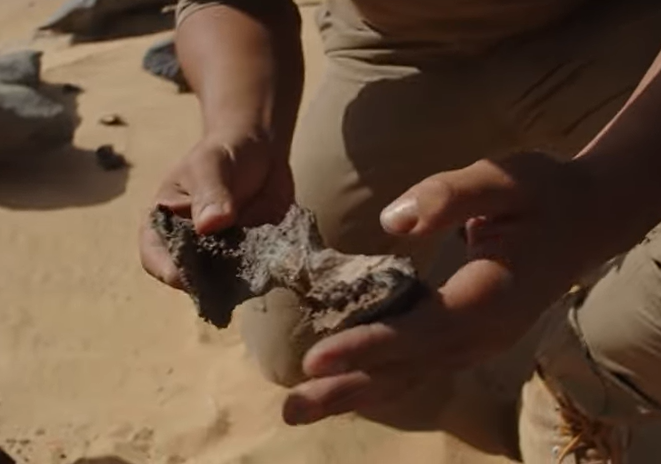
Screenshot from video in article
The species, named Spinosaurus mirabilis, was identified from fossil remains dating back around 95 million years. Researchers say the dinosaur was a fish-eating hunter, adapted for life in rivers and wetlands, and distinguished by a tall, scimitar-shaped crest rising from its skull.
The discovery was published this week in Science, with further details released by the University of Chicago. The research team was led by palaeontologist Paul Sereno, who has spent decades exploring fossil-rich regions of the Sahara.
Sereno described the moment the fossils came together as deeply emotional for the team, noting how unexpected the find was. Field expeditions to Niger in 2019 and 2022 yielded the material that ultimately confirmed the dinosaur as a previously unknown species.
What sets Spinosaurus mirabilis apart is the shape and structure of its cranial crest, which researchers say clearly differentiates it from its closest known relative, Spinosaurus aegyptiacus. The crest is thought to have been covered in keratin, the same tough material found in human fingernails and animal horns, and was laced with blood vessels that suggest it may have played a role in display or communication.
ALSO READ:
To better understand how the crest may have functioned, scientists compared it to similar structures found in modern birds, including the cassowary, Casuarius casuarius. This comparison led to the dinosaur’s evocative nickname: the “hell heron”, a nod to both its appearance and fishing lifestyle.
Researchers also clarified that an image of the dinosaur that circulated online ahead of the study’s release was an early, rough visual model created during fieldwork. It was used internally to help the team conceptualise the animal, rather than as a final reconstruction.
Africa continues to play a central role in reshaping what scientists know about dinosaurs. In 1999, Sereno led another team that described Jobaria tiguidensis, a massive plant-eater discovered in Niger and dating back to the Middle Jurassic period.
More recently, a 2018 discovery in Egypt revealed Mansourasaurus shahinae, based on fossils found in the Western Desert. Together, these finds underline the Sahara’s importance as one of the world’s richest windows into deep time.
For scientists, Spinosaurus mirabilis is another reminder that Africa’s deserts still hold many ancient secrets waiting to be uncovered.
Follow us on social media for more travel news, inspiration, and guides. You can also tag us to be featured.
TikTok | Instagram | Facebook | Twitter
ALSO READ:
Split plans late-night alcohol sales ban to curb party tourism