
From the shore, the kelp forests of the Western Cape look almost ordinary. Dark ribbons move across the water, rising and falling with the swell.
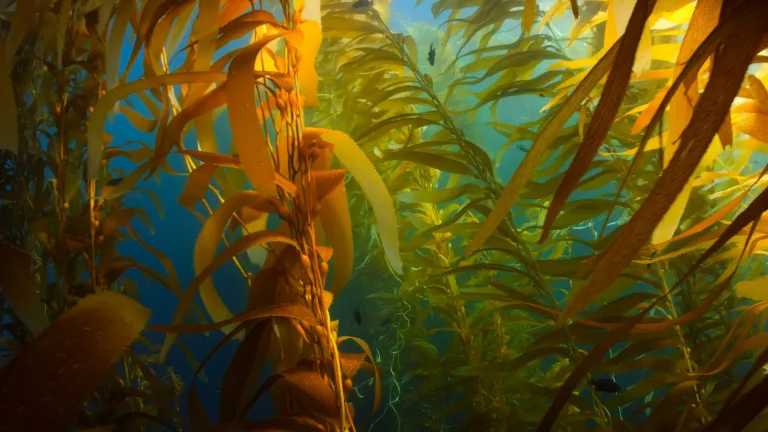
Oleksandr Sushko / Unsplash / Illustrative purposes only
Beneath the surface, however, the Western Cape kelp forests form a dense underwater world filled with fish, sharks, abalone, sea urchins, sponges and countless smaller creatures.
The Great African Seaforest stretches for roughly 1,000km along South Africa’s west and southwest coast and into Namibia. Dominated by giant kelps including sea bamboo (Ecklonia maxima) and split-fan kelp (Laminaria pallida), it’s one of the world’s great marine ecosystems.
A forest beneath the Atlantic
The kelp thrives in the cold, nutrient-rich waters of the Benguela Current. Coastal upwelling brings nutrients towards the surface, creating highly productive conditions for marine life.
Sea bamboo can grow towards the surface, forming a floating canopy. Below it, the kelp is anchored to rocky reefs by holdfasts. These tangled structures are miniature habitats in their own right. Research on Ecklonia maxima has found distinct communities living among the canopy, fronds, stipes and holdfasts, with holdfasts supporting particularly high numbers of marine invertebrates.
Sponges, crustaceans, worms and other small animals make their homes among the kelp. And scientists are still finding more. The 1001 Seaforest Species project is documenting biodiversity across the Great African Seaforest, while environmental DNA research is helping scientists investigate fish communities along its vast range.
A nursery for marine life
Kelp provides more than shelter. It’s structure creates feeding grounds and nursery habitat for marine species.
The Table Mountain National Park Marine Protected Area alone contains hundreds of recorded marine invertebrate species, as well as fish, sharks, rays and marine mammals. Abalone, rock lobster and sea urchins are among the species associated with the kelp ecosystem. Sea urchins, for example, are important grazers and can also provide shelter for juvenile abalone.
It’s an interconnected world where changes to one species can affect many others.
A wild place beside Cape Town
Perhaps the most remarkable thing about these underwater forests is how close they are.
The Table Mountain National Park Marine Protected Area follows 127km of coastline between Muizenberg and Mouille Point, covering roughly 1,000 square kilometres of ocean. From places such as Oudekraal, dense kelp forests lie just offshore, supporting a busy marine ecosystem beneath the waves.
The coastline has supported people for thousands of years too, with archaeological evidence showing how communities along the Cape Peninsula have long relied on the sea. Today, we are still discovering just how much life exists within it.
A changing ecosystem
Kelp is resilient, growing in some of the Cape’s roughest waters, but the ecosystem faces pressure from fishing, poaching, pollution, harvesting and climate change.
Changing ocean temperatures and extreme marine heat events can affect kelp forests and the food webs around them. The picture is not simply one of decline. Recent research suggests that kelp has expanded it’s range in some areas as conditions have changed. Scientists are continuing to study what those shifts mean for the wider ecosystem.
What is clear is that the forest is dynamic, and it’s future is closely tied to the changing ocean.
Protecting the forest
Marine protected areas play an important role in safeguarding these ecosystems. The Table Mountain National Park Marine Protected Area protects extensive kelp forests alongside rocky reefs and other marine habitats. Other protected areas, including the Robben Island and Betty’s Bay marine protected areas, also protect kelp-associated species.
Further south, kelp forests grow around the Alphard Banks, where volcanic pinnacles rise from the Agulhas Bank. Protecting the kelp means protecting far more than the algae itself. It means protecting the habitat, food and shelter supporting an entire marine community.
Look beneath the surface
It’s easy to stand on a Cape beach and think you know the landscape. You see the mountains, rocks, waves and dark kelp drifting offshore. But beneath those waves is another world.
The Western Cape’s kelp forests are a reminder that some of the region’s wildest places are hiding in plain sight. All you have to do is look beneath the surface.
Follow us on social media for more travel news, inspiration, and guides. You can also tag us to be featured.
Instagram | Facebook | Twitter | Spotify
ALSO READ: