



Picture a brown bear weighing nearly 400kg roaming the forests of what is now Portugal. Around 22 000 years ago, these enormous predators were among the largest brown bears ever recorded in the Iberian Peninsula. Today, their descendants are less than half that size.
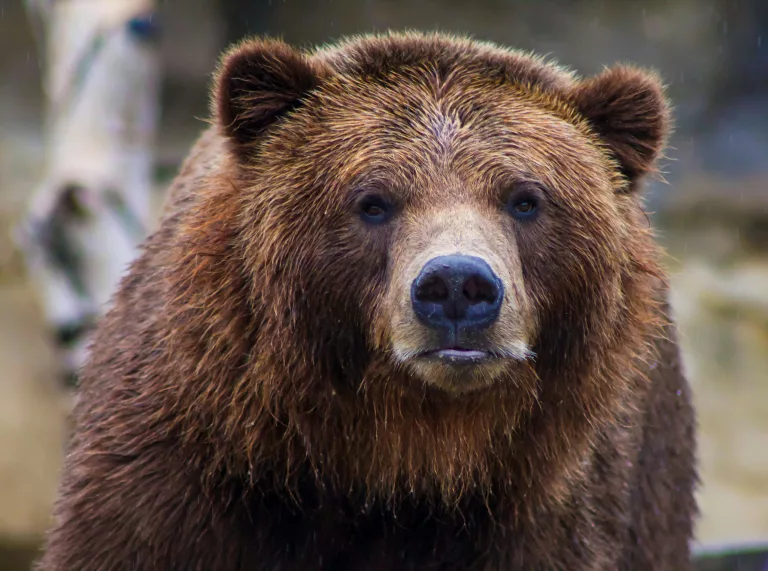
Photo: Unsplash
A new study has revealed how Portugal’s ancient brown bears gradually became smaller over thousands of years, with researchers suggesting that changing environments and increasing human pressure may have played a role in their remarkable transformation.
Portugal’s prehistoric giants
Researchers examined hundreds of fossilised brown bear bones recovered from caves across Portugal, uncovering evidence that these animals were once true giants. One male is estimated to have weighed around 385kg, making it one of the largest Iberian brown bears ever identified.
The findings, published in Palaeogeography, Palaeoclimatology, Palaeoecology, paint a picture of a landscape where brown bears filled an important ecological role long before modern humans reshaped the region.
Interestingly, while cave bears once dominated much of Europe, none have ever been found in Portugal. According to the researchers, this may be because Portugal lacked the extensive cave systems these animals preferred for hibernation. Instead, brown bears appear to have occupied a similar ecological niche.
A steady decline in size
The fossil record shows that these giants didn’t disappear overnight.
By the early Holocene, around 12 000 to 8 000 years ago, male brown bears in the Iberian Peninsula had already become noticeably smaller, weighing roughly 260kg. Modern Iberian brown bears are smaller still, with males averaging around 144kg and females approximately 102kg.
That represents a reduction of more than 40% in the average size of males over thousands of years.
Rather than a sudden shift, researchers believe this gradual downsizing reflects a long-term evolutionary response to changing conditions.
Could humans have influenced the change?
Climate alone doesn’t appear to explain the bears’ shrinking size. The research team proposes that humans may have exerted increasing pressure on bear populations over thousands of years. Early hunters may have targeted bears during hibernation, while later human settlement led to widespread forest loss and, eventually, the introduction of firearms.
Over generations, this may have favoured smaller bears that required fewer resources and were less likely to come into conflict with people. The researchers stress that this remains a working hypothesis, but note that similar evolutionary responses have been observed in other species exposed to sustained hunting pressure.
They also point out that diet could have influenced body size, with more carnivorous bears typically growing larger than those with a more plant-based diet.
Why ancient bears still matter today
While the study focuses on the distant past, it has important implications for modern conservation. Brown bears are considered ecosystem engineers. They help regulate prey populations, redistribute nutrients and disperse vast numbers of seeds across the landscape. According to the researchers, a single bear dropping can contain tens of thousands of seeds, helping forests regenerate naturally.
Understanding how Portugal’s ancient brown bears adapted to environmental change offers valuable clues about how wildlife responds to long-term pressures. As habitats continue to change across Europe and elsewhere, these prehistoric lessons could help inform conservation efforts for the remaining Iberian brown bear populations.
ALSO SEE: Great apes cuddle before conflict, offering clues to human behaviour
Great apes cuddle before conflict, offering clues to human behaviour
Source: This article is based on reporting by Phys.org, which covered research published in Palaeogeography, Palaeoclimatology, Palaeoecology examining the evolution of ancient brown bears in Portugal.