





Africa’s elusive leopards may have a brighter future than previously thought, provided conservation efforts focus on protecting habitats, restoring prey populations and reducing conflict with people.
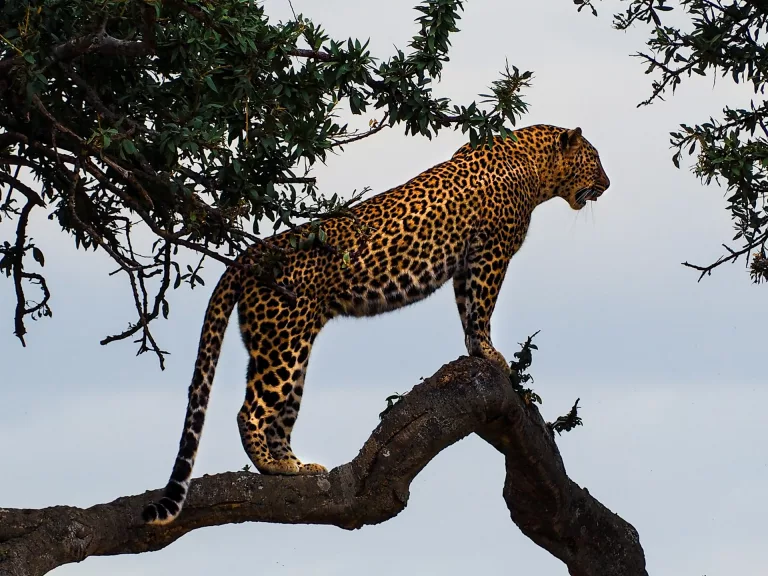
Image used for illustrative purposes/Bibake Uppal/Unsplash
A new study led by researchers from Nottingham Trent University estimates that between 45,000 and 143,000 leopards remain in the wild across sub-Saharan Africa.
While this is lower than previous estimates, the researchers say the continent could potentially support as many as 176,000 leopards within their historical range if the right conservation measures are put in place.
The findings, published in the Journal of Applied Ecology, offer a roadmap for where conservation actions could have the greatest impact.
Human activity remains the biggest challenge
The study found that leopard populations were significantly lower in landscapes heavily influenced by people, particularly where livestock farming, agriculture and expanding settlements have reduced suitable habitat.
In contrast, leopards were more abundant in areas with healthy populations of natural prey, especially ungulates and wild pigs, highlighting the importance of maintaining intact ecosystems.
The researchers note that current estimates are not direct population counts. Much of the available data comes from protected areas, where leopard populations tend to be healthier than in unprotected landscapes.
Concerns over trophy hunting
The research also raises questions about the sustainability of current trophy hunting quotas.
According to the study, international leopard hunting quotas exceed sustainable levels in more than half of the countries assessed. Researchers estimate that only around 2,800 to 8,700 adult male leopards live outside protected areas in countries where trophy hunting is permitted.
They argue that hunting quotas should be urgently reviewed using updated population data and supported by regular field surveys to help prevent further declines.
ALSO READ:
New open access platform helps conservationists measure what works
A blueprint for leopard recovery
The study identifies priority areas where conservation actions could deliver the greatest benefits, including habitat protection, prey restoration and reducing conflict between people and wildlife.
Antonio Uzal, Associate Professor of Conservation Biology at Nottingham Trent University, said reliable population estimates are essential for effective conservation planning.
“Our work provides practical guidance for conservation and clear, location-specific targets for leopard recovery. It shows where protection efforts will work best and can support countries in focusing their work both inside and outside protected areas.”
Co-author Julien Fattebert, a Research Professor at Vilnius University and Research Associate at Nelson Mandela University, added that current hunting quotas are based on outdated population estimates and should be revised using the latest scientific evidence.
Filling the gaps
Researchers recommend expanding camera-trap surveys and restoring habitats in areas outside protected reserves, where leopard numbers remain poorly understood. In suitable regions, they say carefully managed reintroductions could also help rebuild populations.
Lead author Kalpapran Patowary said conservation efforts should prioritise regions where leopards are likely still present but have received little scientific attention, particularly in parts of West Africa.
While the outlook remains challenging, the study suggests that with coordinated conservation efforts, Africa’s iconic big cats still have the potential to reclaim more of their historic range.
SOURCE: Down To Earth
Follow us on social media for more travel news, inspiration, and guides. You can also tag us to be featured.
Instagram | Facebook | Twitter | Spotify
ALSO READ:
VIDEO: Curious cheetah cubs bring Maasai Mara safari to a standstill