


South Africa has earned its place among the world’s leading destinations for astronomy. Thanks to vast open landscapes, exceptionally dark skies and minimal light pollution, the country offers some of the finest conditions on Earth for observing the universe.
It is also home to internationally recognised scientific facilities that are helping researchers answer some of astronomy’s biggest questions.
For travellers, this presents a unique opportunity to combine a scenic getaway with unforgettable nights under the stars. Whether you’re keen to peer through one of the world’s largest optical telescopes, learn about cutting-edge radio astronomy or simply marvel at the Milky Way far from city lights, these destinations prove that South Africa’s greatest attractions aren’t limited to what’s on the ground.
1. Sutherland and the Southern African Large Telescope (SALT)
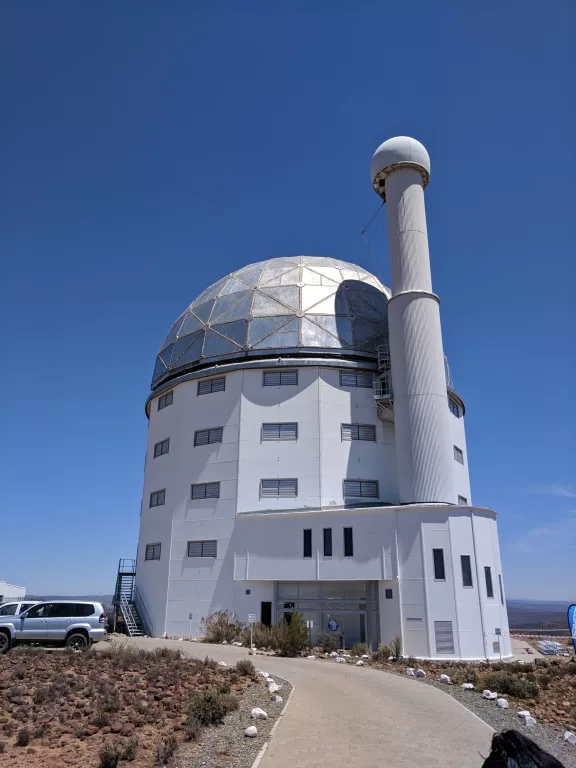
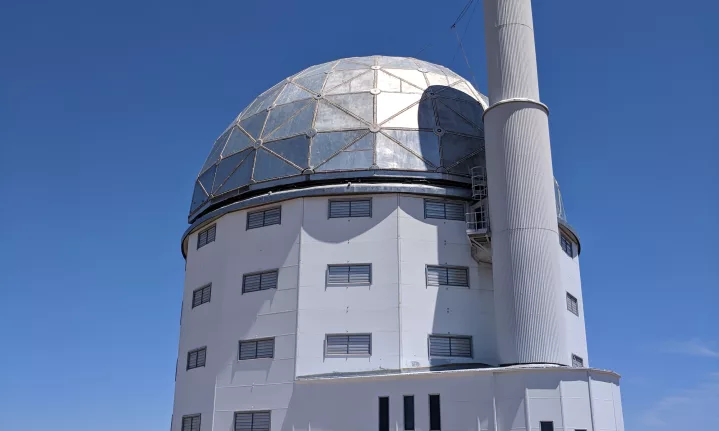
The Southern African Large Telescope/Lengau/Wikimedia Commons
Africa’s premier stargazing destination
No destination is more synonymous with astronomy in South Africa than Sutherland. Perched high on the Roggeveld Plateau in the Northern Cape, this small Karoo town is renowned for its crisp, dry air, high altitude and remarkably dark skies.
The main attraction is the Southern African Large Telescope (SALT), the largest single optical telescope in the Southern Hemisphere. Visitors can tour the observatory during the day, learn how astronomers study distant galaxies and, on selected evenings, join guided stargazing experiences that reveal the brilliance of the southern night sky.
Winter is particularly rewarding, with cold, clear nights providing exceptional viewing conditions.
2. South African Astronomical Observatory, Cape Town
View this post on Instagram
Where South African astronomy began
While Sutherland houses the country’s biggest telescopes, Cape Town is home to the headquarters of the South African Astronomical Observatory (SAAO), South Africa’s oldest scientific institution.
Situated in Observatory, the historic campus dates back to 1820 and continues to play an important role in astronomical research and education. Visitors can explore the grounds, admire heritage telescopes and attend occasional public open nights featuring telescope viewing, astronomy talks and family-friendly activities.
It’s an excellent stop for anyone wanting to understand the country’s rich scientific heritage before heading into the Karoo.
ALSO READ:
5 South African wildlife centres where kids can meet conservationists
3. MeerKAT Radio Telescope
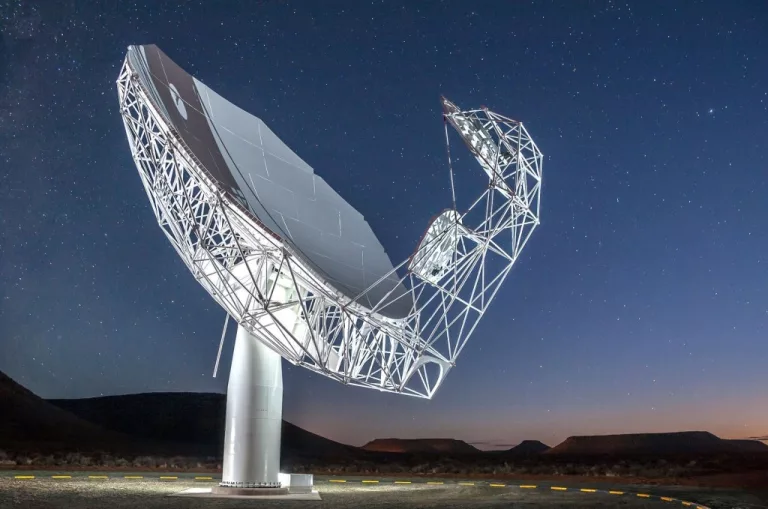
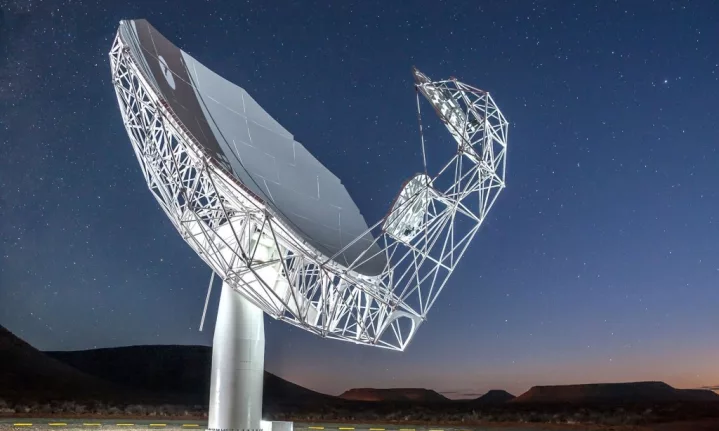
MeerKAT Radio Telescope/Morganoshell/Wikimedia Commons
Listening to the universe in the Karoo
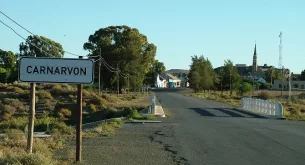
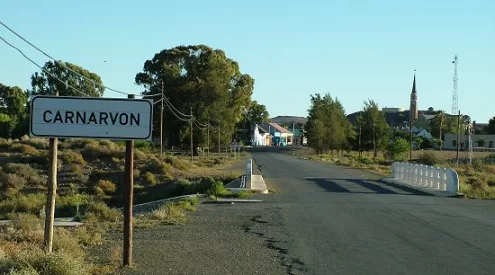
Near the town of Carnarvon lies one of South Africa’s greatest scientific achievements: the MeerKAT Radio Telescope.
Unlike traditional telescopes that capture visible light, MeerKAT uses an array of radio dishes to detect faint radio waves from deep space. Since becoming operational, it has produced groundbreaking images of the centre of the Milky Way and distant galaxies, earning international recognition.
Although the telescope array itself has restricted public access, the surrounding Karoo has become an important destination for science tourism, with nearby towns embracing their role in one of the world’s most ambitious astronomy projects.
4. Square Kilometre Array (SKA)
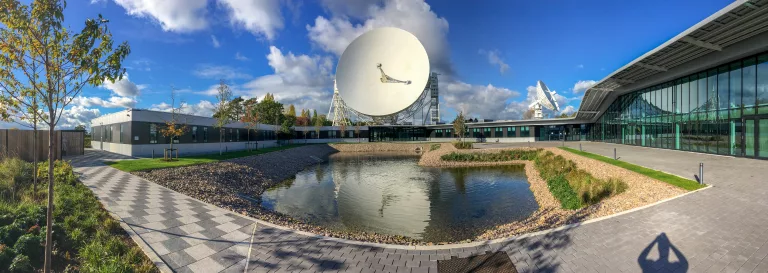
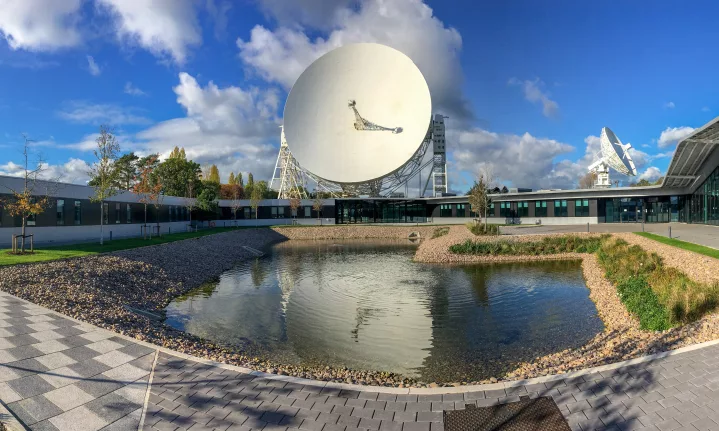
The SKA headquarters at Jodrell Bank, with the Lovell Telescope in the background/Photograph by Mike Peel (www.mikepeel.net)/Wikimedia Commons
A global project with South Africa at its heart
Building on the success of MeerKAT, the Square Kilometre Array (SKA) is one of the largest international scientific collaborations ever undertaken. Designed to become the world’s most powerful radio telescope, the project spans two continents, with major facilities in both South Africa and Australia.
SKA-Mid, located in South Africa’s Karoo, consists of 197 dish antennas, including the existing MeerKAT dishes, and observes the universe using mid-frequency radio waves. Meanwhile, SKA-Low in Western Australia comprises more than 131,000 low-frequency antennas, enabling astronomers to study some of the earliest moments after the Big Bang.
Although access to the telescope sites is restricted, travellers can visit nearby Karoo towns to learn about this groundbreaking project and discover how South Africa has become a global leader in radio astronomy. The SKA has also helped establish the region as one of the world’s premier astrotourism destinations.
5. Sutherland Planetarium
View this post on Instagram
Bringing the night sky to life
Before venturing beneath the stars, stop at the Sutherland Planetarium for an immersive introduction to the universe.
Digital shows explain constellations, planets and galaxies engagingly, making astronomy accessible for visitors of all ages. Many experiences are paired with evening stargazing sessions, helping guests identify celestial objects they’ll later see with the naked eye.
It’s an ideal addition for families or anyone new to astronomy.
6. Tankwa Karoo National Park
A wilderness beneath dazzling skies
Remote, rugged and wonderfully quiet, Tankwa Karoo National Park offers some of South Africa’s darkest skies.
With virtually no nearby towns and minimal artificial light, the park delivers breathtaking views of the Milky Way stretching from horizon to horizon. Campers and photographers often plan their visits around the new moon, when the sky is at its darkest.
By day, visitors can explore dramatic desert landscapes, while after sunset the heavens become the main attraction.
7. Cederberg Wilderness Area

Picture/Getaway Gallery
Mountains by day, stars by night
The rugged Cederberg is famous for its ancient rock formations and hiking trails, but it is equally impressive after dark.
Recognised as an International Dark Sky destination, the area offers excellent conditions for stargazing throughout the year. On moonless nights, thousands of stars become visible, while the Milky Way appears in extraordinary detail.
Several lodges and guided experiences cater specifically to astronomy enthusiasts, making it easy to combine outdoor adventure with unforgettable nights beneath one of Africa’s clearest skies.
Why South Africa is perfect for astrotourism
South Africa’s combination of high-altitude plateaus, dry climate, low population density and protected dark-sky regions has made it a global leader in astronomy. The country’s investment in world-class research facilities such as SALT, MeerKAT and the Square Kilometre Array has also sparked growing interest in astrotourism, where travellers seek destinations that combine science, education and spectacular natural scenery.
For the best experience, plan your trip during a new moon, when the sky is at its darkest, and remember that Karoo nights can become surprisingly cold—even in summer—so pack warm layers.
Follow us on social media for more travel news, inspiration, and guides. You can also tag us to be featured.
Instagram | Facebook | Twitter | Spotify
ALSO READ: