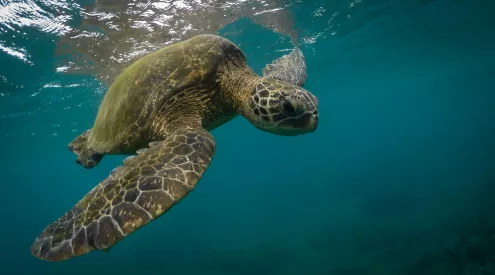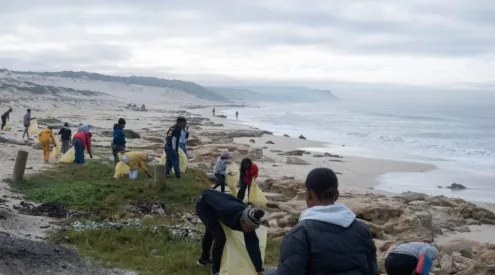

Conservation is easy to admire from a distance. A rhino on safari, a penguin on the coast, or a giraffe crossing a road can make for an unforgettable wildlife encounter, but the work protecting these animals is often less visible.

Image used for illustrative purposes/By: Yagi Studio/Getty Images
Across Africa, however, there are places where travellers can see that work for themselves. These aren’t simply wildlife attractions. They are rehabilitation centres, research stations, community conservation projects and working reserves where tourism helps support efforts to protect species and restore ecosystems.
From a seabird hospital in Cape Town to a rewilded landscape beside Etosha National Park, these six places offer travellers a closer look at what conservation involves – without making the animals themselves the attraction.
1. See seabird rehabilitation in Cape Town
SANCCOB, Western Cape
On the edge of Cape Town’s Table Bay, the Southern African Foundation for the Conservation of Coastal Birds (SANCCOB) gives visitors an opportunity to see what happens after a seabird is rescued.
The organisation specialises in the rescue, rehabilitation and release of threatened seabirds, including the critically endangered African penguin. Its Cape Town centre in Table View offers guided tours through the seabird hospital and rehabilitation facilities, providing an introduction to the challenges facing coastal birds and the work involved in getting them back into the wild.
The experience is deliberately educational rather than an animal encounter. Visitors don’t need to handle a penguin or get close to a patient to understand the work. Instead, the tour provides a glimpse into the veterinary and rehabilitation process and explains why seabird conservation matters.
SANCCOB also offers more detailed and behind-the-scenes tours for visitors who want to learn more about the rehabilitation process.
Why visit: It is one of the easiest ways to see conservation work in action in Cape Town, while supporting an organisation working with one of South Africa’s most threatened coastal species.
2. Follow the science behind cheetah conservation
Cheetah Conservation Fund, Namibia
Near Otjiwarongo in Namibia’s Waterberg region, the Cheetah Conservation Fund brings together research, education, wildlife management and efforts to reduce conflict between predators and farmers.
Visitors can spend time at CCF’s conservation centre, where activities can include seeing ambassador cheetahs exercise, visiting the model farm and learning about the organisation’s livestock-guarding dog programme. The centre also houses research facilities, including a conservation genetics laboratory.
The science is an important part of the story. CCF uses genetic research, field surveys and non-invasive monitoring to understand cheetah populations and their movements. Its research also extends into human-wildlife conflict, agriculture and predator ecology.
That makes a visit different from simply seeing a cheetah in an enclosure. The emphasis is on understanding the network of research, farming practices and community-based solutions needed to keep cheetahs in the landscape.
CCF welcomes visitors for day visits and overnight stays, with its centre open almost throughout the year.
Why visit: It shows how saving a species can involve laboratories, farmers, dogs, researchers and local communities as much as it involves wildlife.
3. See how a working conservancy protects wildlife
View this post on Instagram
Ol Pejeta Conservancy, Kenya
Ol Pejeta in Kenya’s Laikipia region is a working wildlife conservancy where conservation forms part of the visitor experience rather than sitting behind the scenes.
Travellers can choose experiences that reveal different aspects of the work. These include lion tracking with conservation teams, rhino monitoring and identification, dog tracking with the conservancy’s K9 unit and conservation talks with experts.
The rhino-monitoring experience is particularly revealing. Rangers know individual rhinos and their home ranges, allowing visitors to see how monitoring and protection work together on the ground. The conservancy also offers opportunities to learn about its anti-poaching work and wider conservation technology.
For travellers wanting a deeper immersion, Ol Pejeta’s Immersive Conservation Experience goes further, introducing participants to wildlife research and monitoring, conservation agriculture, endangered-animal care and the K9 anti-poaching unit, alongside the communities living around the conservancy.
The result is a different understanding of safari. The animals remain part of the experience, but visitors also see the people, technology and decisions required to protect them.
Why visit: It demonstrates that a wildlife conservancy is not simply a place where animals live. It is a complex conservation operation requiring monitoring, security, research and community involvement.
ALSO READ:
UKZN researchers use bird radar to study millions of swallows
4. Support a community-led rhino sanctuary
Khama Rhino Sanctuary, Botswana
Near Serowe, Khama Rhino Sanctuary offers a different model of conservation. Established to help save Botswana’s dwindling rhino population, the sanctuary is a community-based wildlife project that combines conservation with tourism and local economic benefits.
The sanctuary covers about 8 585 hectares of Kalahari Sandveld and protects both black and white rhinos alongside numerous other species. Visitors can explore through guided game drives, walks and birding, while the sanctuary also runs environmental education programmes.
Its community connection is central to the story. The sanctuary is managed and staffed by people from nearby villages, while tourism helps generate economic benefits for the local community.
Travellers can stay overnight, camp and book guided activities, making it possible to spend more than a few hours seeing rhinos before continuing north.
Why visit: Khama shows how tourism, community livelihoods and species protection can work together rather than treating conservation as something separate from local people.
5. See what happens after wildlife is rescued
View this post on Instagram
Moholoholo Wildlife Rehabilitation Centre, Limpopo
Near Hoedspruit, Moholoholo Wildlife Rehabilitation Centre deals with a side of conservation that safari-goers rarely see: what happens when wild animals are injured, poisoned, orphaned or otherwise unable to survive without intervention.
The centre cares for rescued wildlife and releases animals whenever rehabilitation makes that possible. Those that cannot return to the wild become permanent residents and form part of its conservation education work.
Visitors can join guided tours lasting roughly 1½ to two hours, learning the stories behind individual animals and the threats that brought them to the centre. Importantly, Moholoholo ended animal interactions on its public tours in 2019, following ethical wildlife-tourism guidelines.
The centre is also involved in conservation research, including monitoring vultures and studying leopard movements and behaviour.
That visit is about much more than seeing rescued animals. It allows travellers to understand why rehabilitation is needed in the first place – and why releasing an animal is not always as simple as putting it back into the bush.
Why visit: It offers an honest look at the difficult decisions involved in wildlife rescue, while showing why ethical rehabilitation needs to put the animal’s welfare before visitor interaction.
6. Join researchers in a rewilded landscape
Etosha Heights Conservation Centre, Namibia
For travellers who want to get closer to the research side of conservation, the Etosha Heights Conservation Centre in Namibia offers one of the more unusual experiences on this list.
The centre is run by the Giraffe Conservation Foundation in partnership with the Namibia University of Science and Technology and Etosha Heights Private Reserve. The reserve has restored more than 60 000 hectares of degraded farmland into a wildlife landscape beside Etosha National Park.
Research here extends beyond giraffes. Teams monitor wildlife, study habitats, assess biodiversity and examine how different land-use models affect ecological productivity across the wider Greater Etosha South-West Landscape.
Conservation Supporters can apply to join field-based experiences, gaining practical exposure to conservation research at the reserve. Depending on the programme, the work can involve field observations, wildlife monitoring, data collection and other research activities.
It is about as far from a conventional wildlife encounter as you can get. The reward is not guaranteed sightings or close approaches, but the chance to understand how researchers gather the information needed to make better conservation decisions.
Why visit: It shows that conservation can mean collecting data, studying habitats and patiently monitoring animals over time – work that rarely makes it into a safari photograph.
Make the visit part of the conservation story
The most worthwhile conservation experiences are not necessarily the ones that promise the closest animal encounter. In fact, the opposite can be true.
A good conservation visit should leave travellers understanding something they didn’t know before: why a penguin needs rehabilitation, how farmers can coexist with predators, what a ranger monitors every day, why a rhino sanctuary needs community support or how researchers measure whether a landscape is recovering.
These places offer that perspective. They allow visitors to see conservation as ongoing work rather than a backdrop to a holiday.
And that may be the most valuable souvenir of all: leaving with a better understanding of what it takes to keep Africa’s wild places and wildlife here for the next generation.
Follow us on social media for more travel news, inspiration, and guides. You can also tag us to be featured.
Instagram | Facebook | Twitter | Spotify
ALSO READ: