

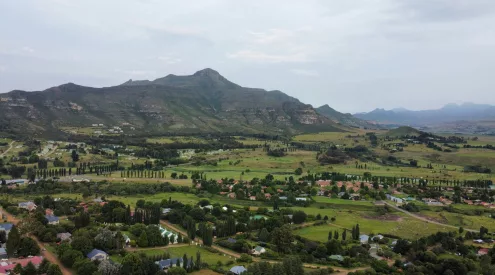
The Great Karoo is a place to slow down. Its open plains, rocky hills and small towns make for a road trip that feels far removed from the rush of everyday life.
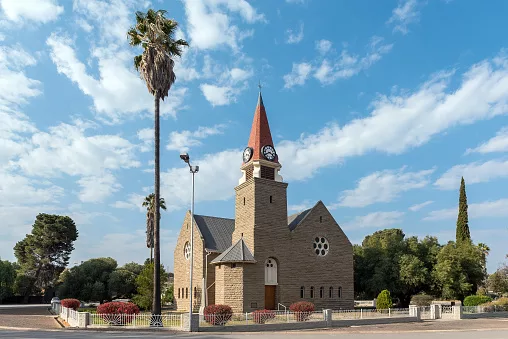
Street scene with the Dutch Reformed Church in Loxton/By: GroblerduPreez
iStock Editorial
Over 48 hours, travel through Victoria West, Beaufort West, Fraserburg and Loxton, stopping for Karoo food, historic buildings, fossils and quiet country roads. Along the way, you’ll find stories that go back millions of years, old theatres, sheep farms and wide-open skies.
From the N1, the Karoo can look like a long stretch of dry scrubland and distant mountains. Take a slower route, though, and there is much more to see.
This is a trip for travellers who enjoy taking their time stopping for a farm meal, exploring a small-town museum or simply pulling over to take in the view. By night, the clear Karoo skies offer one more reason not to hurry.
Day one: Victoria West to Beaufort West

Apollo Theatre in Victoria West/Facebook
Start in Victoria West
Victoria West makes a fitting starting point. Established in 1843, the small town sits between ridges in the Upper Karoo and is filled with reminders of its 19th-century past. Its position at the junction of the N12, N10 and R63 also makes it a useful base for exploring the surrounding landscape.
Start with a walk through the older part of town, where Victorian-era buildings line Church Street. The Victoria West Museum is worth a stop for its collection of local history, archaeology and fossils, including fossilised fish from the Karoo’s distant past.
Then look for one of the town’s most unusual landmarks: the Apollo Theatre. The Art Deco cinema dates back to 1928 and is recognised as a heritage site.
Take your time over lunch
Victoria West is not a place where you need to build an itinerary around a long list of restaurants. Instead, look for a locally run café or restaurant and make lunch part of the experience.
The Karoo is sheep country, so this is a good place to seek out regional dishes and products rather than expecting a conventional city dining scene. Think lamb, homemade bread, preserves and simple farm-style food.
Follow the road to Beaufort West
From Victoria West, the road towards Beaufort West gradually opens into classic Karoo scenery. Sheep farms stretch towards low hills, windmills punctuate the plains, and the enormous sky becomes increasingly difficult to ignore.
The landscape is one of the main attractions, so resist the temptation to treat this section as simply a transfer between towns. Stop safely where possible, photograph the changing light and keep an eye out for birds and wildlife.
Discover Beaufort West’s fossil country
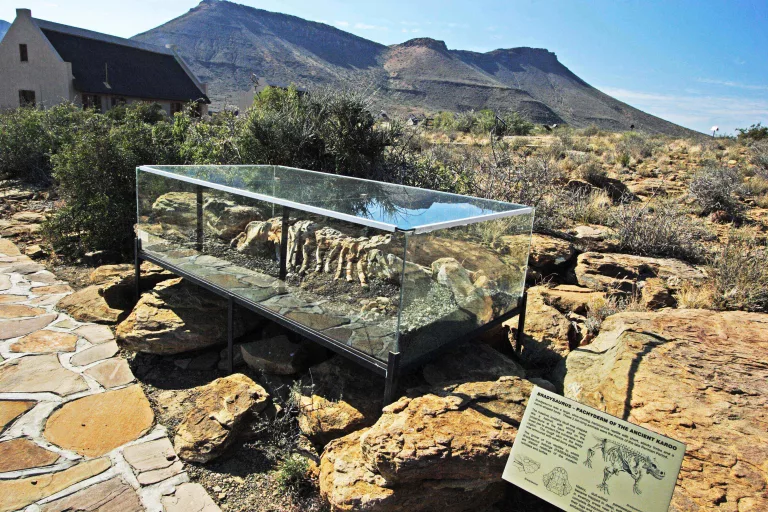
Karoo National Park Fossil Trail/South African Tourism from South Africa/Wikimedia Commons
Go back 250 million years
Beaufort West’s greatest story began long before the town existed.
The surrounding Karoo is internationally important for its fossils. The first reptile fossil near Beaufort was found in 1827, and the area subsequently became one of the world’s richest fossil-collecting grounds.
A visit to Karoo National Park gives travellers a chance to connect the landscape they have been driving through with this extraordinary geological history. The park has a Fossil Trail interpreting the area’s palaeontology and geology.
The short trail is particularly useful because it makes an otherwise abstract story tangible. Instead of simply being told that the Karoo contains fossils, you can see evidence of the ancient creatures and environments preserved in the rocks.
Walk through the historic centre
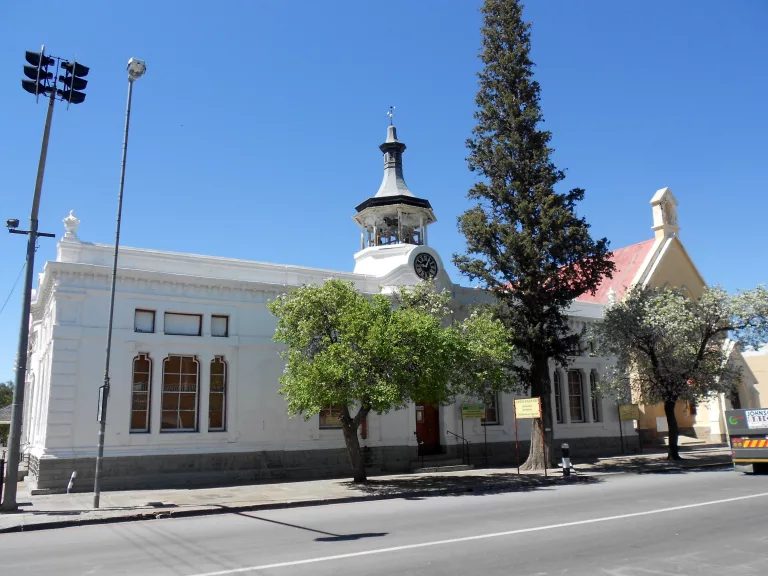
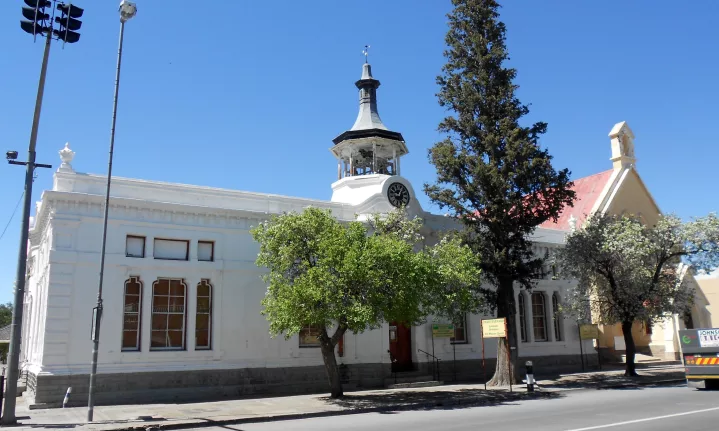
Old Town Hall Beaufort West/Lugerda/Wikimedia Commons
Back in town, give yourself time to explore Beaufort West on foot.
The historic centre contains an eclectic mix of Victorian, Georgian, Edwardian, Cape Dutch, Neo-Gothic and other architectural styles. The old Town Hall, Mission Church and several historic homes form part of the town’s heritage landscape.
The museum complex adds another layer to the story. It includes memorabilia connected to Christiaan Barnard, the Beaufort West-born surgeon who performed the world’s first human heart transplant in 1967.
For dinner, a Karoo-style meal is the obvious choice. 4 Sheep Restaurant Deli and Convenience Store is one option in town, while Karushi offers another local dining stop.
Stay beneath the stars
End your first day somewhere where the landscape remains visible after dark.
Staying at or near Karoo National Park turns the night into part of the experience. The park offers guided day and night drives, while the wider Karoo is known for its low levels of light pollution.
If you are staying in town, simply step outside after dinner. On a clear night, the Milky Way can transform what seemed like an empty landscape during the day into something entirely different.
Day two: Fraserburg and the Upper Karoo
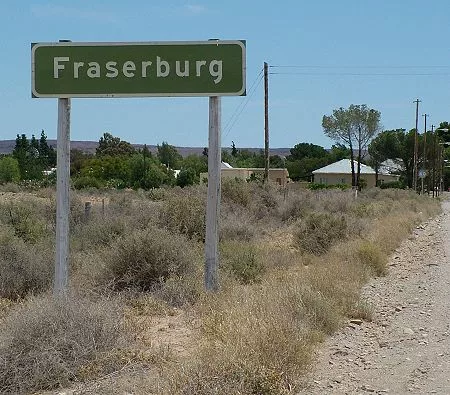
Fraserburg sign/Etienne Marais/Wikimedia Commons
Leave early for Fraserburg
The second day takes you deeper into the Upper Karoo, where distances grow longer, and settlements become smaller.
Fraserburg is one of the region’s best-preserved Karoo towns, with historic buildings and a particularly strong connection to the area’s geological past. The municipality describes it as one of the most authentic remaining Karoo towns, with hiking, 4×4 routes and exceptionally clear night skies.
The journey itself is part of the attraction. On the surrounding gravel roads, farms can be separated by considerable distances, reinforcing just how sparsely populated this part of South Africa is.
See footprints from before the dinosaurs
Fraserburg’s most remarkable attraction is not a building but a set of tracks preserved in stone.
At the Gansfontein palaeo-surface, fossilised footprints and other traces reveal what happened in the region more than 250 million years ago, during the Permian period. The site includes tracks associated with therapsids, the mammal-like creatures that lived before the dinosaurs.
The discovery was made in 1968 after a farmer noticed unusual footprints exposed by water from a burst dam. What followed was the recognition of an extraordinary record of ancient life, including animal tracks, fish marks and traces left by smaller creatures.
Access to sites on private farms should be arranged in advance, making the local museum or tourism office a useful first stop.
Look for the Karoo’s stone houses
Find a corbelled house
The Upper Karoo has another unusual connection between landscape and human ingenuity: corbelled houses.
Built from locally available stone, these beehive-shaped structures use layers of stone that gradually project inwards until they form a roof without conventional wooden beams. They are associated with the early Trekboer communities who settled in this dry landscape, where timber was scarce.
Examples survive around Fraserburg and Loxton, including on private farms. Some can be visited by prior arrangement, so this is an experience to organise before setting out rather than an attraction to simply turn up at.
The houses are more than photogenic curiosities. They show how people adapted architecture to the materials and conditions of the Karoo.
End in Loxton
Slow down in a small Karoo town
From Fraserburg, continue towards Loxton, where the pace becomes even slower.
Founded in 1899, Loxton developed around the sheep-farming community of the surrounding district. Its streets contain restored Karoo cottages, old verandas, sash windows and distinctive corrugated-iron roofs.
The town is particularly rewarding on foot. Instead of looking for one major attraction, wander through the streets and notice the details: old water infrastructure, stone buildings, gardens and the church at the centre of town.
Walk the Riverine Rabbit Thinking Path
One of Loxton’s more unusual contemporary attractions is the Riverine Rabbit Thinking Path, a large geoglyph designed as a walking route at the entrance to the village.
The 1,097m path takes roughly 25 minutes to walk and uses the shape of a riverine rabbit as its design. It links art, the local landscape and awareness of an endangered Karoo species.
It is a fitting final activity because it asks visitors to do what this entire journey has encouraged: slow down and pay attention to the landscape.
Have one last Karoo meal
Loxton is small, so don’t arrive expecting a long list of dining options. Instead, plan around whatever local café or restaurant is operating during your visit and allow the meal to become part of the slower pace.
Local tourism information also highlights the area’s indigenous Karoo vegetation and its connection to the flavour of the region’s lamb.
Why take this Karoo road trip?
The appeal of this route is not a single spectacular attraction. It is the way several different stories overlap.
Victoria West brings heritage, architecture and fossils into a compact town.
Beaufort West connects the Karoo to palaeontology, conservation and the remarkable story of Christiaan Barnard.
Fraserburg takes you deep into the region’s prehistoric past, with fossilised footprints dating back more than 250 million years.
Loxton brings the journey back to architecture, sheep farming, local food and the rhythms of a tiny rural community.
Together, they offer a different way to experience the Great Karoo. You are not simply driving through an empty landscape. You are travelling across an ancient seabed, through historic farming country and past communities that have learned to live with distance, drought and enormous skies.
Practical tips for the journey
- Allow more time than the map suggests. Distances are long, and some attractions require prior arrangements.
- Fill up with fuel when you can. Smaller Karoo towns have limited services, particularly outside normal business hours.
- Carry water and snacks, especially when heading onto quieter rural roads.
- Check road conditions before taking gravel routes, particularly after heavy rain.
- Arrange private-farm visits in advance, including visits to corbelled houses and fossil sites.
- Pack warm clothing for winter nights. The Karoo can become very cold after sunset.
- Look up after dark. The region’s low light pollution makes the night sky one of the easiest attractions to enjoy without an itinerary.
Follow us on social media for more travel news, inspiration, and guides. You can also tag us to be featured.
Instagram | Facebook | Twitter | Spotify
ALSO READ: