
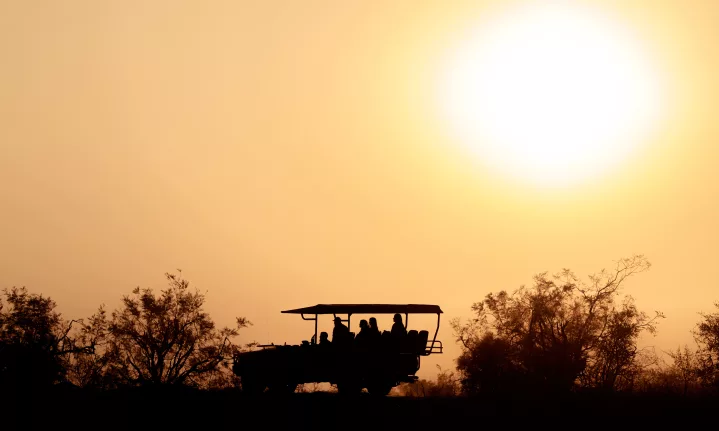
I’ve always subscribed to the logic of the game drive. Set the alarm before dawn, gulp down coffee that’s still too hot, pull on a fleece while the air still has a bite to it. There is pleasure in the discipline of it, in the collective focus as everyone leans forward, scanning the treeline for a leopard that may or may not appear.
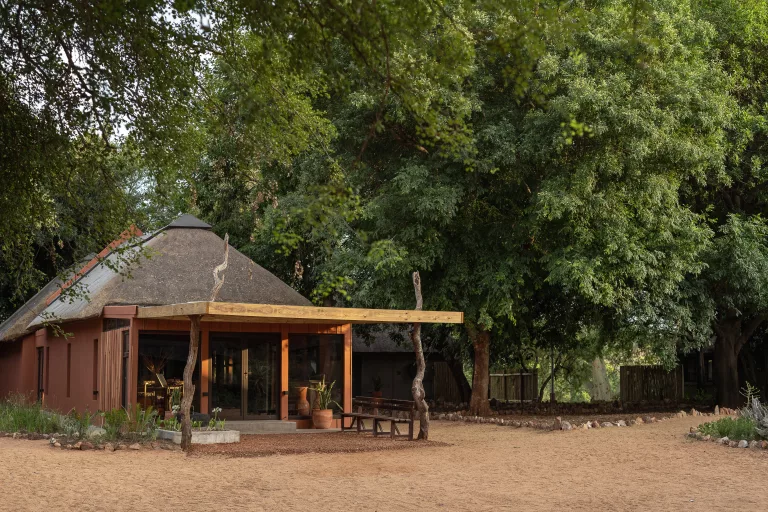
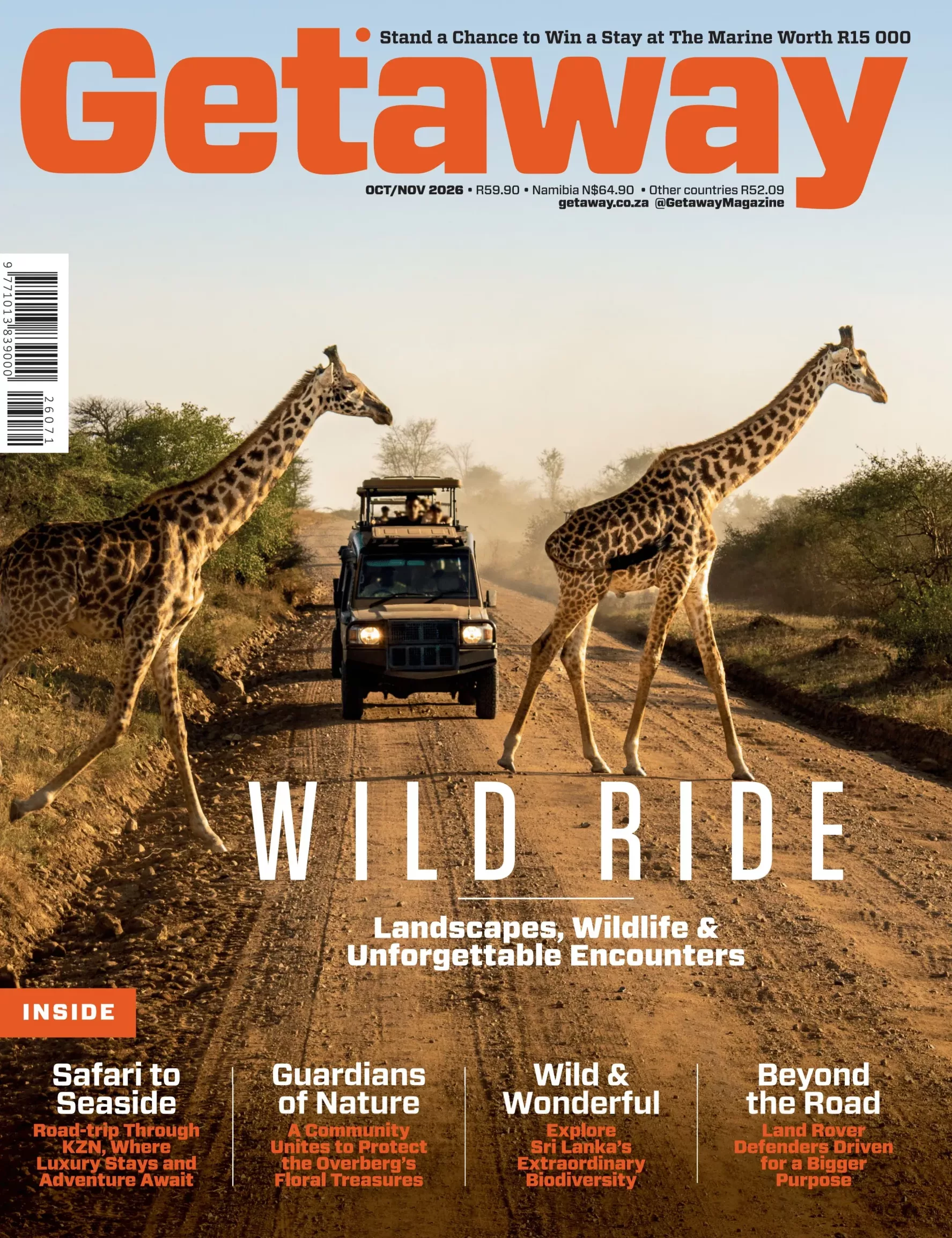
Image from the February – March 2026 print edition of GETAWAY.
But during a stay at Kruger Shalati, I did something I never expected to do. I skipped a game drive and stayed behind on the suspended pool deck. I floated at the water’s edge as the Sabie River moved below me. The sky darkened slowly, settling into shades of rust and ochre, stark against the green of the bushveld below.
When I mentioned it to my guide later, almost guiltily, he barely reacted. Plenty of guests, he said, choose to stay in. Some never get into a vehicle at all.
It’s not a decision made lightly. Skipping a drive still feels faintly transgressive, like breaking an unspoken rule. But across South Africa, lodges are being designed with this possibility in mind.
Wildlife viewing is no longer something that only happens from a seat in a vehicle. From open-air sleep outs and underground hides to waterholes positioned directly in front of decks and pools, staying put now feels like a legitimate safari choice rather than a missed opportunity.
None of this suggests the traditional safari is disappearing. The game drive still matters. But it is no longer the only way in.
Watching From Above
Kruger Shalati is perhaps the most audacious piece of safari architecture in South Africa. The converted train carriages house 24 suites on the bridge over the Sabie River, once an overnight stop for travellers in the ’20s. The suites feature floor-to-ceiling windows to maximise the view from the rainfall shower and king-size bed. You’d be hard-pressed to find a better vista anywhere else in the park.
The most compelling vantage point, though, is the pool deck that extends beyond the bridge. Elephants and buffalo follow familiar paths along the banks below, while crocodiles bask in the afternoon sun on the sandbars. Hippos surface, submerge, surface again. The elevation removes the urgency that often accompanies wildlife viewing. There is no need to reposition, no radio chatter, no sense of pursuit.
Being inside the park, Kruger Shalati still offers twice-daily game drives. But many guests choose to skip one and stay on the deck or watch the sunset from their suite, content to let the river deliver the action.
Elevation changes perspective in other ways, too. At Lion Sands Game Reserve, straddling both Sabi Sands and Kruger National Park, guests can trade their suite for a night in one of three treehouses. These are not part of the main lodge, but they are designed around the same principle: once you arrive, you stay where you are.
You’re escorted in at sunset and left alone on a raised platform featuring a four-poster bed with only a mosquito net and feather bedding between you and the sky. At nightfall, lanterns are lit, and the rest of civilisation seems to fade entirely into the distance. Lying awake beneath the open sky, you might hear hyenas call in the distance or lions vocalising at dusk. Elephants move below, audible long before they are visible, betrayed by the sounds of branches snapping, bark being chewed, and the low rumble of communication passing between them. When dawn breaks, the bush doesn’t suddenly appear. It reveals itself gradually, shapes emerging from shadow: a herd of impala watchfully grazing, a giraffe’s head above the treeline, kudu moving single file along a worn path.
From the Ground Up
If height offers one kind of proximity, ground level provides another. At Mhondoro Safari Lodge & Villa in the Welgevonden Game Reserve, just three hours from Johannesburg, an underground hide accessed through a tunnel beneath the main deck places you at eye level with the permanent waterhole. Animals approach without height or distance interfering. Warthogs pass close enough to hear them breathing. Rhinos arrive cautiously, then linger.
The hide reconfigures the relationship between observer and observed. You’re not looking down from a vehicle or watching from across a dam. You’re sitting shoulder-deep in their world. What changes here isn’t just proximity, but patience and stillness. From a vehicle, there’s always the option to move on, to search for something else. In the hide, you stay. You watch the same waterhole change character as light shifts and different animals arrive, and in doing so, you begin to notice patterns you would usually drive past.
Mhondoro is also known for another detail that sounds improbable until you see it: herds of elephants regularly drink from the lodge’s saltwater swimming pool.
The pool is built near the same waterhole that the hide overlooks, and the elephants treat it accordingly. They arrive almost daily, sometimes in large numbers, moving through the space without hesitation. Guests float quietly or sit on the edge as the elephants reach with their trunks into the nearby water. Though sightings aren’t guaranteed, this happens often enough that once the novelty wears off, what remains is something stranger: the unsettling intimacy of sharing a swimming pool with a bull elephant while reading a book.
Inside the Territory
Sometimes, thoughtful positioning gives way to something else entirely. Places like Kruger Untamed do something even more fundamental and remove the need for a specific viewpoint altogether. Here, two seasonal tented camps appear during the dry winter months and vanish entirely when the rains return. Both are unfenced – one near Satara Rest Camp and one near Tshokwane – and built so lightly that there’s no trace of them come October. Animals that pass through here aren’t visiting a waterhole and leaving,but crossing through their backyard. The camps acknowledge something the permanent lodges can only approximate: this isn’t your territory. It’s theirs. You’re just borrowing it for a season.
Cheetah Plains Private Game Reserve in Sabi Sands expresses a similar principle of immersion through more permanent architecture. Each of the three exclusive-use villas has glass doors that open completely onto the bush. One villa, Mapogo, sits directly beside an active waterhole, its infinity pool running alongside the water’s edge. From the pool, you see wildlife approach without obstruction, framed by open space rather than hides or platforms.
Choosing Not to Go Anywhere
None of this diminishes the value of the game drive. Early mornings and late afternoons in a vehicle remain some of the most effective ways to cover ground and track elusive species. But these lodges recognise that guests don’t have to spend every hour searching.
When wildlife viewing is part of where you sleep, eat and swim, the bush doesn’t switch on when the vehicle does. It is present regardless. By choosing to stay put, you aren’t missing out. You’re choosing a different kind of safari, one where the wildlife comes to you. For those who still want the traditional experience, the 5 am wake-up calls remain. You can still head out on drives. But you no longer have to.
Originally published in the February – March 2026 print edition of GETAWAY.
Follow us on social media for more travel news, inspiration, and guides. You can also tag us to be featured.
Instagram | Facebook | Twitter | Spotify
ALSO READ:
Botswana Footprints is your one-stop self-drive and lodge booking shop