
Palermo is easy to romanticise. There are grand churches, ornate palaces, Mediterranean light and narrow streets filled with the smell of food. But Sicily’s capital is far more layered than its postcard image suggests.
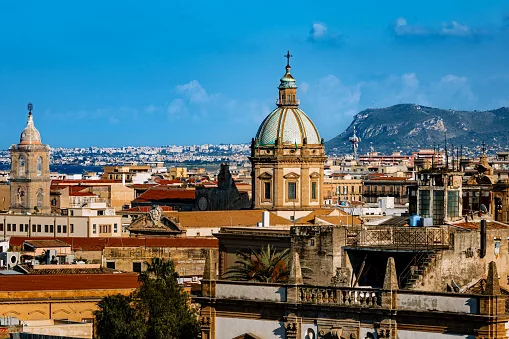
Sunlit Palermo skyline featuring a prominent church dome and dense historic architecture in Sicily, Italy/By: Nikada/Getty Images
Over three days, you can move from noisy historic markets and street-food stalls to Byzantine mosaics, Arab-Norman architecture, contemporary art spaces and neighbourhoods where Palermo’s different eras sit side by side.
The city’s Arab, Norman, Byzantine, Spanish and Italian influences are not confined to museums. They are visible in its buildings, heard in its markets and tasted in its food. UNESCO’s Arab-Norman Palermo listing recognises this unusual blend of Western, Islamic and Byzantine traditions, represented by monuments including the Royal Palace and Palatine Chapel, Palermo Cathedral, San Giovanni degli Eremiti and Santa Maria dell’Ammiraglio.
Here is how to spend 72 hours getting beyond Sicily’s postcard.
Day one: Eat your way through the old city
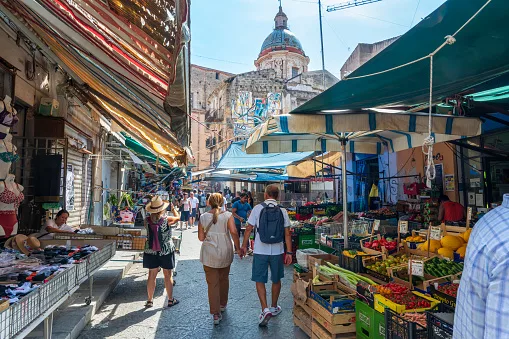
The Ballarò market in Palermo/By: Paolo Gagliardi/Getty Images
Start at Ballarò
Begin in the morning at Ballarò, Palermo’s oldest and largest historic market. The market stretches through the Albergheria district, where colourful stalls, narrow lanes, churches and old buildings create one of the city’s most atmospheric walks.
Ballarò has roots stretching back to the period of Arab rule, and the market remains a place where food and everyday life overlap. Listen for the abbanniate, the distinctive calls of vendors trying to attract customers, while browsing stalls piled with fruit, vegetables, spices and other ingredients.
This is also the place to start sampling Palermo’s famous street food.
Try panelle, chickpea fritters usually served in a bread roll, or crocchè, potato croquettes. More adventurous eaters can try pani câ meusa, a traditional sandwich filled with spleen, while stigghiola, grilled skewers made from offal, are another local speciality.
Palermo’s historic markets, including Ballarò, Capo, Vucciria and Borgo Vecchio, are closely tied to the city’s street-food culture.
Wander through Albergheria
After eating, slow down and explore Albergheria on foot.
The neighbourhood around Ballarò is filled with Baroque churches, small courtyards, old palazzi and streets that reveal Palermo’s more lived-in side. The Church of the Gesù, also known as Casa Professa, is one of the area’s standout examples of the city’s elaborate Baroque style.
Don’t rush from one attraction to the next. Part of Palermo’s appeal is simply looking up as you walk. Balconies, faded façades, carved doorways and unexpected pockets of colour often provide as much interest as the major sights.
See Palermo’s grand centre
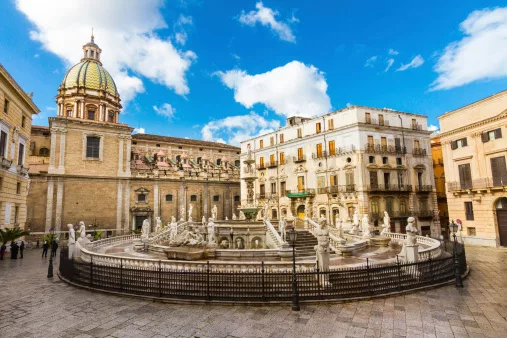
In the heart of Palermo’s loveliest square, Piazza Pretoria, stands this magnificent fountain, Fontana Pretoria, work of the Florentine sculptor Francesco Camilliani. Palermo, Sicily/By: kasto80/iStock
Continue towards the heart of the historic centre, where Quattro Canti marks the intersection of two of Palermo’s principal streets.
From here, walk towards Piazza Pretoria, dominated by its elaborate 16th-century fountain, before continuing to Palermo Cathedral.
The cathedral is part of Palermo’s UNESCO-listed Arab-Norman heritage and reflects the layers of history that define the city.
End with dinner around Vucciria
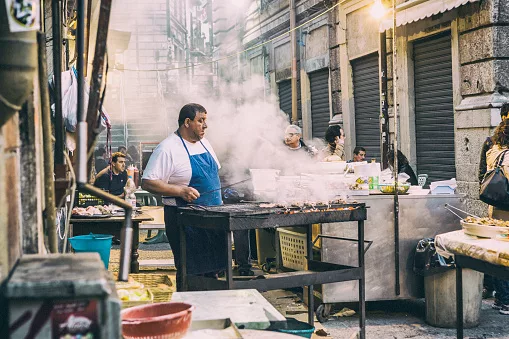
Market vendor preparing street food in La Vucciria, one of the historical markets of Palermo/By: Massimo Borchi/Atlantide Phototravel/Getty Images
As evening arrives, make your way towards Vucciria.
The historic market around Piazza Caracciolo has changed considerably over time, but it remains one of Palermo’s best-known meeting places. During the day it functions as a traditional market, while in the evening the area becomes a lively nightlife district with food, drinks and music.
It is a fitting end to a first day in Palermo: noisy, social and distinctly different from the polished version of Sicily found on postcards.
ALSO READ:
48 hours in Hualien, Taiwan: Where mountains meet the Pacific
Day two: Discover Palermo’s cultural layers
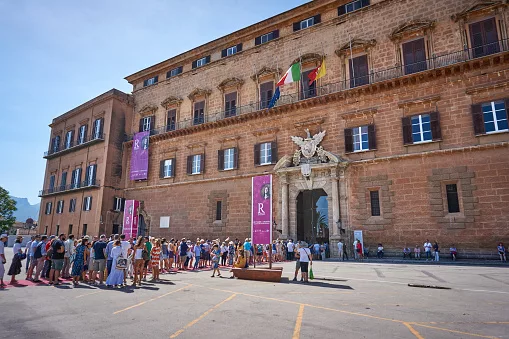
Tourists outside the Palazzo dei Normanni (Palace of the Normans) or Royal Palace, the oldest royal residence in Europe/By: Paolo Paradiso/Getty Images
Begin with the Palatine Chapel
Spend your second morning exploring Palermo’s Arab-Norman heritage.
Start at the Palazzo dei Normanni, or Norman Palace, and its extraordinary Palatine Chapel. The complex forms part of the UNESCO-listed heritage of Arab-Norman Palermo, a collection of monuments that demonstrate the cultural exchange between Western, Islamic and Byzantine traditions in medieval Sicily.
Inside the chapel, look closely at the mosaics and decorative details. Gold mosaics, geometric patterns and architectural features from different traditions make the building a useful introduction to Palermo’s history.
The point is not simply that Palermo was ruled by different peoples. Its architecture shows how those cultures influenced and absorbed elements from one another.
See San Giovanni degli Eremiti
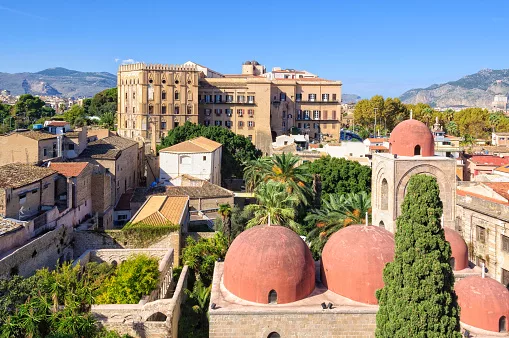
The famous red domes of the Church of St. John of the Hermits (San Giovanni degli Eremiti) and the Norman Palace (Palazzo dei Normanni)/By: lkonya/
iStock
Continue to San Giovanni degli Eremiti, recognisable by its distinctive red domes.
The church is another component of Palermo’s UNESCO-listed Arab-Norman heritage.
Its quiet garden provides a welcome contrast to the busy streets outside and makes it worth adding even if you are travelling at a leisurely pace.
Stop for a long Sicilian lunch
Palermo is not a city to rush through at lunchtime.
Look for a traditional trattoria and try dishes that go beyond the famous street food. Pasta with sardines, caponata, aubergine dishes, fresh seafood and local cheeses offer another perspective on Sicilian cooking.
Save room for something sweet. Cannoli and cassata are two of Sicily’s best-known desserts, while smaller pastries and granita provide plenty of alternatives.
Spend the afternoon in Kalsa
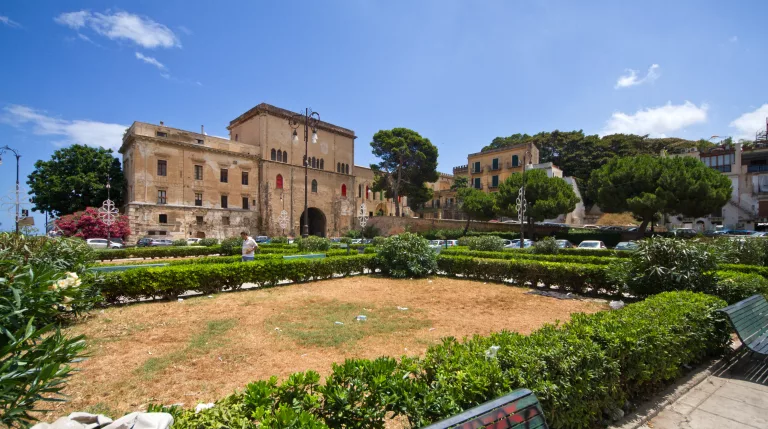
Kalsa, Palermo/trolvag/Wikimedia Commons
In the afternoon, head towards Kalsa, one of Palermo’s most atmospheric neighbourhoods.
The district has a particularly strong sense of the city’s cultural layering. Historic buildings, churches, galleries and contemporary creative spaces sit within streets shaped by centuries of change.
One of the most interesting stops is Palazzo Butera, an 18th-century palace restored as a cultural and exhibition space. Its collection brings together contemporary art, decorative arts, old masters and antiques, while parts of the building itself have become part of the experience.
The palace’s restored rooms include contemporary installations alongside historic architectural details, making it a natural fit for a Palermo itinerary that looks beyond the city’s conventional sightseeing circuit.
Walk towards Santa Maria dello Spasimo
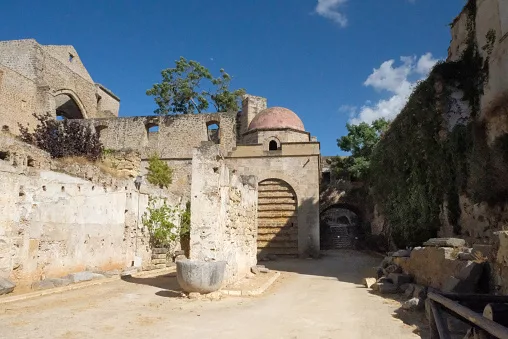
The ruins of Santa Maria dello Spasimo/By: ©Daniela White Images/Getty Images
Continue through Kalsa towards Santa Maria dello Spasimo, a roofless former church that has become one of Palermo’s atmospheric cultural spaces.
Its open interior, framed by old stone walls and the sky above, offers a different kind of architectural experience from the city’s grand cathedrals.
End the afternoon with a coffee or aperitivo before heading out for dinner.
Day three: Markets, art and Palermo after dark
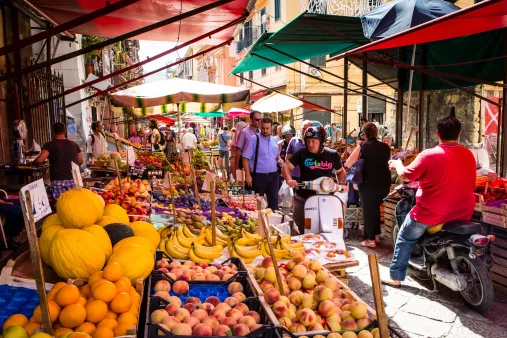
Capo market/By: Richard I’Anson/Getty Images
Explore the Capo market
Start your final morning at Capo, another of Palermo’s historic markets.
The market runs through the old Seralcadio district and is another place to experience the city’s food culture away from formal restaurants. The municipality lists Capo alongside Ballarò, Vucciria and Borgo Vecchio as Palermo’s historic markets.
Come hungry and graze as you walk. A few bites of street food, fresh fruit, pastries and coffee can easily become breakfast.
The appeal is less about finding one particular stall and more about watching the city get on with its day.
Take in Teatro Massimo
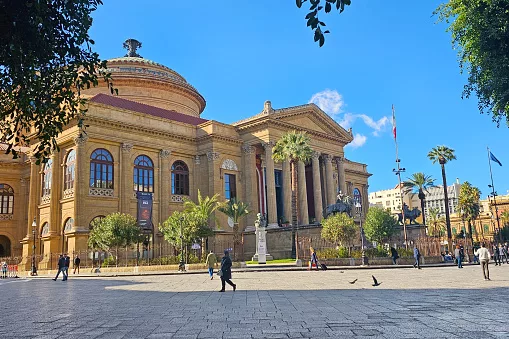
Teatro Massimo/By: Gelia/Getty Images
From Capo, walk towards Teatro Massimo, Palermo’s monumental opera house.
Even if you do not have time for a performance, Piazza Verdi and the building’s enormous scale are worth seeing. The theatre remains an important part of Palermo’s cultural life, hosting concerts, opera, dance and community events. Its 2026 summer programme, for example, included performances both inside the theatre and in different parts of the city.
From here, wander along Via Maqueda and take your time exploring the surrounding streets.
Look beyond the big sights
This is where it is worth leaving the itinerary slightly loose.
Step into small churches. Browse independent shops. Stop at a bakery. Sit in a square and watch people pass.
Palermo rewards curiosity because its most interesting details are often between the major attractions.
A street that appears unremarkable can suddenly open onto a Baroque courtyard. A weathered building might sit opposite a contemporary gallery. A food stall can tell you something about the city’s history more effectively than a museum label.
That constant collision between old and new is part of what makes Palermo distinctive.
Finish at Vucciria
Return to Vucciria for your final evening.
By now, the market should feel familiar, but the atmosphere will have changed again. The area becomes a social hub after dark, with people gathering for drinks, food and music.
Order one last Sicilian meal, find a table or simply join the evening crowd and let the city unfold around you.
After three days, Palermo’s postcard image may still be there: churches glowing in the afternoon sun, ornate palaces and Mediterranean streets.
But you will have seen the city underneath it too.
The markets, the food, the faded façades, the contemporary art and the cultural influences that overlap from one street to the next are what make Palermo more than a pretty Sicilian stopover. They are the reason the city is worth giving 72 hours to.\
Follow us on social media for more travel news, inspiration, and guides. You can also tag us to be featured.
Instagram | Facebook | Twitter | Spotify
ALSO READ: