
South Africa’s far north-western coastline is a place of striking contrasts. Cold Atlantic water meets an arid desert landscape, while old mining towns sit close to wetlands alive with birdlife.
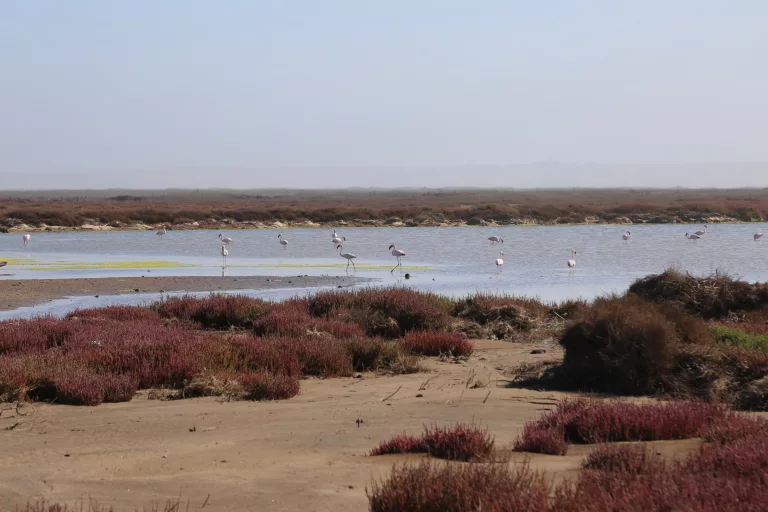
Orange River mouth, Alexander Bay, Northern Cape/yakovlev.alexey from Moscow, Russia/Wikimedia Commons
A day between McDougall’s Bay and Alexander Bay offers a glimpse of this unusual corner of the Northern Cape, from Port Nolloth’s copper and diamond history to the Orange River, where it reaches the Atlantic.
Morning: Start beside the Atlantic
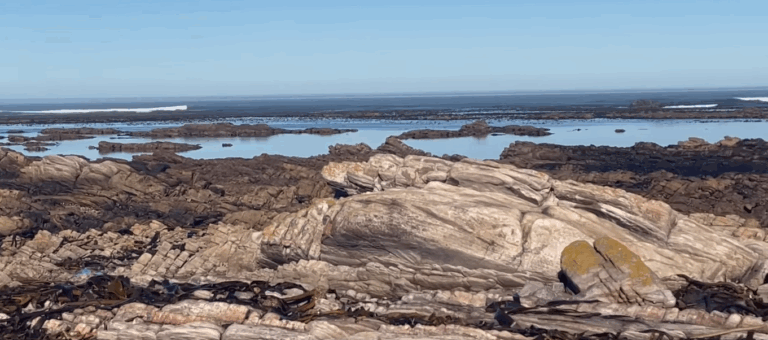
McDougall’s Bay/ Screenshot from a Facebook video
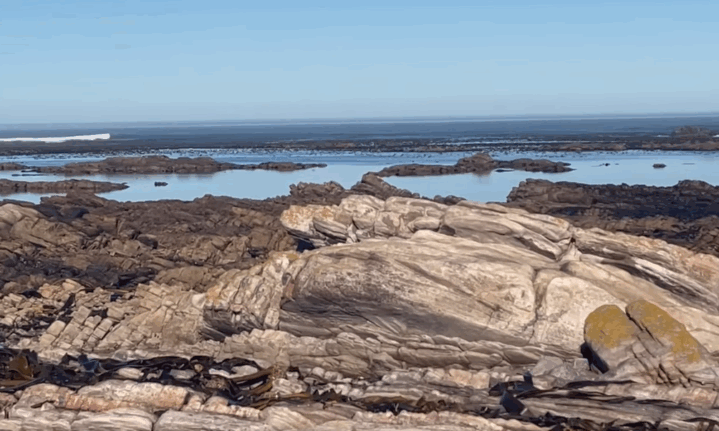
Take in McDougall’s Bay
Begin the day at McDougall’s Bay, just south of Port Nolloth. The coastal settlement is known for its sandy beach, relatively sheltered waters and relaxed holiday atmosphere.
The bay offers opportunities for walking, kayaking, boating and fishing, while the coastline is also a good place to appreciate the stark contrast between the Atlantic Ocean and the dry Namaqualand landscape. The water can be very cold, so swimming is less appealing than simply enjoying the shore and scenery.
Give yourself time for a walk along the beach before continuing towards Port Nolloth. The early part of the day is particularly well suited to photography, when the light picks out the textures of the sand, rocks and surrounding desert.
Look towards Port Nolloth’s working coast
Port Nolloth may appear quiet today, but its history is anything but uneventful.
The town developed in the 1850s as a harbour and railway junction for transporting copper from the mines around Okiep. When the copper trade declined, the discovery of alluvial diamonds along the coast in the 1920s brought another mining boom. Fishing and small-scale diamond recovery remain part of the area’s identity today.
The difficult coastline also has a maritime history. The shallow harbour entrance and offshore reefs made navigation challenging, with several vessels running aground over the years.
Late morning: See the history behind the landscape
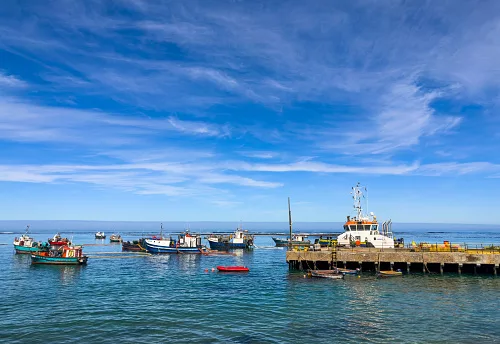
Marine diamond mining boats at a jetty in Port Nolloth/By: Sunshine Seed/Getty Images
Discover Port Nolloth’s mining history
Spend some time exploring Port Nolloth and its surroundings to understand how copper, diamonds and fishing shaped this remote coastal settlement.
The town was established in 1854 as a harbour and railway junction for the copper-mining industry before becoming associated with alluvial diamond mining. Today, fishing and small-scale diamond recovery remain part of its identity.
The town also has a fascinating maritime history, with the difficult coastline and shallow harbour contributing to a number of shipwrecks over the years. The former Port Nolloth Museum contained artefacts connected to these wrecks, as well as objects documenting the area’s copper and diamond-mining past. The museum is currently closed following the death of its long-time curator, George Moyses, in 2022.
Midday: Follow the coast north

The now abandoned terminal building of Alexander Bay airport/Emilemyburgh/Wikimedia Commons
Drive towards Alexander Bay
Continue north towards Alexander Bay, where the landscape becomes increasingly remote and desert-like.
The two destinations are roughly 80km apart, making the journey manageable within a day, although the point of the drive is as much the landscape as the destination. Expect wide-open spaces, sparse vegetation and the sense of isolation that makes this section of the Northern Cape so distinctive.
The coastline forms part of the Diamond Coast, a region whose history is closely tied to alluvial diamond mining. Alexander Bay itself developed after diamond discoveries near the Orange River mouth in the 1920s, eventually becoming a major centre of the state’s diamond-mining operations.
Keep an eye out for the subtle changes in the landscape as the road approaches the river. The dry surroundings make the appearance of the Orange River feel particularly unexpected.
Afternoon: Discover Alexander Bay
Explore the town’s mining history
Alexander Bay’s story is closely connected to diamonds.
Rich deposits were discovered in the area in the 1920s, and government mining operations followed soon afterwards. The town was built around this industry, leaving behind a landscape of old mining infrastructure, roads and workings.
If available during your visit, a local mine or heritage tour offers a deeper look at this history. The Richtersveld Local Municipality lists mine tours, the Alexkor Alluvial Diamond Mine and Museum and other heritage experiences among the area’s attractions.
The Alexkor Alluvial Diamond Mine and Museum also contains artefacts from the old mining community, along with fossils found during mining operations.
Look for life in the desert
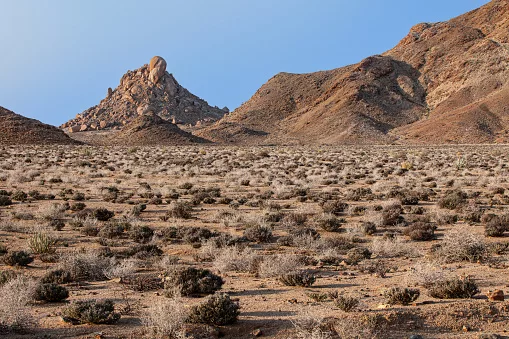
Die Toon (The Toe). This rock is situated to the northeast of Tatasberg in the Richtersveld. It refers to a little “kopje” (hill) topped by an enormous boulder that resembles a toe. Photographed in the UNESCO Richtersveld Cultural and Botanical Landscape/By: Attie Gerber/iStock
The surroundings may look barren at first glance, but the wider Richtersveld is famous for its remarkable desert biodiversity.
The nearby |Ai-|Ais/Richtersveld landscape contains an extraordinary diversity of succulent plants, while early-morning Atlantic fog provides moisture that helps sustain plants and animals in an otherwise extremely dry environment. SANParks describes the region as home to a remarkable range of small reptiles, birds and mammals.
This is one of the area’s great surprises: the desert is not empty. It simply rewards slower observation.
Late afternoon: Follow the Orange River
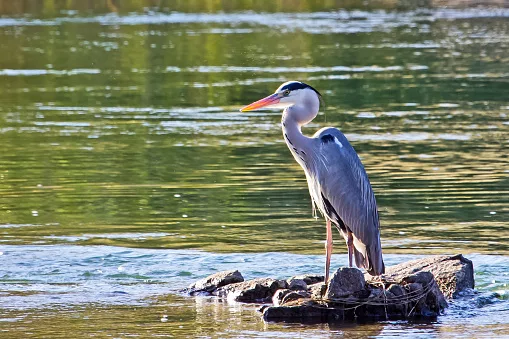
Tall Grey Heron standing on rock in Orange River waiting for fish/By: geoffsp/
iStock
Visit the Orange River mouth
End the afternoon at the Orange River mouth, where one of southern Africa’s great rivers reaches the Atlantic.
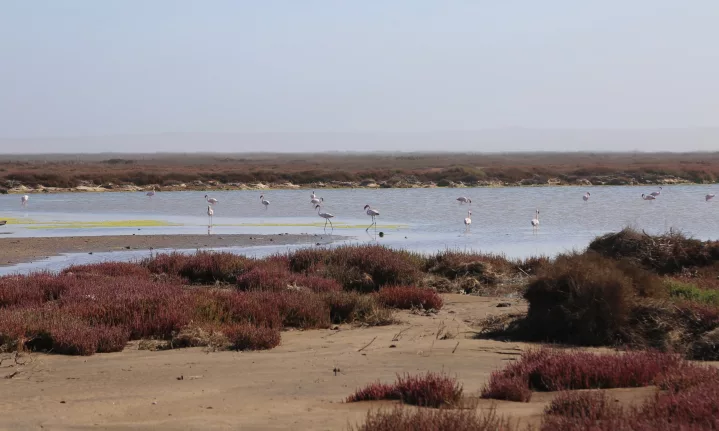
The transition from desert to wetland is striking. Shallow waters, mudflats, saltmarshes and river channels create habitat for a wide range of waterbirds. The Orange River Mouth is recognised as a Ramsar Wetland of International Importance and is also an important bird area.
The wetland can support thousands of waterbirds, including species such as Cape cormorants, Grey Herons, Damara terns, flamingos and migratory waders.
Bring binoculars if you have them and give yourself time to watch the river rather than simply stopping for a photograph.
Respect the wetland
The Orange River mouth is an environmentally sensitive area, so visitors should stick to permitted routes and avoid disturbing birds, particularly around roosting and nesting areas. Some sections are restricted because of sensitive habitat and active or former mining areas.
It is also worth remembering that this is not a conventional seaside attraction. Conditions around the river mouth can change, and access to certain areas may require permission or a local guide.
Sunset: Watch two landscapes meet
Stay for the final light
If time allows, stay near the river mouth until late afternoon.
There are few places where the contrast between desert and water is quite so dramatic. Behind you is the dry landscape of the Richtersveld; ahead is the Atlantic, with the Orange River cutting through the middle.
As the light softens, the landscape takes on a completely different character. The river, wetlands and desert become less about individual attractions and more about the remarkable ecosystem they create together.
Planning your 24 hours
Getting there
McDougall’s Bay is next to Port Nolloth on the Northern Cape’s north-western coast. Alexander Bay lies farther north near the Orange River mouth and the Namibian border.
This itinerary works best as part of a longer Northern Cape road trip rather than as a standalone day trip from a major city. Distances are substantial and services become increasingly limited as you travel north.
What to bring
Pack water, snacks, sun protection, comfortable walking shoes and binoculars. Layers are useful because coastal conditions can be cool and misty, while inland areas can become considerably warmer.
Check local conditions before setting out, particularly if you plan to explore areas around the Orange River mouth or join a mine or heritage tour.
A different side of the Northern Cape
McDougall’s Bay and Alexander Bay offer something more unusual than a conventional beach escape. Within a single day, you can move from the cold Atlantic shoreline to a historic copper and diamond port, through stark desert scenery and finally to a wetland where the Orange River meets the sea.
Follow us on social media for more travel news, inspiration, and guides. You can also tag us to be featured.
Instagram | Facebook | Twitter | Spotify
ALSO READ:
The road to Rhodes: South Africa’s highland drive through the Eastern Cape