


Constantine is a city that seems to defy geography. Built across a rocky plateau in north-eastern Algeria, it rises above the deep Rhumel Gorge, with bridges linking neighbourhoods separated by sheer cliffs. From suspension bridges and Ottoman-era architecture to traditional food and Andalusian music, the city offers a North African city break with a character all its own.
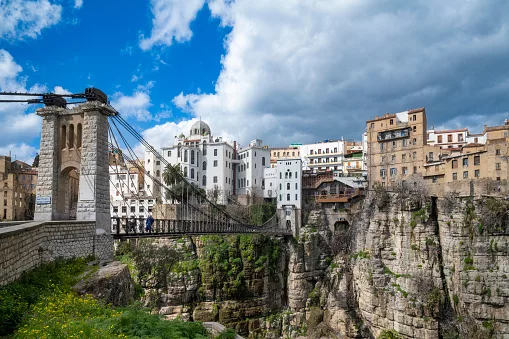
Historic suspension bridge spanning the canyon of the Rhumel Gorge with the city of Constantine in the background/By: Nirian/Getty Images
Known as the City of Bridges, Constantine has a history stretching back to ancient Cirta, when it was an important centre of the Numidian kingdom. Roman rule, later Islamic influences, Ottoman governance and French colonialism have all left their mark on its architecture and culture.
Three days allow enough time to explore its dramatic landscape, wander through its historic streets and discover the traditions that continue to shape daily life. Here’s how to spend 72 hours in one of Algeria’s most distinctive cities.
Day one: Discover the city of bridges
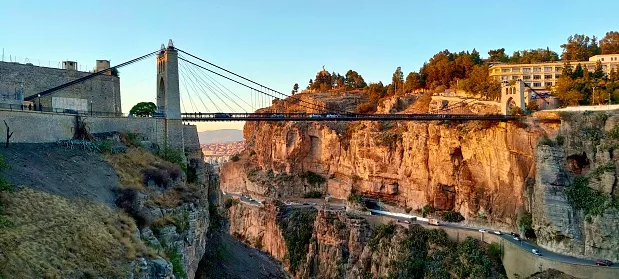
Sidi M’Cid suspension bridge in Constantine bathed in the golden light of sunset. The bridge spans the dramatic cliffs over the deep Rhumel River gorge/By: hocine haroun/iStock
Walk above the Rhumel Gorge
Begin with the feature that makes Constantine instantly recognisable: its bridges. The city is divided by the Rhumel Gorge, a deep natural ravine that cuts through the urban landscape. Rather than being confined to one historic district, Constantine spreads across the rocky edges, with bridges connecting its different sections.
Start at the Sidi M’Cid suspension bridge, one of the city’s most celebrated landmarks. Suspended high above the gorge, it offers sweeping views of the cliffs and the buildings perched along their edges. Looking down reveals the scale of the ravine, while looking back towards the city shows how closely its architecture follows the contours of the rock.
Continue towards the Sidi Rached Bridge, another impressive crossing that demonstrates how engineering has helped shape the city. Each bridge has its own character, and seeing several provides a better understanding of how Constantine functions as a living city rather than simply a collection of viewpoints.
Take your time along the crossings, stopping at designated viewpoints to appreciate the scenery. The gorge is spectacular, but it is also part of the city’s everyday environment, so follow barriers and avoid getting too close to exposed edges.
Explore the old city
After taking in the bridges, head into Constantine’s historic centre. The old city, with its narrow streets, shops and traditional buildings, offers a different perspective from the grand views above the gorge.
Allow time to walk without rushing between attractions. Browse local shops, notice the details of older façades and watch the rhythm of daily life unfold around you. The historic centre reflects Constantine’s long history as a regional hub, with architectural influences that reveal different periods of its past.
The city is not a perfectly preserved museum. Historic buildings sit alongside modern streets and everyday businesses, creating a place where heritage and contemporary Algerian life coexist.
End the day with a panoramic view
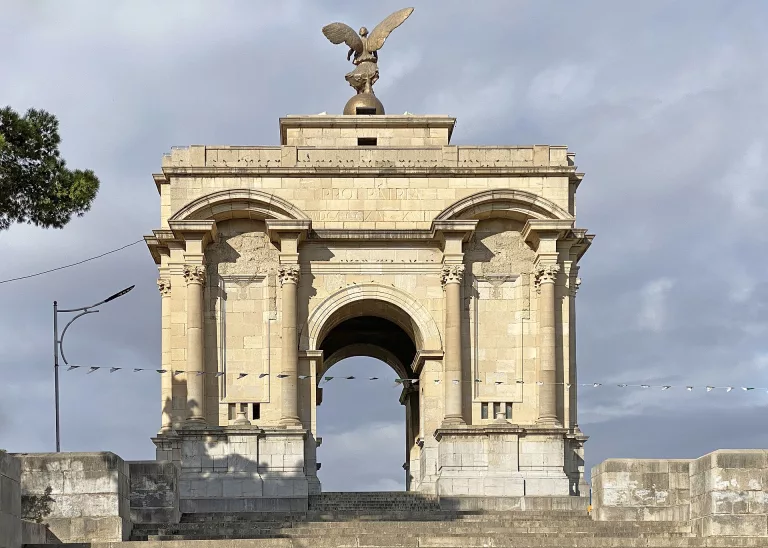
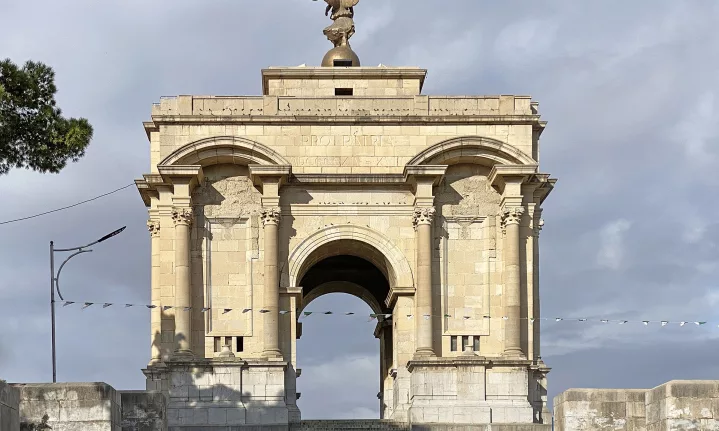
Monument aux morts (Constantine)/Bernard Gagnon/Wikimedia Commons
As afternoon light softens, make your way to a viewpoint overlooking the gorge. The Monument aux Morts area is known for its elevated panoramas and offers another way to appreciate the relationship between the city and its dramatic setting.
Give yourself time to take in the bridges from a distance. From above, their scale and position become clearer, and the city begins to resemble a series of stone neighbourhoods suspended between sky and ravine.
ALSO READ:
Day two: Step into Constantine’s history
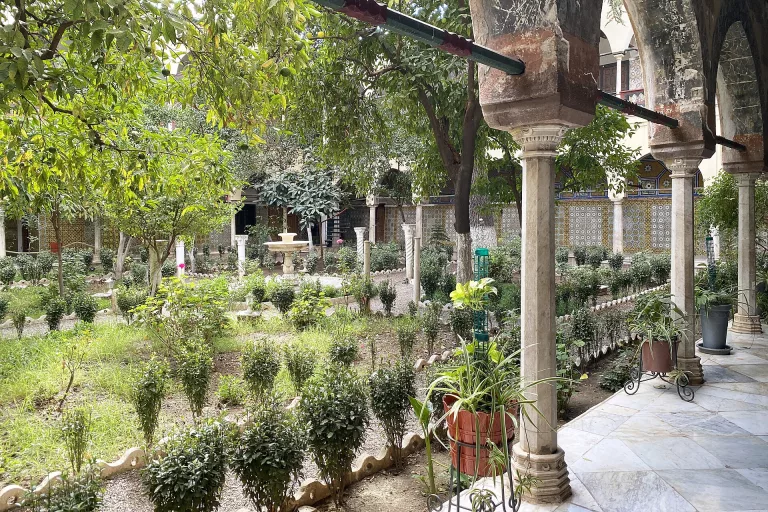
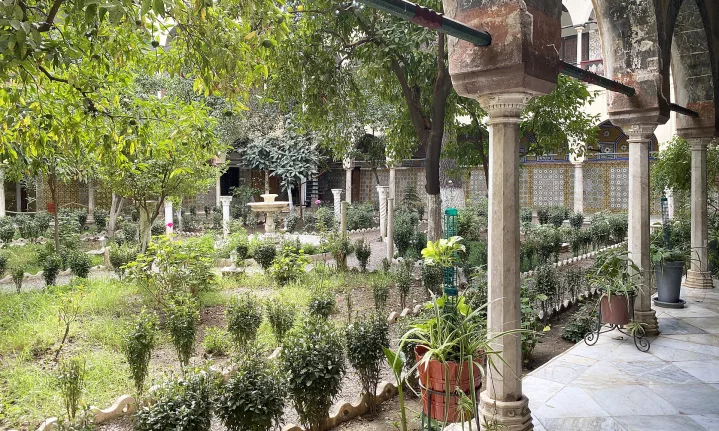
Gardens of Ahmed Bey Palace/Bernard Gagnon/Wikimedia Commons
Visit Ahmed Bey Palace
Dedicate the morning to Ahmed Bey Palace, one of Constantine’s most important historic buildings. The 19th-century residence belonged to Ahmed Bey, the city’s last Ottoman-era ruler before French forces took control of Constantine in 1837.
The palace offers a glimpse into the city’s political and artistic history. Its courtyards, arcades and decorative interiors reflect a period when architecture communicated status, authority and cultural connections across the Mediterranean and North Africa.
Look beyond the building’s grand appearance to the details: painted surfaces, ornamental patterns and the arrangement of rooms around open courtyards. These features help tell the story of a city that was connected to wider artistic and political traditions while retaining a distinct regional identity.
Check opening hours and visitor access before setting out, as arrangements at heritage sites can change.
Discover ancient Cirta at the Cirta Museum
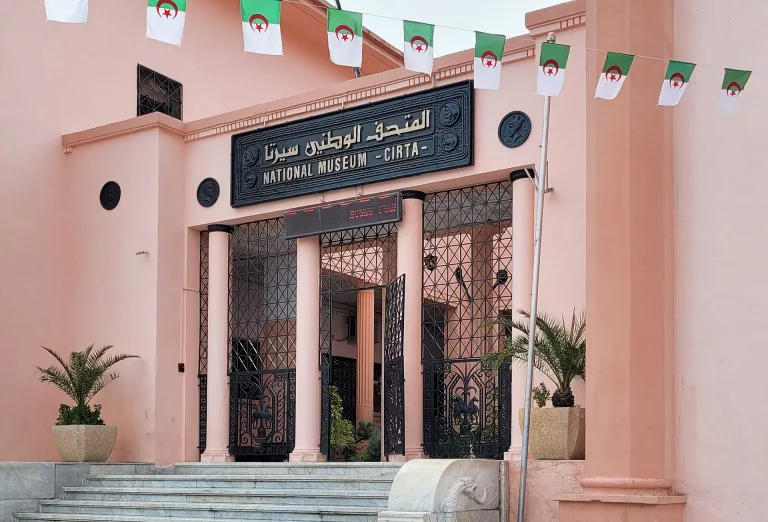
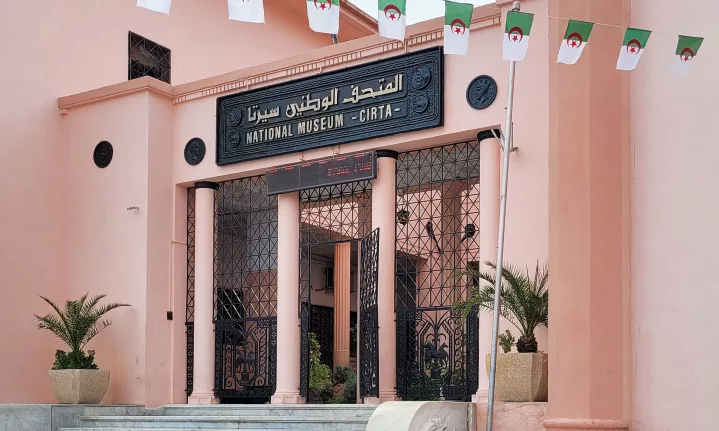
Cirta National Museum/Bernard Gagnon/Wikimedia Commons
Continue to the Cirta Museum to explore the region’s archaeological heritage. Constantine was once known as Cirta and played an important role in the ancient Numidian kingdom before becoming part of the Roman world.
The museum’s collections help place the city’s surviving architecture within a much longer timeline. Archaeological objects and historical displays offer context for the civilisations that shaped the surrounding region, making this a worthwhile stop for travellers interested in the history behind the scenery.
A visit also provides a useful contrast with the previous day’s bridge walks. Constantine’s appeal is not only its dramatic geography, but also the layers of history that have accumulated on this rocky plateau over centuries.
See the Emir Abdelkader Mosque
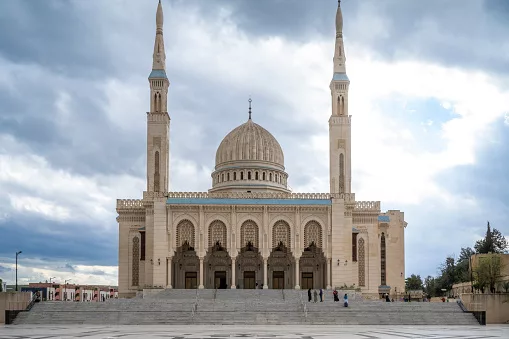
Front view of the Emir Abdelkader Mosque with its large central dome and twin minarets dominating the skyline of Constantine/By: Nirian/Getty Images
Make time to see the Emir Abdelkader Mosque, one of Constantine’s most prominent modern religious landmarks. Its impressive scale and distinctive architecture offer a contrast to the older buildings found in the historic centre.
The mosque is also a reminder that Constantine’s heritage is not limited to archaeological remains and Ottoman palaces. Religious institutions remain important parts of the city’s cultural and social life.
Visitors should be respectful of worshippers, dress modestly and confirm whether non-worshippers can enter any areas. Even when viewed from outside, the building is an impressive addition to the city’s architectural landscape.
Wander through the medina at your own pace
Leave the rest of the afternoon open for the old city’s smaller streets and neighbourhoods. This is an opportunity to revisit places that caught your attention on the first day, browse shops or pause at a café.
Constantine rewards a slower approach. Rather than attempting to cover every landmark, allow space for the unexpected: a striking doorway, a view between buildings or a lively local square.
Day three: Experience Constantine’s food and culture

Fried Chicken Over Chakhchoukha/By: Sergio Amiti/Getty Images
Taste the flavours of eastern Algeria
Food is an essential part of understanding a destination, and Constantine offers an opportunity to explore the broader culinary traditions of eastern Algeria.
Look for chakhchoukha, a regional favourite made with torn flatbread or pieces of prepared dough served with a richly flavoured sauce, often accompanied by meat. Another dish worth asking about is trida, made with fine pieces of pasta and commonly served with chicken or meat in a savoury sauce.
Menus and recipes vary between households and restaurants, so ask what is prepared locally rather than expecting every establishment to serve the same specialities.
Make time for traditional pastries and coffee, too. A meal in a neighbourhood restaurant or a relaxed stop at a local café can reveal as much about a place as a visit to one of its major monuments.
Listen for the sounds of Malouf
Constantine is one of Algeria’s important centres of malouf, a classical musical tradition associated with Andalusian musical heritage in the Maghreb. Its repertoire and performance traditions reflect centuries of cultural exchange across the Mediterranean.
If a concert or cultural performance coincides with your visit, it is worth making time for it. Ask locally about performances, cultural venues or events, as schedules may vary.
Music offers a way to experience Constantine beyond its architecture. It connects the city to a wider cultural history while remaining part of its living identity.
Leave room for everyday discoveries
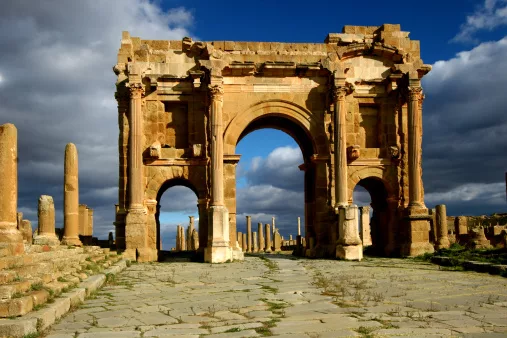
Roman ruins of Timgad, late afternoon at Trajan’s Arch/By: Photo ©Tan Yilmaz/Getty Images
Use your final afternoon to explore at a gentler pace. Return to a favourite viewpoint, browse the old city’s shops or spend time in a café observing the flow of daily life.
The temptation in a city with so many striking landmarks is to keep moving. Yet Constantine’s atmosphere emerges as much from the ordinary details as from its famous bridges: conversations in the streets, the sounds of the city echoing across the gorge and the contrast between bustling neighbourhoods and sudden, far-reaching views.
If you have extra time, the surrounding region also offers opportunities to explore Algeria’s ancient past. The Roman archaeological sites of Timgad and Djémila are notable extensions for a longer itinerary, although each requires separate transport planning and is better treated as an additional excursion than squeezed into this final afternoon.
Planning your trip to Constantine
-
When to visit
Spring and autumn are good seasons to consider for a walking-focused visit, with generally more comfortable conditions for exploring the city and its viewpoints. April to June and September to October are useful starting points when planning, although conditions vary.
Summer can be hot, particularly when walking between exposed viewpoints, while winter may bring cold weather and rain. Check the forecast before travelling and wear shoes suitable for steep streets, stairs and uneven surfaces.
-
Getting around
Constantine has an airport and connections by road and rail to other parts of Algeria. Once in the city, walking is one of the best ways to experience the historic centre and its bridges, although the steep terrain can make distances more demanding than they appear on a map.
Plan your route around the city’s changes in elevation, and use local transport or a taxi for longer transfers when necessary. A local guide can also help explain the history of the monuments and navigate the historic centre.
-
How long to stay
Three days is a comfortable amount of time to combine the major bridges, historic attractions, food and cultural experiences without rushing. Travellers with a strong interest in archaeology could extend their stay to explore more of eastern Algeria.
What to keep in mind
Check museum opening times, palace access and cultural event schedules before your visit. Carry water when walking, keep to designated paths near the gorge and use normal precautions in busy areas.
Travellers should also check current Algerian visa requirements, entry conditions and travel advice for their nationality before booking.
Constantine may first capture your attention with its bridges, but its appeal extends well beyond them. Its history, regional cuisine, musical heritage and everyday streets reward visitors who take time to explore. Spend 72 hours here, and you will discover a city defined not only by the dramatic landscape beneath it, but by the culture and life built across it.
Follow us on social media for more travel news, inspiration, and guides. You can also tag us to be featured.
Instagram | Facebook | Twitter | Spotify
ALSO READ:
Inside Chile’s marble caves, where water carved a world of stone


.jpg)

