




Scientists studying Jonathan, the world’s oldest known living land animal, have identified genetic and epigenetic features that could help explain his remarkable lifespan.
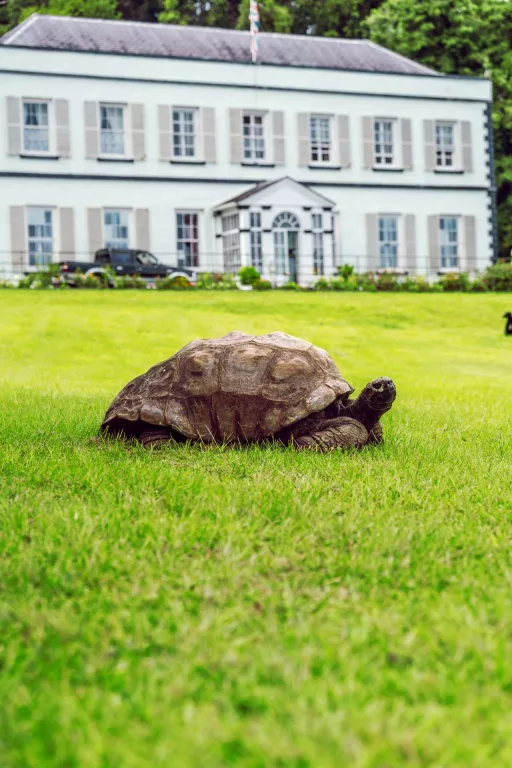
Image: Supplied
Jonathan has lived through almost two centuries of human history. Now, the giant tortoise’s extraordinary longevity is offering scientists a rare opportunity to investigate how some animals resist the effects of ageing.
Believed to have hatched around 1832, Jonathan is an Aldabra giant tortoise who lives on the South Atlantic island of St Helena. At approximately 194 years old, he has far outlived the typical lifespan of his species, which can exceed 100 years. His remarkable age has made him the subject of new research into the biological mechanisms that may allow certain animals to live exceptionally long lives.
Investigating the secrets of Jonathan’s longevity
According to New Scientist, an international team of researchers examined Jonathan’s genetic material to better understand the biological processes associated with ageing. Their findings, published in the journal Science Advances in October 2026, offer clues about how his cells may have retained some important functions despite his advanced age.
The researchers investigated both his genome, which contains his DNA, and his epigenome. The latter refers to chemical markers that influence how genes are switched on or off without changing the underlying DNA sequence. These markers can change as an organism ages. By examining them, scientists can investigate how biological systems become less stable over time and identify patterns that might be associated with healthier ageing.
One of the most intriguing findings involved genes linked to mitochondrial function. Mitochondria are structures inside cells that help produce the energy required for them to function. Their deterioration is associated with ageing and a range of age-related diseases.
In Jonathan, certain chemical patterns associated with mitochondrial function appeared remarkably similar to those found in much younger tortoises. Researchers believe this relative stability could help explain part of his exceptional longevity.
What his DNA reveals about ageing
The study also identified genetic variations associated with several biological processes involved in maintaining health over time. These include DNA repair, metabolism, immune function and mechanisms that help protect against cancer.
Such processes are important because cells accumulate damage as organisms grow older. The ability to repair that damage and maintain essential cellular functions may influence how an animal ages and how long it survives.
Jonathan’s findings could therefore contribute to a broader understanding of longevity across the animal kingdom. Scientists are interested in whether some of the biological mechanisms observed in exceptionally long-lived species could eventually inform research into human ageing.
However, the results do not mean that researchers have discovered a single gene responsible for Jonathan’s lifespan. Nor do they establish that his genetic characteristics alone account for his extraordinary age.
The research is based on a very small comparison group, and further investigation is needed to determine whether the patterns identified in Jonathan are common among giant tortoises or unusually pronounced in this individual.
A remarkable life on St Helena
Jonathan arrived on St Helena in 1882 and has since become one of the island’s best-known residents. He lives on the grounds of Plantation House, the official residence of the island’s governor.
Although he has experienced age-related difficulties, including blindness, he continues to receive care from his keepers. His daily routine and long life also highlight the importance of animal welfare and ongoing veterinary attention when caring for exceptionally old animals.
For researchers, Jonathan represents a rare opportunity to study an animal whose lifespan extends far beyond that of most mammals and many other vertebrates. Understanding how his cells have maintained certain functions for so long could help scientists identify new questions about the biology of ageing.
For now, his longevity remains only partly understood. But the research suggests that the answer may lie not simply in how long an animal lives, but in how effectively its cells preserve the processes that keep them functioning over time.
Follow us on social media for more travel news, inspiration, and guides. You can also tag us to be featured.
Instagram | Facebook | Twitter | Spotify
ALSO READ: