



A Florida fish collector made an unexpected discovery in 1996 when he noticed staghorn coral growing on his live-rock farm. Nearly three decades later, that discovery has helped inspire an underwater farming method used to restore damaged coral reefs.
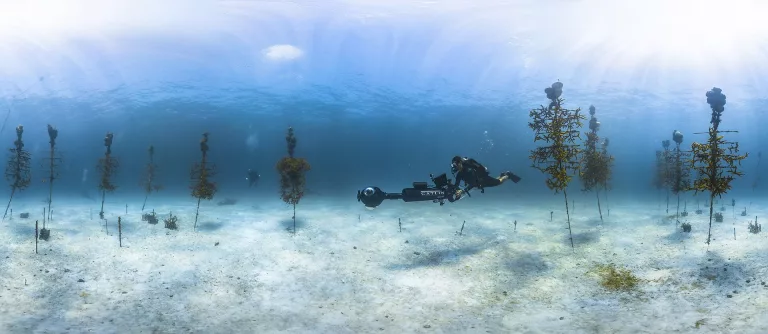
Coral Nursery , Florida / National Marine Sanctuaries / Wikimedia Commons / Illustrative purposes only
Ken Nedimyer, who worked in the tropical fish and aquarium trade, began experimenting with broken coral fragments. He found that they could grow into larger colonies when suspended underwater, leading to the development of the Coral Tree nursery system.
How coral trees work
The concept is simple. Coral fragments are suspended from branching structures anchored to the seafloor, allowing water to circulate around them while keeping them away from some of the algae and sediment found closer to the seabed.
As the fragments grow, conservationists transplant them onto damaged reefs. The method allows nurseries to raise large numbers of corals before returning them to their natural habitat. Nedimyer’s work eventually led to the Coral Restoration Foundation, which uses coral nurseries to support restoration efforts in the Florida Keys.
Why Florida’s reefs need restoring
Florida’s coral reefs have suffered from disease, habitat loss and rising ocean temperatures. In 2023, an unprecedented marine heatwave caused devastating losses.
Research published in Science in October 2025 found that between 97.8% and 100% of staghorn and elkhorn coral colonies had died in the Florida Keys and Dry Tortugas during the heat event.
These branching corals provide important habitat for marine life. Their decline affects the wider reef ecosystem, leaving fewer places for fish and other marine species to shelter and feed.
Protecting coral for the future
Growing more coral is only part of the challenge. Conservationists are also working to preserve genetic diversity, which could help coral populations withstand disease and environmental change.
Maintaining different coral genotypes across nurseries and partner facilities helps protect valuable genetic material from being lost in a single disaster.
However, coral trees cannot shield colonies from prolonged marine heatwaves. Even corals successfully grown in nurseries must survive once they are returned to the reef. The method offers a practical way to rebuild damaged habitats, but lasting recovery also depends on addressing the environmental pressures driving coral decline.
What began as an observation on a Florida fish farm has become an important tool in reef restoration. The challenge now is ensuring that the corals conservationists work so hard to grow can survive in warming seas.
Source (Earth.com)
Follow us on social media for more travel news, inspiration, and guides. You can also tag us to be featured.
Instagram | Facebook | Twitter | Spotify
ALSO READ:
Satellite research reveals where elephants affect Kruger trees most