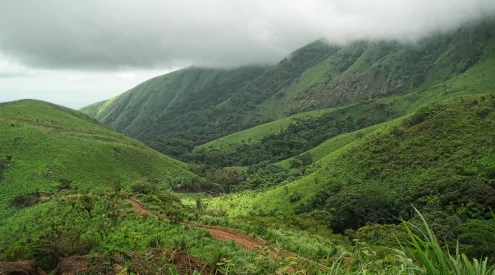





Hidden among the green landscapes of western Kenya, Thimlich Ohinga is a remarkable archaeological site where towering stone walls tell the story of communities that lived, worked and protected their livestock centuries ago. Built without mortar or cement, this ancient settlement reveals an impressive understanding of construction and communal life.
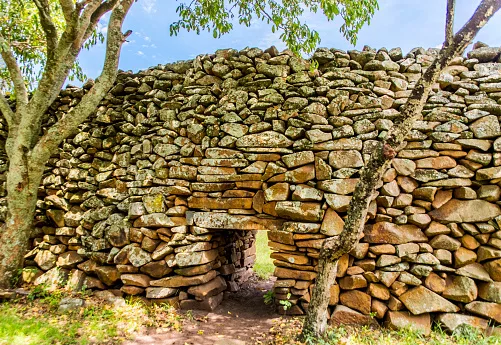
Thimlich Ohinga, a historic 15th-century Iron Age village enclosure/By: Jennifer Watson/iStock
Located near Lake Victoria, Thimlich Ohinga offers a fascinating glimpse into Kenya’s past and is one of Africa’s most distinctive examples of traditional dry-stone architecture.
A settlement built to last
Thimlich Ohinga was probably established in the 16th century, although its enclosures continued to be used and maintained by successive communities for centuries. The site became a UNESCO World Heritage Site in 2018 in recognition of its cultural and archaeological importance.
The name is associated with the Dholuo language and is commonly translated as “a frightening dense forest”. The word ohinga refers to a settlement or enclosure, reflecting the site’s distinctive character.
Its stone walls once helped protect communities and their livestock, while the settlement’s layout reflected relationships between families and wider social groups.
How the stone walls were built
No mortar, just careful engineering
One of the most striking features of Thimlich Ohinga is its construction. Builders selected stones of different shapes and sizes, fitting them together in an interlocking arrangement without cement or mortar.
The walls used a three-part design, with outer and inner layers supported by a middle section of smaller stones. This technique helped create stable structures that could withstand the elements.
Some walls reach approximately 4.5 metres high and about a metre thick, an impressive achievement considering the materials and techniques available to the builders.
More than a defensive wall
The settlement contains several large enclosures, including Kochieng, Kakuku, Koketch and Koluoch. Within them, archaeologists have identified smaller enclosures, traces of former houses, livestock areas and evidence of craft activities.
These features suggest that Thimlich Ohinga was more than a defensive stronghold. It was an organised community where people lived, raised animals and carried out everyday activities.
What archaeology reveals about its people
Thimlich Ohinga provides important evidence of migration, cultural exchange and changing settlement patterns around the Lake Victoria Basin.
Different communities of varying linguistic backgrounds occupied and adapted the site over time. Archaeological evidence, including pottery and traces of ironworking, helps researchers understand how people used local resources and interacted with neighbouring groups.
The settlement also demonstrates how communities organised themselves without relying on a single central authority. Social relationships, family lineages and shared responsibilities helped shape the way people lived and maintained their surroundings.
Visiting Thimlich Ohinga today
For travellers interested in Kenya’s history beyond its famous wildlife reserves, Thimlich Ohinga offers a rewarding cultural experience. The site lies approximately 46 kilometres northwest of Migori town, in western Kenya, near the Lake Victoria region.
Visitors can walk among the surviving stone enclosures, observe the unusual construction techniques and imagine the daily life that once unfolded behind the walls. The surrounding vegetation adds to the sense of stepping into a place shaped by centuries of human activity.
The site is managed by the National Museums of Kenya, which works to protect its archaeological remains and cultural significance. Visitors should respect the structures, follow site guidance and avoid disturbing stones or other archaeological features.
Protecting a remarkable piece of Kenya’s past
Thimlich Ohinga is a reminder that extraordinary architecture does not always require elaborate tools or modern materials. Through careful stone placement, shared knowledge and generations of maintenance, its builders created a settlement that has survived for centuries.
Today, preserving the site means protecting not only its walls but also the history, traditional knowledge and community connections they represent.
For anyone exploring Kenya’s cultural heritage, Thimlich Ohinga offers a fascinating journey into a past that remains visible in every carefully placed stone.
Follow us on social media for more travel news, inspiration, and guides. You can also tag us to be featured.
Instagram | Facebook | Twitter | Spotify
ALSO READ: