


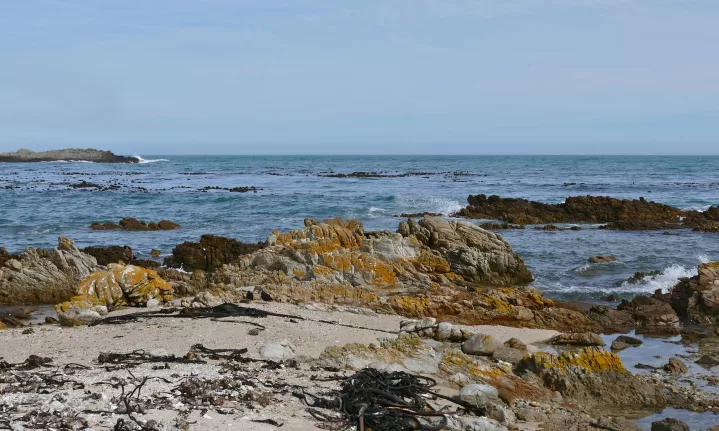
Situated along the Western Cape’s Whale Coast, approximately two hours from Cape Town, Gansbaai is surrounded by a landscape shaped by the ocean, centuries of human history and remarkable biodiversity.
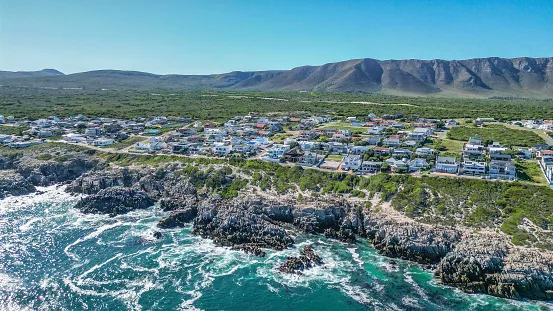
Aerial drone view of Gansbaai/By: Shams/iStock
Whether exploring archaeological sites, following coastal trails or discovering efforts to protect endangered marine life, there are plenty of reasons to spend more time here.
From ancient caves and rugged coastal walks to indigenous forests, fynbos landscapes and marine conservation projects, its lesser-known attractions reveal a destination worth exploring beyond the water.
Step back in time at Klipgat Cave
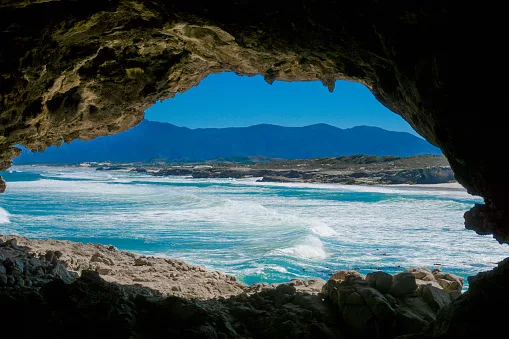
Klipgat Cave in De Kelders in Walker Bay Nature Reserve/By: Shams/iStock
Discover one of the Overberg’s important archaeological sites
One of Gansbaai’s most fascinating attractions is Klipgat Cave, a coastal archaeological site offering a glimpse into some of the earliest chapters of human history.
Positioned along the limestone cliffs of De Kelders, the cave contains evidence of human occupation dating back approximately 65,000 to 85,000 years. Archaeological discoveries have provided important insights into the lives of Middle Stone Age communities, including their use of marine resources and the surrounding environment.
Today, visitors can reach the cave via a boardwalk and steps leading down towards its entrance. The site features two chambers, with a circular boardwalk helping visitors explore its historical significance. Its position also offers impressive views across Walker Bay.
The surrounding cliffs provide opportunities for land-based whale watching during the southern right whale migration season, when the animals visit the sheltered waters of Walker Bay to calve and nurse their young.
Explore the wild coastline of Walker Bay
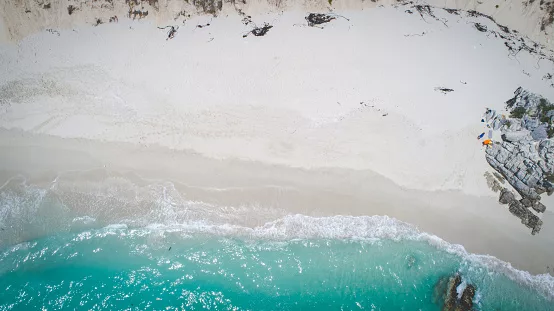
Aerial view over the rocks in the Walker bay reserve in Gansbaai/By: Dewald Kirsten/Getty Images
Follow coastal paths, discover secluded beaches and look out for whales
The coastline around Gansbaai is a major attraction in its own right. Rugged limestone formations, sandy beaches, rock pools and sweeping ocean views create a landscape best explored on foot.
Walker Bay Nature Reserve is an excellent starting point for discovering the region’s natural beauty. Stretching from the Klein River estuary to De Kelders, the reserve encompasses beautiful coastal scenery, diverse birdlife and important marine habitats.
Visitors can enjoy scenic walks along the coastline, with opportunities for birdwatching and whale spotting. During the southern right whale season, generally between June and November, the sheltered waters of Walker Bay become an important breeding and calving ground for these marine mammals.
Further along the coast, Pearly Beach offers a quieter seaside experience, with long stretches of sand suited to leisurely walks and uninterrupted ocean views.
ALSO READ:
Discover the Cape Floral Kingdom
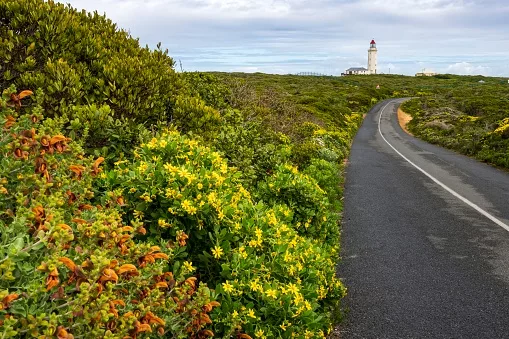
Wild flowers and the road to Danger Point Lighthouse on the southern point of Walker Bay near Gansbaai/By: Roger de la Harpe/Getty Images
Walk among ancient forests and indigenous fynbos
The landscapes surrounding Gansbaai extend well beyond its beaches. Inland, the region’s fynbos-covered hills, mountain slopes and pockets of indigenous forest offer another reason to explore the Overberg.
One of the area’s best-known conservation destinations is Grootbos Private Nature Reserve. Overlooking Walker Bay, the reserve protects an extraordinary stretch of Cape Floral Kingdom vegetation, including diverse fynbos species and ancient milkwood forests.
Guided botanical walks and nature experiences introduce visitors to the region’s plant life, highlighting the importance of conserving one of the world’s richest floral kingdoms. Grootbos also combines biodiversity conservation with community development through its foundation.
For those wanting a more immersive experience, the Fynbos Trail offers a multi-day hiking adventure through the surrounding Walker Bay Fynbos Conservancy. The slackpacking route takes hikers through fynbos landscapes, forests and rural Overberg scenery, with luggage transfers and overnight stops arranged along the way.
Another worthwhile stop is Platbos Indigenous Forest, an unusual pocket of indigenous forest where visitors can experience a different side of the region’s natural environment.
Get closer to marine conservation
View this post on Instagram
Meet the penguins being rehabilitated in Gansbaai
Gansbaai’s relationship with the ocean extends beyond tourism. The surrounding waters support an important marine ecosystem, while local conservation organisations work to protect the wildlife that depends on it.
At the African Penguin and Seabird Sanctuary in Kleinbaai, visitors can learn about the rescue, rehabilitation and release of injured, oiled, displaced and abandoned marine birds.
Established as an initiative of the Dyer Island Conservation Trust, the sanctuary places particular emphasis on the endangered African penguin, whose populations face mounting pressure from food shortages, habitat changes and other environmental threats.
A visit offers insight into the work involved in caring for these birds before they can potentially return to the wild. It is also an opportunity to learn more about the conservation challenges facing seabirds along South Africa’s coastline.
For a broader perspective on the area’s marine biodiversity, consider a boat-based excursion with Marine Dynamics. Its marine wildlife tours explore the waters around Dyer Island, where visitors may encounter Cape fur seals, penguins, dolphins, whales and various seabirds. Wildlife sightings are never guaranteed, but the experience offers another way to appreciate the region’s marine ecosystem.
Explore Gansbaai’s maritime history
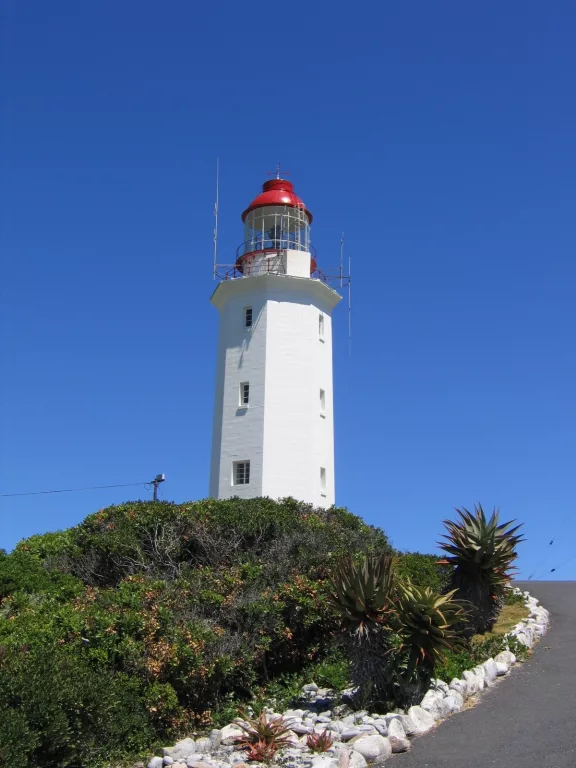
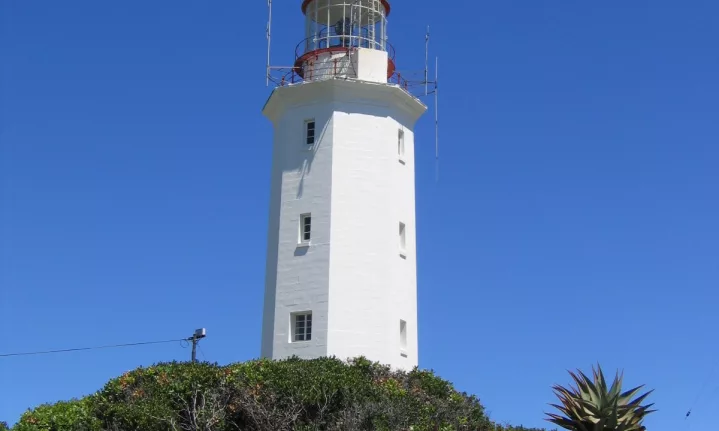
Danger Point lighthouse, Gansbaai/Self/Wikimedia Commons
Visit the lighthouse at Danger Point
Gansbaai’s coastline is beautiful, but its history is also marked by shipwrecks and dangerous stretches of ocean. One of the area’s recognisable landmarks is Danger Point Lighthouse.
The lighthouse stands on a rocky headland near the site where HMS Birkenhead was wrecked in 1852. The tragedy claimed the lives of hundreds of people and became remembered for the discipline displayed by soldiers who remained in formation while women and children were given priority in the lifeboats.
The lighthouse was subsequently established to help vessels navigate this hazardous stretch of coastline. Today, the headland is worth visiting for its maritime history and sweeping ocean views.
It is a reminder that the sea has shaped Gansbaai’s identity in ways that extend well beyond its marine wildlife.
Make time for local flavours and wine
From coastal seafood to Overberg wine
A visit to Gansbaai would not be complete without exploring its food and wine offerings. As a working fishing town, it has a strong connection to the sea, with local restaurants offering opportunities to enjoy fresh seafood and traditional coastal fare.
For a change of scenery, head inland to Lomond Wine Estate. Set against the Overberg’s distinctive fynbos landscape, the estate offers wine-tasting experiences that bring together the area’s natural environment and local winemaking.
Its location also makes it an appealing stop for those wanting to explore the countryside beyond the coast. Visitors can combine a tasting with a leisurely afternoon taking in the surrounding landscape.
For something more informal, explore Gansbaai’s local eateries and harbour-side food spots, where the town’s fishing heritage remains part of its everyday character.
Find more reasons to explore the surrounding coastline
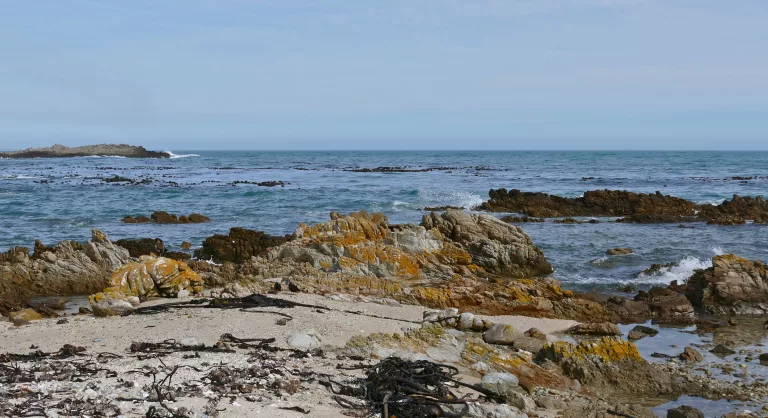
Franskraal, south of Gansbaai/Bernard DUPONT from FRANCE/Wikimedia Commons
Beaches, forests and small-town discoveries
There is plenty more to discover beyond Gansbaai’s better-known attractions. A coastal drive opens up quieter corners of the Overberg, each with its own character.
In Franskraal, visitors can explore stretches of sandy coastline and pockets of milkwood forest, while nearby Pearly Beach offers long beaches and a slower seaside atmosphere.
For an experience further inland, consider the village of Baardskeerdersbos. Known for its artistic community and rural surroundings, it offers a glimpse into a different side of the Overberg, away from the busier coastal attractions.
These smaller stops are ideal for travellers who have an extra day to spare and want to explore beyond the usual tourist route.
A different side of Gansbaai awaits
Gansbaai may have earned its international reputation through its marine wildlife encounters, but its appeal stretches well beyond the ocean. Its ancient caves, dramatic coastline, indigenous forests, fynbos landscapes and conservation initiatives reveal a destination with plenty of depth.
Whether following a coastal trail, learning about early human history at Klipgat Cave, visiting a penguin rehabilitation centre or enjoying a wine tasting surrounded by fynbos, there are many ways to experience this corner of the Overberg.
For travellers planning a coastal escape from Cape Town, Gansbaai offers more than a single bucket-list encounter. It is a destination worth slowing down for.
Follow us on social media for more travel news, inspiration, and guides. You can also tag us to be featured.
Instagram | Facebook | Twitter | Spotify
ALSO READ: