


Deep in Zimbabwe’s Zambezi Valley, a remarkable prehistoric secret lies beneath the sand of a remote riverbed. Here, in the Ntumbe Wilderness, enormous three-toed footprints preserved in sandstone offer a glimpse into a world that existed around 140 million years ago.
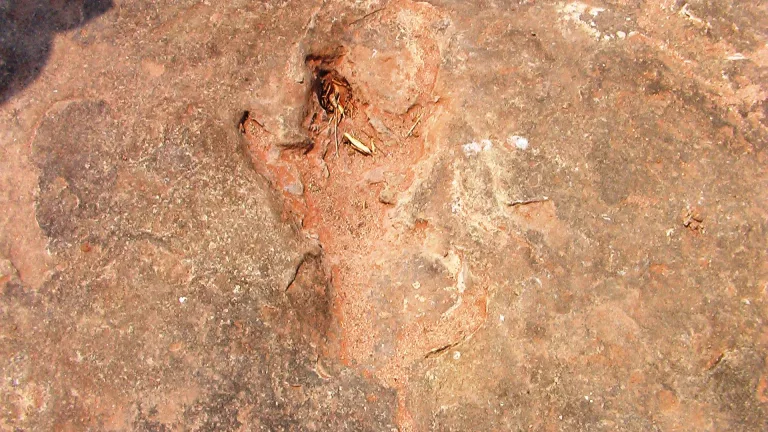
Dinosaur footprints found in the Chewore/David17101944, CC BY-SA 4.0, via Wikimedia Commons/
Now, following its opening to non-hunting tourism in June 2026, travellers have a new opportunity to explore this little-known wilderness, discover its ancient trackways and experience one of Zimbabwe’s most remote conservation landscapes.
A wilderness with a prehistoric secret
Located in northern Zimbabwe, the Ntumbe Wilderness lies within the Chewore South region of the Zambezi Valley, close to the renowned Mana Pools National Park. Part of the Mana Pools, Sapi and Chewore UNESCO World Heritage Site, the landscape is known for its biodiversity, rugged river systems and expansive wilderness.
But beyond its elephants, predators and birdlife, Ntumbe has another claim to fame: its remarkable collection of fossilised dinosaur footprints.
The tracks are preserved along sections of the Ntumbe River, where exposed sandstone reveals impressions left by prehistoric animals millions of years ago. Some are remarkably distinct, with three forward-pointing toes and visible claw impressions.
For visitors, the experience is rather different from encountering dinosaur fossils in a museum. These are footprints left in the landscape itself, allowing travellers to stand beside the impressions and follow the paths of animals that once moved through this ancient environment.
The area first attracted scientific attention in 1984, when geologist Tim Broderick and his wife, Trish, began documenting the tracks. Further excavation in 1990 uncovered additional footprints beneath the riverbed sand, revealing a much longer trackway than was initially visible.
Today, the Ntumbe trackways are considered among the notable dinosaur footprint sites in Southern Africa.
Following the footsteps of dinosaurs
The most striking impressions belong to large, two-legged dinosaurs, with some measuring approximately 40 to 43cm from heel to toe.
Their three-toed shapes are particularly recognisable, offering clues about the animals that made them. Scientists believe some of the larger prints were left by theropods, a group of predominantly carnivorous dinosaurs that walked on two legs.
The tracks have been associated with Allosaurid dinosaurs, although footprints alone cannot establish the exact species responsible.
One of the most remarkable discoveries came during the 1990 excavation, when researchers uncovered additional impressions beneath the riverbed. The original trackway, which initially showed 14 exposed prints, was eventually documented over approximately 48m, with 45 footprints recorded.
There is more to the site than its enormous impressions, however. Researchers have also identified clusters of much smaller footprints, some measuring only a few centimetres across. These have prompted speculation about whether certain areas could have served as nursery sites for young dinosaurs.
Together, the discoveries suggest that the Ntumbe River landscape once supported a variety of prehistoric animals.
What dinosaur footprints can tell us
Fossilised footprints are known as trace fossils. Unlike bones, which provide evidence of an animal’s physical structure, trace fossils preserve evidence of how an animal moved and behaved.
By studying the distance between individual impressions, their depth, shape and arrangement, palaeontologists can make estimates about an animal’s size, direction of travel and walking speed.
A sequence of footprints, for instance, can reveal whether an animal was walking or moving at a faster pace. Multiple trackways may also provide clues about how different animals moved through the same environment.
At Ntumbe, these impressions offer an extraordinary record of prehistoric activity. They also help researchers understand the ancient environments in which dinosaurs lived, including the conditions that allowed their tracks to be preserved in the first place.
The sandstone surfaces along the river provide a natural window into this distant past, making the site particularly interesting for visitors with an appreciation for geology, palaeontology and natural history.
Visitors should remember that these are protected scientific sites. Fossils and footprints should be observed without being disturbed, and any discoveries should be reported to the appropriate authorities rather than collected.
A new chapter for Ntumbe Wilderness
For decades, the area was known as the Chewore South Safari Area and operated as a trophy-hunting concession. In June 2026, it entered a new chapter when it opened its doors to non-hunting tourism.
The transition is being managed through a long-term partnership between the Zimbabwe Parks and Wildlife Management Authority (ZimParks) and the Chewore Conservation Trust, which operates under a 25-year conservation mandate.
The aim is to establish a tourism model that supports the protection of the landscape while creating opportunities for local communities.
Tourism proceeds are directed towards conservation efforts, helping fund the management and long-term protection of this important ecosystem.
The change also introduces travellers to a destination that has remained relatively unfamiliar compared with Zimbabwe’s better-known safari areas. Rather than focusing exclusively on traditional game viewing, Ntumbe offers a combination of wilderness exploration, walking safaris, birdwatching and prehistoric discoveries.
Exploring the wilderness beyond the footprints
While the dinosaur trackways are a major drawcard, there is plenty more to discover across Ntumbe’s expansive landscape.
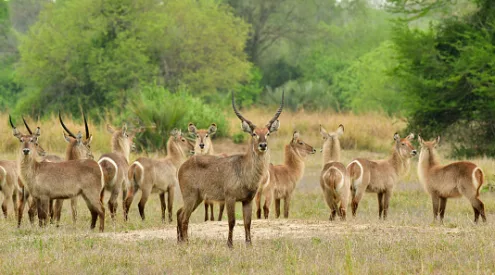
The area supports elephants, lions, leopards, African wild dogs, buffalo and several antelope species, including sable and the increasingly rare roan antelope.
Wildlife viewing is part of the experience, although visitors should approach it with the understanding that this is a remote wilderness rather than a conventional high-density safari destination. Animals can be elusive, and exploring the landscape often requires patience.
Walking safaris offer an opportunity to experience the bush at a slower pace, with knowledgeable guides helping visitors identify animal tracks, plants, birds and other details that can easily be missed from a vehicle.
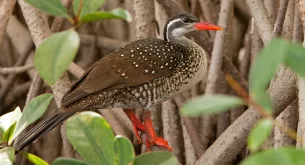
The wilderness is also home to approximately 400 recorded bird species, making it an appealing destination for birdwatchers. Among the notable species are the African pitta, Pel’s fishing owl, Narina trogon and crested guineafowl.
For those wanting to explore independently, self-drive safaris are available, with an extensive network of rugged bush tracks providing access to different parts of the reserve.
Where to stay in Ntumbe Wilderness
Visitors can choose between camping and a more comfortable safari experience at Chenje Camp.
The recently refurbished camp reopened in June 2026, transforming a former hunting base into an intimate tented safari retreat along the Chenje River.
The camp has six en-suite tents, with flexible bed configurations, and offers both fully inclusive safari packages and accommodation-only options for self-drive visitors.
Its unfenced setting allows wildlife to move naturally through the surrounding landscape, while walking trails provide opportunities to explore the riverine environment.
Chenje Camp is also conveniently positioned for visitors interested in the dinosaur trackways, which are approximately a 40-minute drive away.
Those preferring a more independent experience can make use of the Kanga campsite, which offers another way to experience the remote surroundings.
Planning a visit to Ntumbe Wilderness
Getting to Ntumbe requires some planning, as this is a remote destination with rugged terrain and limited infrastructure.
The reserve can be accessed through its designated entry points, including Mkanga Gate and Chewore Bridge. Chenje Camp is approximately a 25-minute drive from Mkanga Park Gate when travelling from Harare, while the drive from Mana Pools takes around three hours from the west.
Visitors should arrange their accommodation and activities in advance, particularly if they intend to join guided walks or multi-day wilderness trails.
Self-drive visitors should be prepared for challenging bush tracks and ensure their vehicles are suitable for the conditions. It is also worth contacting the conservation trust before travelling for current road conditions, access requirements and activity availability.
For bookings and further information, visitors can contact the Chewore Conservation Trust through the official Ntumbe Wilderness website.
A journey millions of years in the making
Ntumbe offers something quite different from the traditional Zimbabwean safari. Here, the wilderness tells two stories at once: one of the wildlife that continues to inhabit the Zambezi Valley and another of the prehistoric animals that once roamed its ancient landscapes.
The opportunity to stand beside dinosaur footprints preserved for millions of years is reason enough to make the journey. But with its transition towards conservation-led tourism, walking experiences and remarkable biodiversity, Ntumbe is also an opportunity to discover a lesser-known corner of Zimbabwe while contributing to the protection of one of its important wilderness areas.
Follow us on social media for more travel news, inspiration, and guides. You can also tag us to be featured.
Instagram | Facebook | Twitter | Spotify
ALSO READ:
Bazaruto beyond the beach: The marine wilderness protecting Mozambique’s coast