

A new National Geographic documentary is taking viewers beneath the surface of the world’s oceans, showcasing groundbreaking scientific discoveries and the people working to protect marine ecosystems.
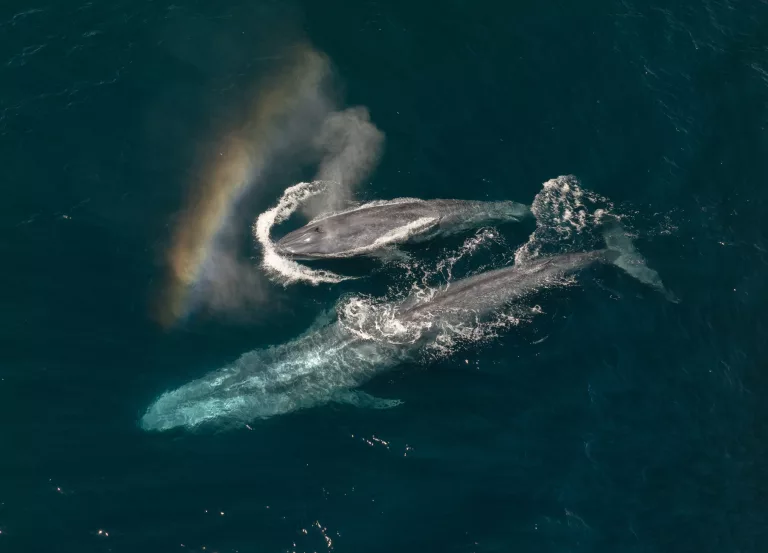
Aerial image of pygmy blue whale (Balaenoptera musculus brevicauda) mom and calf feeding on krill in the South Taranaki Bight of New Zealand. (credit: National Geographic/Ralph Pace)
Titled Expedition: Saving Our Seas, the one-hour special follows National Geographic Explorers across all five ocean basins as they investigate the effects of environmental change, document previously unknown marine environments and explore solutions to some of the challenges facing ocean conservation.
Presented by the National Geographic Society in partnership with Rolex, the documentary forms part of the National Geographic and Rolex Perpetual Planet Ocean Expeditions. This multiyear scientific research initiative combines advanced technology with the knowledge of coastal communities to improve understanding of the world’s oceans, from shorelines to the deepest parts of the seafloor.
The documentary premieres on Monday, 16 November, at 18:50 on National Geographic (DStv channel 181 and StarTimes channel 220). It will also be available to stream on Disney+ in South Africa. Ocean conservationist Auliʻi Cravalho, known for voicing Moana, narrates the special.
Exploring the ocean’s hidden ecosystems
One of the expeditions takes place in the Southern Ocean, where a team of scientists uses SuBastian, a remotely operated underwater vehicle aboard the Schmidt Ocean Institute’s research vessel Falkor (too), to investigate marine environments nearly 13,000 feet below the surface.
The team includes oceanographer Dr Andrew Thurber, biological oceanographer Dr Kim Bernard and microbial oceanographer Dr Allison Fong. Their research leads to three significant discoveries: the most southerly known deep-sea hydrothermal vent on Earth, groups of Antarctic krill carrying eggs at depths of approximately 3,000 feet, and the first known live sighting of a giant Antarctic gonate squid.
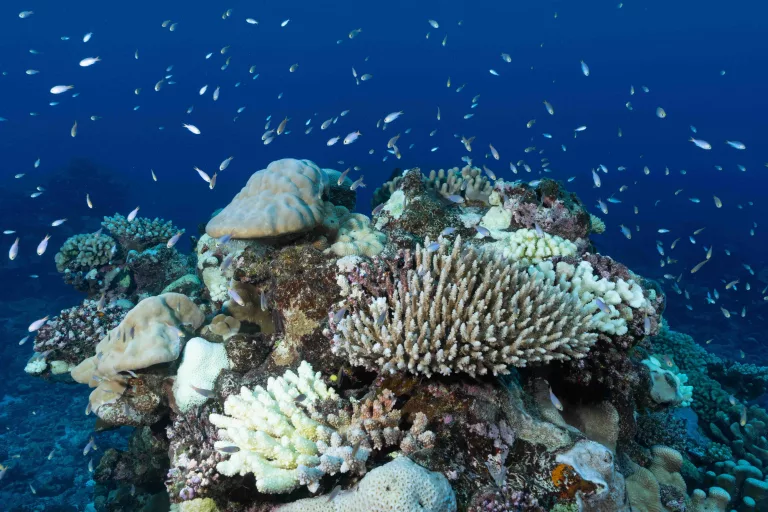
Rarotonga, Cook Islands – 2025/02/05: Underwater seascape showing signs of bleaching and progressive coral mortality in Rarotonga. (credit: Giacomo d’Orlando/National Geographic)
Elsewhere in the Pacific Ocean, researchers investigate how rising temperatures are affecting marine ecosystems. Dr Bernard works alongside marine ecologist Dr Leigh Torres and members of the local Māori community to track blue whales and their krill prey in New Zealand’s South Taranaki Bight.
In the Cook Islands, National Geographic Explorer Dr Anya Brown examines the heat tolerance of coral reefs, helping scientists better understand how these ecosystems might respond to increasing ocean temperatures.
Coastal communities and marine conservation
The expeditions also highlight the importance of involving local communities in ocean research and conservation.
Off the coast of South Africa, Sheena Talma, the first deep-sea scientist from the Seychelles, works with her Seychellois team to develop their skills in using deep-ocean camera lander systems. The technology will also be deployed in Seychelles to collect information that can support fisheries management, marine protected areas and the monitoring of deep-ocean habitats.
Along the Gambian coastline, where rising sea levels threaten communities and infrastructure, marine ecologist Maiyai Taal Hocheimy works with local students to measure ocean depths and currents. Together with National Geographic Explorer Dr Angelo Bernardino, she also investigates mangrove forests between the capital, Banjul, and the advancing Atlantic waters. These coastal ecosystems form an important part of the region’s natural protection against rising seas.
Further north, researchers visit Gjoa Haven in Nunavut, Canada, where the Arctic Ocean is warming at approximately four times the rate of the rest of the planet. Marine biogeochemist Dr Kristina Brown works with the local Inuit community, including elder Saul Aksalook Qirqniq, to conduct the first known scientific study of the secluded Sherman Basin. The research will help map a previously unexplored section of the seafloor.
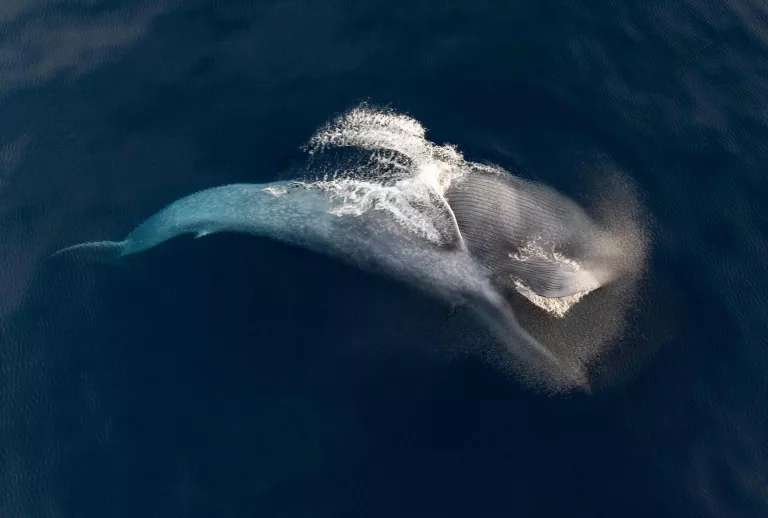
Aerial image of pygmy blue whale (Balaenoptera musculus brevicauda) lunge feeding on krill in the South Taranaki Bight of New Zealand. (credit: National Geographic/Ralph Pace)
Making deep-sea exploration more accessible
Connecting the different expeditions is deep-ocean scientist Dr Katy Croff Bell, founder of the Ocean Discovery League. She is developing the Deep Ocean Research and Imaging System (DORIS), a lightweight, lower-cost device designed to make deep-sea exploration more accessible to communities and researchers who have traditionally lacked access to this technology.
The initiative highlights how expanding access to marine research equipment could help more countries and coastal communities gather information about their underwater environments.
The documentary also coincides with a special November issue of National Geographic magazine dedicated to Earth’s interconnected ocean system. The issue explores the five ocean basins, the discoveries made during the Perpetual Planet Ocean Expeditions and the relationship between human activity and the future of marine ecosystems.
An accompanying digital experience on National Geographic’s website will feature interactive three-dimensional maps, allowing users to explore ocean currents, the seafloor, human impacts and marine protected areas around the world.
Produced by Offspring Films and directed by Katharine Arthy, Expedition: Saving Our Seas offers a closer look at the scientific research and conservation efforts taking place beneath the surface, while highlighting how much of the deep ocean remains unexplored.
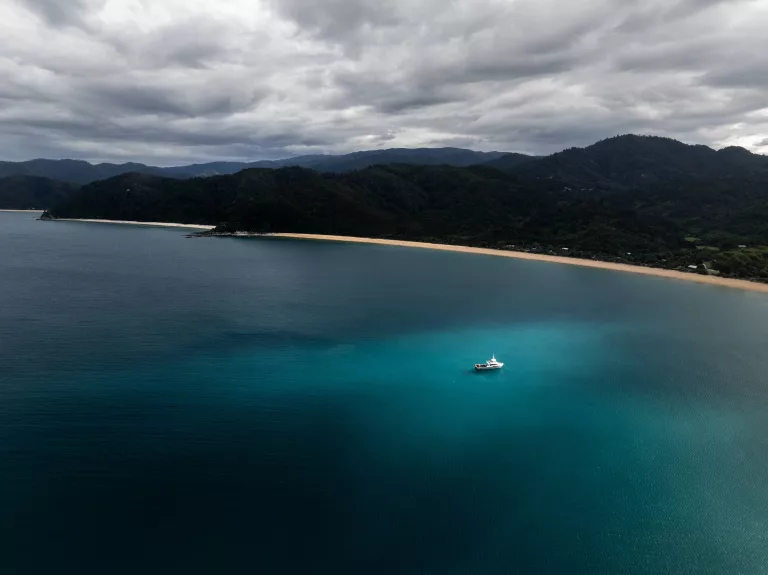
Aerial imagery of research vessel Star Keys safe harboring in Abel Tasman, New Zealand. (credit: National Geographic/Ralph Pace)
Follow us on social media for more travel news, inspiration, and guides. You can also tag us to be featured.
Instagram | Facebook | Twitter | Spotify
ALSO READ: