

Seeing wildlife from a boat, canoe, or other watercraft offers a different perspective on the South African landscape. Instead of approaching animals by road, you can watch them from the water as they drink at the shoreline, move through wetlands or gather along riverbanks.
From hippos and crocodiles to elephants, dolphins, and colourful waterbirds, these are six places where the journey itself becomes part of the wildlife experience.
Kosi Bay, KwaZulu-Natal
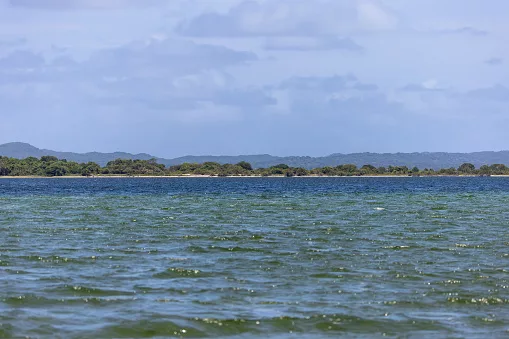
Kosi Lake/By: Beata Whitehead/Getty Images
Explore a network of lakes and channels
The Kosi Bay lake system in northern KwaZulu-Natal is one of the country’s more unusual places to experience wildlife from the water. Channels link four interconnected lakes before eventually reaching the Indian Ocean, creating a maze of waterways surrounded by coastal forest, wetlands, and dunes.
A boat trip across the lakes can bring sightings of hippos, crocodiles, and flamingos, while birdlife includes kingfishers, herons and African fish eagles. The water also offers a close look at the area’s traditional Thonga fish traps, woven into the channels and still used in local fishing practices.
The combination of wildlife, wetlands and cultural history makes Kosi Bay feel very different from a conventional boat safari.
Don’t miss
Look out for the traditional fish traps between the lakes and keep binoculars handy for the abundant birdlife.
Lake Jozini, KwaZulu-Natal
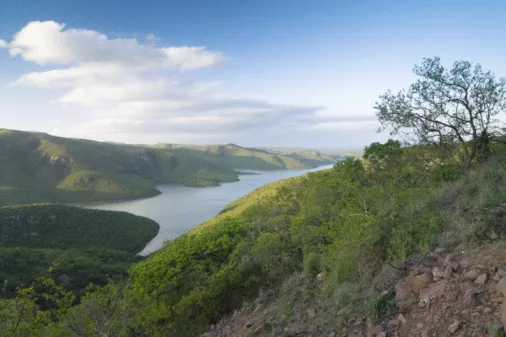
A flooded valley of Jozini Dam (Pongolapoort)/By: Emil von Maltitz/Gallo Images ROOTS RF collection
Watch wildlife along the shoreline
Lake Jozini, also known as Pongolapoort Dam, offers one of South Africa’s most unusual combinations of water-based wildlife viewing and big-game country.
The lake borders the Pongola Game Reserve, allowing visitors on boat cruises to watch animals along the shoreline rather than from a traditional safari vehicle. Sightings can include hippos, crocodiles, elephants, antelope and a variety of waterbirds.
The surrounding Ubombo and Lebombo mountains add another layer to the experience, while the lake itself is famous for tiger fishing. Boat cruises can be particularly atmospheric in the early morning or late afternoon, when wildlife comes down to the water.
Don’t miss
Keep watch around the shoreline for elephants coming to drink or enter the water, particularly during a dedicated boat-based game-viewing trip.
ALSO READ:
Mto wa Mbu: The small Tanzanian town turning a safari stop into a destination
Mokolo Dam, Limpopo
Look for wildlife in Waterberg country
Mokolo Dam sits within 4,600 hectares of bushveld in the Waterberg and offers a quieter alternative to some of South Africa’s better-known wildlife destinations. The dam is surrounded by wooded hills and forms part of the broader Waterberg landscape.
Boating and birding are among the activities at Mokolo Nature Reserve, while hippos and crocodiles inhabit the dam. That makes this a place where wildlife should be observed from a safe distance rather than treated as a swimming or watersports destination.
The setting is particularly appealing to travellers who enjoy the combination of open water and classic Limpopo bushveld. From a boat, the shoreline becomes the focus, with birds and other animals moving between the water and surrounding vegetation.
Don’t miss
Bring binoculars for birding and keep a respectful distance from the water’s edge, where hippos and crocodiles occur.
Knysna Lagoon, Western Cape
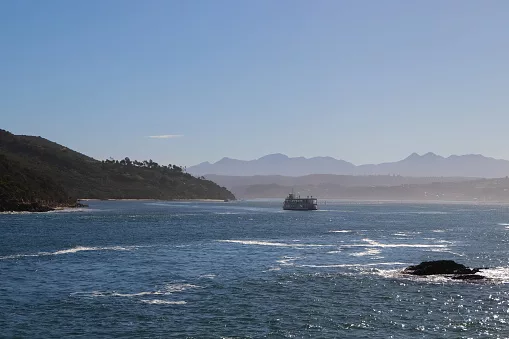
Knysna River ferry boat with nature-covered riverbank and distant mountain horizon, South Africa/By: JJ van Ginkel/iStock
Search for dolphins, seals and seabirds
Knysna offers a completely different wildlife experience, shifting the focus from freshwater animals to marine life and estuarine species.
The Knysna Lagoon is actually an estuary and is recognised for its exceptional biodiversity. Boat trips across the lagoon and through the Knysna Heads can bring sightings of dolphins, seals and numerous seabirds, while marine excursions beyond the Heads can encounter whales in season.
The area is particularly good for birdwatchers, with the wider Knysna region supporting hundreds of bird species. Boat-based excursions also offer the chance to see the landscape from a different angle, with forested hills rising around the waterways.
During whale season, usually from June to November, southern right and humpback whales can be seen along the coast, with dolphins occurring throughout the year.
Don’t miss
Take binoculars on a lagoon cruise and look beyond the shoreline for dolphins and seabirds. If you’re visiting between June and November, consider a marine wildlife trip through the Heads.
Keurbooms River, Western Cape
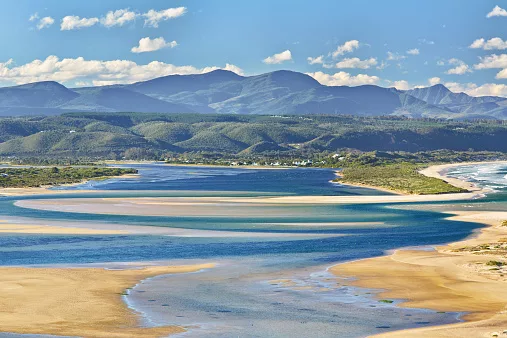
Keurbooms River Lagoon at Plettenberg Bay/By: Peter Unger/Getty Images
Cruise beneath the forest
The Keurbooms River near Plettenberg Bay offers a more intimate kind of wildlife experience. Instead of heading out into open water, boats travel upstream through a landscape of indigenous forest, riverbanks and mountain scenery.
The Keurbooms River Nature Reserve is accessible by water, with boat trips travelling several kilometres upstream. Along the way, guides point out birdlife and animals in the surrounding forest, including vervet monkeys, Knysna turacos, and fish eagles.
The river’s amber-coloured water and steep forested surroundings make the journey as memorable as the wildlife sightings. It is also a good reminder that wildlife watching does not always have to involve spotting the Big Five.
Don’t miss
Keep your eyes on the treetops and riverbanks rather than only scanning the water. Forest birds and monkeys can be easier to spot from a slow-moving boat.
Wilderness, Garden Route
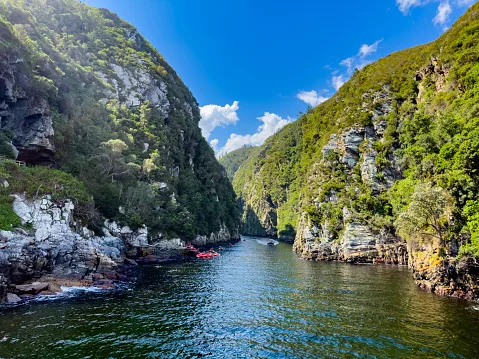
Scenic view of the Storms River Mouth gorge/By: Sunshine Seeds/iStock
Paddle through wetlands and forest
The waterways around Wilderness offer one of the gentlest ways to experience wildlife from the water. Canoeing along the Touw River takes visitors through indigenous forest and a network of lakes and wetlands within the Garden Route National Park.
The surrounding lakes, including Rondevlei, Langvlei and Eilandvlei, form part of an internationally recognised Ramsar wetland system. They support a wide range of aquatic and wetland species, including grebes, herons, egrets, spoonbills, kingfishers, ducks and cormorants.
Paddling rather than travelling by motorboat also changes the experience. The quieter pace makes it easier to notice birds moving through the reeds or sitting in the trees along the river.
Don’t miss
Take a canoe trip along the Touw River and bring binoculars. The area is especially rewarding for birders, with several hides and waterways to explore.
Wildlife looks different from the water
South Africa’s rivers, lakes, estuaries and coastal waters offer another way to experience wildlife. A boat can put you at eye level with a hippo in Kosi Bay, an elephant drinking at Lake Jozini or dolphins moving through the waters around Knysna.
The experience is also slower. Rather than moving from one sighting to the next, you’re watching the landscape unfold around you, with the possibility of spotting something unexpected along the shoreline or above the reeds.
Whether you choose a guided boat safari, a quiet river cruise or a paddle through wetlands, the water can be as much a part of the wildlife story as the animals themselves.
Follow us on social media for more travel news, inspiration, and guides. You can also tag us to be featured.
Instagram | Facebook | Twitter | Spotify
ALSO READ:
The road to Rhodes: South Africa’s highland drive through the Eastern Cape