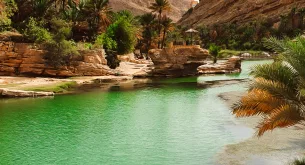

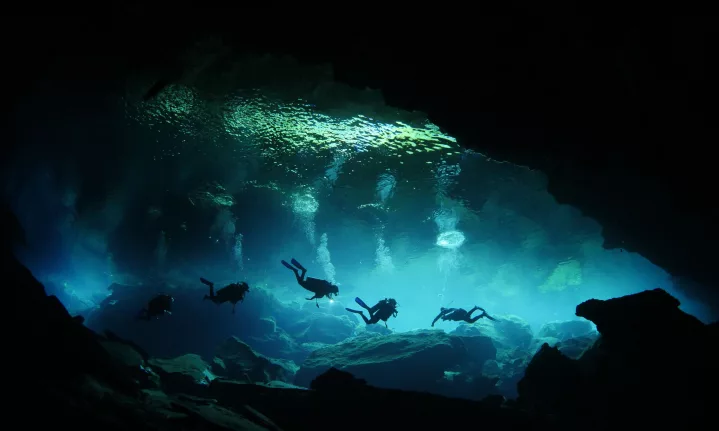
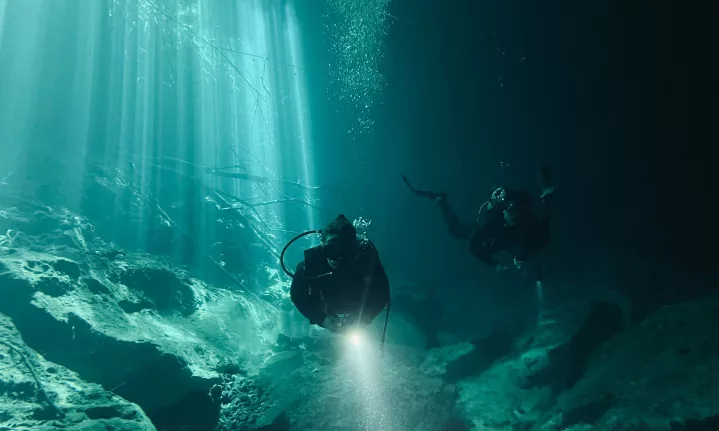
In the North West, a dark pool of freshwater opens unexpectedly in the landscape. From the surface, Wondergat seems deceptively calm. But beneath it, a network of underwater caves and rock formations disappears into the darkness.
Caroline O.marcel / Pexels / Illustrative purposes only
About 30km from Mahikeng and 60km from Lichtenburg, this enormous sinkhole was formed when groundwater dissolved the surrounding dolomite, eventually causing an underground cavern to collapse. Today, the roughly oval opening measures about 75m by 100m and reaches around 58m at its deepest point.
The name, which translates roughly from Afrikaans as ‘wonderous hole’, feels fitting once you realise how much of Wondergat lies beyond the surface.
Beneath the surface
Wondergat is regarded as one of South Africa’s notable inland freshwater dive sites, but it’s definitely not a place for casual exploration.
Divers descend through clear freshwater past steep rock walls before reaching a series of underwater spaces, including northern and southern caverns, an overhang and Leopard’s Cave. Deeper within the system is a bell chamber. Guide ropes and marked grids help experienced divers navigate the caves.
The conditions can be demanding. Water temperatures generally range between 14°C and 21°C, while visibility varies depending on conditions and depth. The site is used by advanced, technical and instructor-level divers, making appropriate training and equipment essential.
Wondergat was historically recorded at depths of more than 70m, although the current maximum depth is around 58m. It has gradually become shallower through natural processes.
In this underwater world, the landscape changes character. Sunlight fades, the walls close in and the familiar idea of a lake gives way to something far more subterranean.
An ancient landscape underwater
The geology is part of Wondergat’s fascination.
The dolomite that created the sinkhole continues below the water, forming the caverns and passages that divers explore. The site is also associated with underwater stromatolites, adding another layer to an already unusual geological landscape.
Naturally, there is wildlife, too. Freshwater species recorded at Wondergat include sharptooth catfish and southern mouthbrooders, while the banded tilapia is particularly associated with the site.
But it’s the rock that holds the attention. Wondergat feels less like diving into a lake and more like entering a geological world that happens to be filled with water.
A dive with a history
Wondergat has a serious side. Its underwater environment has claimed the lives of divers, and memorial stones beneath the surface remember those who died there. The site has also been used for specialist and technical diving training, including the South African Police Special Task Force.
That history is a reminder that Wondergat is not an adventure attraction to approach casually. Divers need appropriate qualifications, experience and equipment, and the site recommends diving with a group rather than alone.
For those who come to stay, there are campsites, braai areas, ablutions and electricity, making it possible to spend a night beside the water before heading back into the surrounding landscape.
Into the unknown
There is something compelling about a place whose greatest feature cannot be seen from the surface.
At Wondergat, a quiet body of freshwater conceals shafts, caverns and rock formations shaped over geological time. For experienced divers, descending into it means entering a landscape that few people ever see. For everyone else, simply standing at the edge offers a glimpse into the strange relationship between water, rock and time.
Wondergat does not need to be conquered. Its magic is knowing that beneath the still surface, there is a whole new world to discover.
Follow us on social media for more travel news, inspiration, and guides. You can also tag us to be featured.
Instagram | Facebook | Twitter | Spotify
ALSO READ: