


A surprising fossil discovery in the Falkland Islands has revealed that the windswept, treeless archipelago once supported lush, cool-temperate forests.
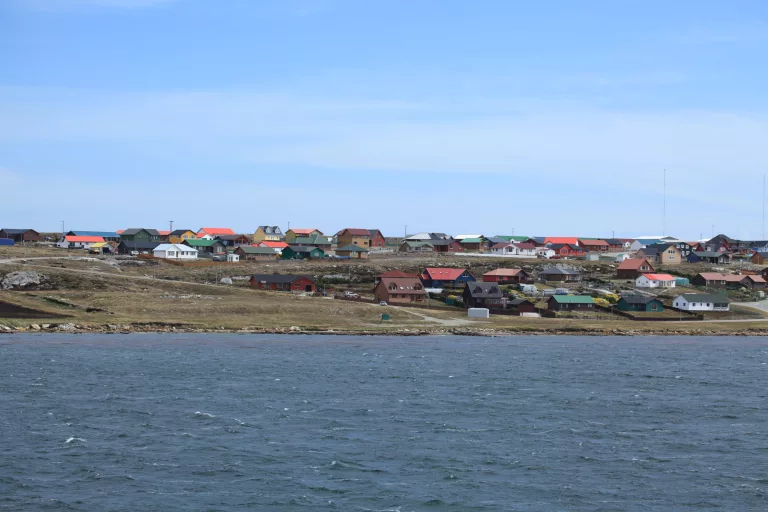
Image used for illustrative purposes/Stanley, Falkland Islands/Liam Quinn from Canada/Wikimedia Commons
A buried forest under Stanley
Construction workers in Stanley, the Falklands’ capital, unearthed a dark, woody layer that caught scientists’ attention. What looked like debris turned out to be a preserved forest bed – a dense, carbon-rich layer formed in a waterlogged basin millions of years ago.
“It was not random rubble. It was a buried ecosystem,” said Dr. Zoë Thomas of the University of Southampton, who rushed to collect samples before they dried out, as previously told by Earth.com.
Fossil pollen and ancient wood
Researchers found three lines of evidence: fossil pollen grains, spores, and fragments of wood. Under microscopes, the samples revealed species typical of Southern Hemisphere rainforests – including southern beech (Nothofagus) and podocarps, conifers still thriving in Chile and Patagonia today.
“The fossil pollen, spores, and wood paint a much different picture of the ancient environment, providing direct evidence of cool, wet forests,” explained Michael Donovan of Chicago’s Field Museum.
How old is the forest?
Though radiocarbon dating could not be applied, scientists matched the Falklands’ fossil pollen sequence to well-dated records from South America. The results point to the mid-to-late Cenozoic era, tens of millions of years ago, when warmer global conditions allowed forests to spread to higher latitudes.
Why the trees vanished
The Falklands’ modern treeless landscapes are shaped by strong westerly winds, thin soils, and cooler glacial cycles that favour grassland over woodland. Without mountains to trap moisture or protect seedlings, forests could not survive as the climate shifted.
Climate lessons from the past
The discovery is more than a historical curiosity. Fossil records like this give scientists benchmarks to test climate models. If a model recreates rainforests in the Falklands during the Cenozoic, it strengthens confidence in its predictions of future change.
“This hidden forest shows how ecosystems shift with temperature, rainfall, and wind,” noted Dr. Thomas. “It’s a reminder that what seems permanent today can be very different over geological timescales.”
The study was published in Antarctic Science.
Follow us on social media for more travel news, inspiration, and guides. You can also tag us to be featured.
TikTok | Instagram | Facebook | Twitter
ALSO READ: Elephant carer killed in tragic incident at Hoedspruit Reserve




.jpg)