

Along South Africa’s rugged coastline, where rocky shores meet the restless ocean, an elusive mammal moves quietly between two worlds.
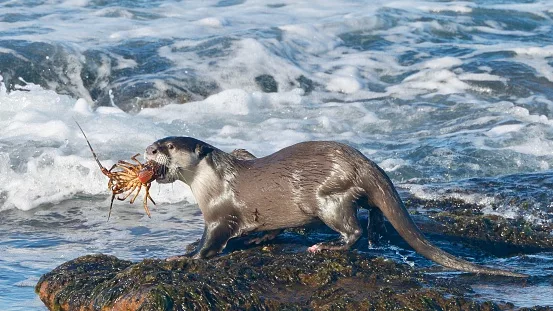
Cape Clawless Otter with a crayfish that it caught in the Atlantic Ocean at Kommetjie/By: Pelaan/iStock
The Cape clawless otter is an often-overlooked resident of the country’s coastal ecosystems, equally at home searching for crabs among the rocks and retreating to freshwater streams and sheltered riverbanks.
With sensitive whiskers, remarkably dexterous paws and a thick coat adapted for aquatic life, these fascinating animals have developed unique ways of surviving along the shoreline. Yet, as coastal development expands and natural habitats face increasing pressure, the spaces they depend on are becoming more vulnerable.
Meet South Africa’s coastal otters
The Cape clawless otter (Aonyx capensis) is one of Africa’s most widely distributed otter species. Despite its name, it is not restricted to the Cape, occurring across much of sub-Saharan Africa and throughout South Africa, particularly along the eastern and southern coastlines.
In South Africa, the species is also found along parts of the west coast, with recorded occurrences extending as far as Langebaan, the Berg River Estuary and the Cederberg. Its distribution stretches beyond the shoreline into rivers, wetlands, dams and other freshwater habitats.
Unlike marine mammals that spend their entire lives in the ocean, Cape clawless otters depend on a combination of aquatic and terrestrial environments. They need access to freshwater, suitable shelter and sufficient food, making healthy connections between rivers, wetlands and coastal ecosystems particularly important.
Their presence along the shoreline is therefore closely linked to the condition of the surrounding landscape.
Built for life between land and water
The Cape clawless otter has several physical adaptations that make it an efficient hunter in aquatic environments. Its brown fur, pale chin and chest, small ears and sensitive whiskers give it a distinctive appearance.
One of its most interesting characteristics is its front paws, which lack the prominent claws found on many other otter species. These dexterous paws are particularly useful when searching for food beneath rocks, in crevices and along muddy riverbanks.
Its whiskers, known as vibrissae, are highly sensitive to movement in the water. They help the otter detect prey in conditions where visibility may be limited, allowing it to locate food through touch rather than relying entirely on sight.
Although capable of moving comfortably through water, Cape clawless otters also spend considerable time on land. They use sheltered areas along riverbanks and coastal vegetation for resting, grooming and establishing dens, known as holts.
These spaces provide protection from disturbance and offer convenient access to nearby feeding grounds.
What do Cape clawless otters eat?
Cape clawless otters are carnivorous and opportunistic feeders, with diets that change according to the habitats they occupy and the food available.
Along the coast, crabs are an important food source, particularly in rocky intertidal environments. They also feed on fish, including small coastal species, as well as other aquatic animals.
Their diet can extend to frogs, insects, worms and occasionally waterbirds. This flexibility allows them to adapt when particular prey becomes less available.
A 2025 study examining the feeding behaviour of African clawless otters at three South African locations found evidence of seasonal changes in their diets. Researchers recorded shifts from crab-based diets towards fish and insects, depending on prey availability and environmental conditions.
This dietary flexibility is one of the reasons the species can occupy such a wide variety of aquatic environments.
For coastal otters, the shoreline provides more than a place to hunt. It is part of a wider ecosystem that connects marine food sources with the freshwater habitats they need to survive.
ALSO READ:
Gorongosa: How a national park is rebuilding its wildlife and communities
Where to find coastal otters in South Africa
Cape clawless otters are associated with a variety of aquatic habitats, from freshwater rivers and wetlands to estuaries, dams and coastal shorelines.
Along the Western Cape, they occur in suitable habitats around the Cape Peninsula and further north towards the Berg River Estuary and Langebaan. Their presence is not limited to remote wilderness areas, either. They have demonstrated an ability to occupy landscapes that have been significantly altered by human activity, including urban environments.
However, not every stretch of coastline provides suitable conditions. Access to freshwater, sufficient prey and sheltered areas for resting and breeding remain important factors influencing where these animals establish themselves.
Research into their habitat preferences has also highlighted the importance of natural riverbanks, particularly areas with reed beds, rocks and overhanging vegetation. These features provide both shelter and access to food.
Living alongside people in Cape Town
One of the more unexpected places to encounter Cape clawless otters is the V&A Waterfront in Cape Town.
The area’s canals and waterways have attracted otters, demonstrating how adaptable these mammals can be when suitable food and freshwater sources are available within an urban environment.
The Two Oceans Aquarium Foundation, in partnership with the V&A Waterfront, established its Urban Otter Project in 2022. The initiative monitors otter activity, gathers information about their behaviour and works to reduce potentially harmful encounters between the animals and people.
The project also highlights an important aspect of urban wildlife conservation: sharing space with wild animals requires an understanding of their behaviour and needs.
Otters have been observed using freshwater pools and fountains within the Waterfront precinct, while vegetation around hotels and residential developments provides additional shelter. Wildlife monitors also collect observations that contribute to research into the species.
For visitors, an otter sighting can be a memorable experience, but these animals should always be treated as wild wildlife. Approaching them, attempting to feed them or allowing dogs to chase them can cause unnecessary stress and potentially dangerous encounters.
The challenges facing South Africa’s coastal otters
Despite their adaptability, Cape clawless otters are not immune to the pressures affecting South Africa’s natural environments.
Coastal development, habitat degradation and pollution can affect the connected ecosystems on which they depend. The destruction of riverbank vegetation, in particular, reduces the sheltered spaces otters use when moving between water and land.
Water pollution also presents a concern because it can affect aquatic biodiversity and alter the availability of prey. Changes to rivers, wetlands and estuaries can have consequences beyond the immediate area where development takes place.
Other threats include accidental entanglement in fishing equipment, road collisions and encounters with domestic dogs.
The City of Cape Town’s indigenous fauna guidance also identifies dogs, poaching, water pollution and habitat degradation among the threats facing the species. In urban environments, feeding wildlife and encouraging close contact with people can create additional problems by changing natural behaviour.
The Cape clawless otter is classified as Near Threatened in the City of Cape Town’s conservation information, reinforcing the importance of protecting the habitats that sustain it.
Protecting the spaces between land and sea
Conserving Cape clawless otters requires more than protecting isolated stretches of coastline. Their survival depends on healthy rivers, wetlands, estuaries and coastal habitats functioning as connected ecosystems.
Protecting freshwater sources, retaining natural vegetation along riverbanks and reducing pollution are all important steps towards maintaining suitable habitats. Responsible recreation also plays a role, particularly in areas where people, pets and wildlife regularly share space.
For travellers exploring South Africa’s coastline, an otter sighting is a reminder that some of the country’s most fascinating wildlife encounters happen beyond traditional game reserves and safari destinations.
Whether searching for crabs along a rocky shoreline or moving quietly through a freshwater stream, the Cape clawless otter is an example of the remarkable wildlife that inhabits the meeting point between land and sea.
Follow us on social media for more travel news, inspiration, and guides. You can also tag us to be featured.
Instagram | Facebook | Twitter | Spotify
ALSO READ:
The dinosaur footprints hidden in Zimbabwe’s remote Ntumbe Wilderness