




Some places ask you to look. Robben Island asks you to listen. Just 11 kilometres off Cape Town’s coastline, this UNESCO World Heritage Site is one of South Africa’s most powerful places to visit – not because of the prison buildings themselves, but because of the people who bring their history to life.
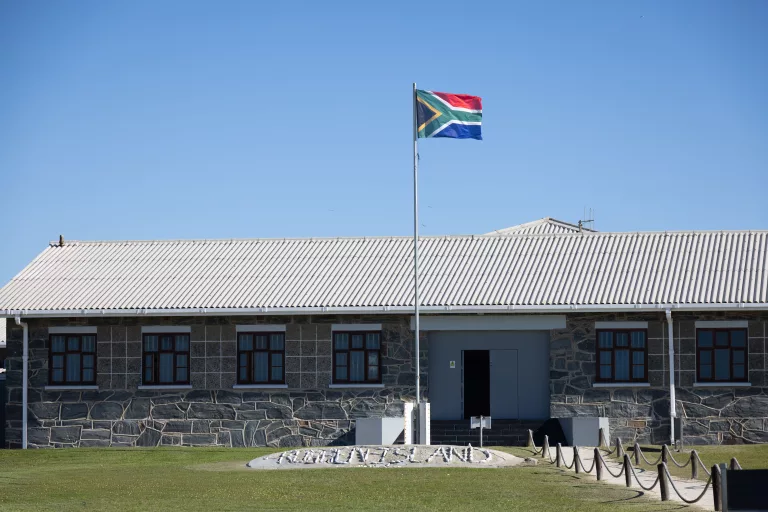
Image by Magda Ehlers / Pexels
A trip to Robben Island is less about ticking off a landmark and more about stepping into the stories that shaped modern South Africa.
If you’re planning a Cape Town itinerary, here’s why this remains one of the city’s most meaningful experiences, how to book your visit, and why your guide may become the part you remember most.
A brief history of Robben Island
Long before it became synonymous with Nelson Mandela, Robben Island had centuries of history as a place of isolation. Over the last 500 years, it has served as a prison, military base, psychiatric hospital and leper colony. Political prisoners, indigenous leaders, religious exiles and people living with leprosy were all confined here at different points in history.
The island’s most recognised chapter began during apartheid, when it became a maximum-security prison for political prisoners between the 1960s and early 1990s. Nelson Mandela spent 18 of his 27 years in prison here, while other prominent anti-apartheid leaders including Walter Sisulu, Govan Mbeki, Ahmed Kathrada and Raymond Mhlaba were also incarcerated on the island.
In 1999, Robben Island was declared a UNESCO World Heritage Site for its symbolic importance in the triumph of democracy and human rights over oppression.
Why Robben Island is unlike any other museum
What makes Robben Island extraordinary isn’t simply the prison. It’s the voices.
Many of the prison tours are led by former political prisoners who once lived behind these walls. Their personal accounts transform what could have been a historical attraction into something deeply human. Rather than reading facts from information boards, visitors hear firsthand memories of daily life, resilience and resistance.
No two tours are exactly alike because each guide brings their own lived experience. For many visitors, standing inside Mandela’s modest prison cell is moving. Yet it’s often the conversations with former inmates that leave the deepest impression long after the ferry returns to the mainland.
What to expect on the tour
The standard Robben Island experience takes around 3.5 to 4 hours, including the return ferry journey from the Nelson Mandela Gateway at Cape Town’s V&A Waterfront. The experience is divided into three parts:
- The ferry crossing across Table Bay, offering spectacular views back towards Table Mountain and Cape Town.
- A guided bus tour around the island, stopping at significant historical landmarks including the Lime Quarry, Robert Sobukwe’s house, the leper cemetery and military installations.
- A walking tour of the maximum-security prison, culminating in a visit to Nelson Mandela’s cell and guided by a former political prisoner where available.
Along the way you’ll also notice that Robben Island isn’t only about history. The island is home to African penguins, seabirds and other wildlife, adding another unexpected layer to the experience.
How to book your Robben Island tour
The easiest way to secure tickets is through the official Robben Island Museum website. Tours frequently sell out during school holidays, long weekends and the busy summer season, so booking several weeks in advance is strongly recommended.
A few practical tips before you go:
- Arrive at least 30 minutes before departure.
- Bring a warm layer, even in summer – the ferry crossing can be windy.
- Wear comfortable shoes for walking.
- If you’re prone to seasickness, consider taking medication before boarding.
- Keep some flexibility in your itinerary, as rough weather can occasionally lead to ferry cancellations for safety reasons.
Why the guide matters more than the destination
There are countless historic prisons around the world. Very few are interpreted by people who actually lived there.
That opportunity won’t exist forever.
As the remaining former political prisoners grow older, the chance to hear these stories firsthand becomes increasingly rare. Their reflections add context that no audio guide, museum display or documentary can fully replicate. It’s a reminder that history isn’t only found in buildings – it lives in the people willing to share it.
A visit that lingers
Robben Island isn’t a feel-good attraction, nor is it intended to be. Instead, it offers something increasingly rare in modern travel: perspective.The ferry ride back to Cape Town often feels quieter than the journey out, giving visitors time to reflect on the resilience, sacrifice and humanity woven into South Africa’s story. Whether it’s your first visit to the Mother City or your fifth, Robben Island remains one of those experiences that changes the way you see both the destination and the country itself.
Follow us on social media for more travel news, inspiration, and guides. You can also tag us to be featured.
Instagram | Facebook | Twitter | Spotify
ALSO READ:
Where history checks in: Five iconic South African hotels with remarkable stories