




South Africa’s national flower is iconic for good reason, with its bold blooms and remarkable ability to thrive in some of the country’s toughest landscapes.
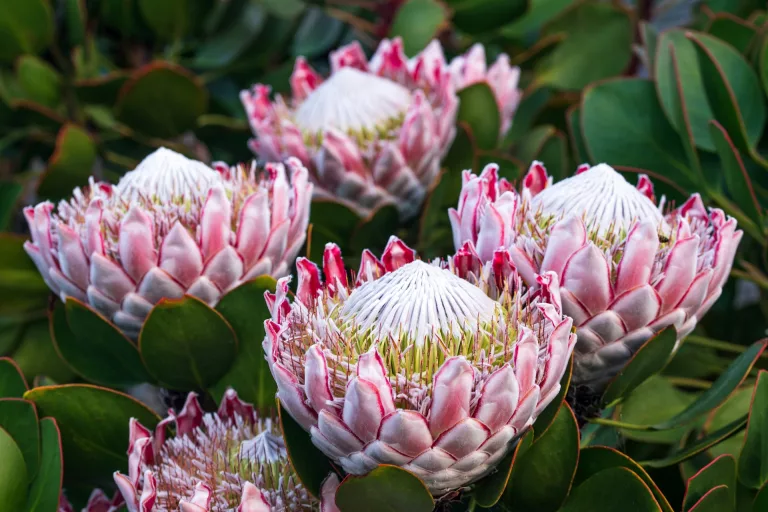
Image of King Proteas used for illustrative purposes/David Clode/Unsplash
While proteas can be admired in gardens and floral displays, seeing them growing wild in mountain fynbos or high-altitude grasslands is an unforgettable experience.
Spring, typically from August to October in the Western Cape and slightly later inland, is the best time to lace up your hiking boots and explore South Africa’s protea-rich landscapes. Here are some of the country’s most rewarding places to walk among these spectacular flowers.
Kogelberg Biosphere: The heart of the Cape Floral Kingdom
A world-renowned fynbos paradise
Often referred to as the heart of the Cape Floral Kingdom, the Kogelberg Biosphere is considered one of the world’s richest centres of plant diversity. With more than 1,600 plant species recorded in the reserve, it’s one of the finest places to experience proteas in their natural habitat.
Whether you choose an easy riverside stroll or a challenging mountain hike, the trails wind through pristine fynbos filled with king proteas, sugarbushes and pincushions, depending on the season and altitude. The combination of dramatic mountains, crystal-clear rivers and colourful wildflowers makes every walk feel like a botanical safari.
Keep an eye out for Cape sugarbirds and orange-breasted sunbirds, both of which play an important role in pollinating proteas.
Best trails: Palmiet River Walk, Oudebosch Eco Trail, Kogelberg Trail
Best time to visit: August to October
Jonkershoek Nature Reserve: Spring blooms beneath towering peaks
A Stellenbosch favourite for hikers
Just outside Stellenbosch, Jonkershoek Nature Reserve is a favourite among hikers looking for mountain scenery, waterfalls and seasonal wildflowers. During spring, the reserve’s fynbos-covered slopes come alive with flowering proteas that contrast beautifully against the rugged peaks.
Trails such as the Panorama Circuit reward walkers with sweeping valley views, while longer routes venture deeper into mountain landscapes where proteas flourish alongside colourful ericas and restios.
The reserve’s changing elevation means different protea species bloom at slightly different times, extending the flowering season for visitors.
Best trails: Panorama Circuit, Swartboskloof Trail, Tweede Waterval
Best time to visit: August to October
ALSO READ:
Beyond Kirstenbosch: South Africa’s botanical gardens worth planning a trip around
Silvermine Nature Reserve: Cape Town’s accessible protea trails
Easy walks with spectacular floral displays
Part of Table Mountain National Park, Silvermine Nature Reserve offers some of Cape Town’s most accessible hiking trails through protected mountain fynbos. It’s an ideal destination for visitors wanting to combine beautiful scenery with exceptional spring flowers.
The Silvermine Reservoir loop provides an easy introduction to the reserve, while more challenging hikes towards Elephant’s Eye Cave or Constantiaberg reveal expansive mountainsides dotted with flowering proteas.
Spring also brings a chorus of birdlife, with nectar-feeding sunbirds and sugarbirds regularly seen flitting between blooms.
Best trails: Silvermine Reservoir Walk, Elephant’s Eye Trail, Constantiaberg
Best time to visit: August to October
Golden Gate Highlands National Park: Proteas among golden cliffs
A different side of South African wildflowers
While Golden Gate Highlands National Park is famous for its towering sandstone cliffs, it’s also home to several protea species that thrive in the cooler grasslands of the eastern Free State.
Walking trails weave through rolling hills where flowering proteas provide splashes of pink and cream against the park’s golden rock formations. It’s a striking contrast that offers photographers some of the country’s most unique spring landscapes.
Wildlife sightings often include mountain reedbuck, black wildebeest and numerous bird species, adding to the experience.
Best trails: Brandwag Buttress Trail, Wodehouse Peak, Mushroom Rock
Best time to visit: September to November
The Drakensberg: High-altitude sugarbush country
South Africa’s mountain giants in bloom
The Drakensberg is celebrated for its soaring basalt cliffs and world-class hiking, but it’s also home to several hardy protea species that thrive in high-altitude grasslands.
Whether you’re exploring Royal Natal National Park, Cathedral Peak or the Southern Drakensberg, you’ll encounter sugarbushes scattered across mountain slopes, particularly after the winter months. These resilient plants have adapted to survive frost, fire and strong mountain winds, making them perfectly suited to the region.
The dramatic scenery, crisp mountain air and colourful spring blooms make the Drakensberg one of South Africa’s most rewarding hiking destinations.
Best areas: Royal Natal National Park, Cathedral Peak, Monk’s Cowl, Southern Drakensberg
Best time to visit: September to November
Why proteas are so special
More than just South Africa’s national flower
Proteas belong to one of the oldest flowering plant families on Earth, with ancestors dating back more than 90 million years. South Africa is home to around 330 protea species, many of which are found nowhere else in the world.
Their remarkable ability to survive periodic fires is one reason they’ve flourished in the Cape Floral Kingdom for millennia. Some species release their seeds only after a fire, while others resprout from underground stems, helping regenerate the landscape.
Their nectar-rich flowers also support specialised pollinators such as Cape sugarbirds, sunbirds and even small mammals in certain regions.
Tips for walking among proteas
Make the most of spring flowering season
- Visit between August and October in the Western Cape and September to November in inland mountain regions.
- Start your hikes early for cooler temperatures and the best light for photography.
- Stay on designated trails to protect fragile fynbos vegetation.
- Never pick wild proteas, as many species are protected and play an important ecological role.
- Bring binoculars to spot sugarbirds, sunbirds and butterflies attracted to the blooms.
- Wear sturdy hiking shoes and carry enough water, especially on exposed mountain trails.
A celebration of South Africa’s floral heritage
Few hiking experiences are as rewarding as walking through landscapes filled with flowering proteas. From the biodiversity hotspot of the Kogelberg Biosphere to the towering peaks of the Drakensberg, these destinations showcase not only South Africa’s iconic national flower but also some of the country’s most spectacular mountain scenery.
Whether you’re an avid hiker, keen photographer or simply someone who appreciates wild places, spring is the perfect season to discover the extraordinary beauty of South Africa’s protea-filled landscapes.
Follow us on social media for more travel news, inspiration, and guides. You can also tag us to be featured.
Instagram | Facebook | Twitter | Spotify
ALSO READ: