
South Africa’s landscapes are often treated as the backdrop to its history, but in many places the two are inseparable. Ancient kingdoms rose beside rivers, San communities left rock art in mountain valleys, and generations of pastoralists shaped desert landscapes that remain rich in biodiversity today.
These destinations bring those stories together with wildlife, dramatic scenery and outdoor experiences, making it possible to explore South Africa’s natural and cultural heritage in the same trip.
1. Mapungubwe National Park, Limpopo
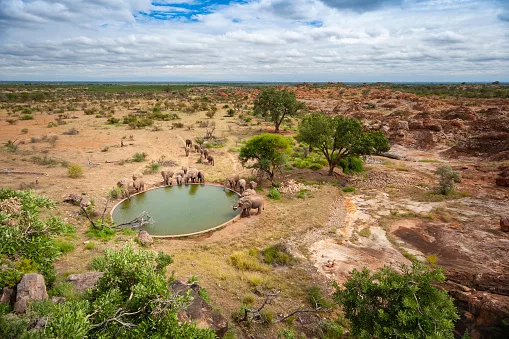
Herd of African savanna elephants visiting a waterhole, Mapungubwe National Park/By: Neil Aldridge/Getty Images
Discover an ancient kingdom among baobabs and sandstone
At the meeting point of the Limpopo and Shashe rivers, Mapungubwe National Park combines wildlife and some of the most significant archaeological remains in southern Africa.
The Mapungubwe Cultural Landscape was home to a powerful African kingdom that flourished between about AD 1220 and 1300. At its height, the kingdom was part of an Indian Ocean trading network with links reaching as far as Arabia and India. Archaeological discoveries on Mapungubwe Hill include gold beads, a gold sceptre and the famous golden rhino, now one of the best-known symbols of the site.
The landscape tells an even older story. Evidence of human occupation stretches back hundreds of thousands of years, while rock paintings, stone tools and archaeological sites reveal changing ways of life across different periods.
The wildlife adds another layer
History is only part of the experience. The park’s riverine forests, sandstone cliffs and dry landscapes support elephants, leopards and abundant birdlife.
A visit can combine a drive through the park with a trip to the Mapungubwe Cultural Landscape, viewpoints overlooking the river confluence and the archaeological sites around Mapungubwe Hill.
It is one of those rare destinations where looking across the landscape also means looking back through hundreds of years of history.
2. uKhahlamba-Drakensberg Park, KwaZulu-Natal
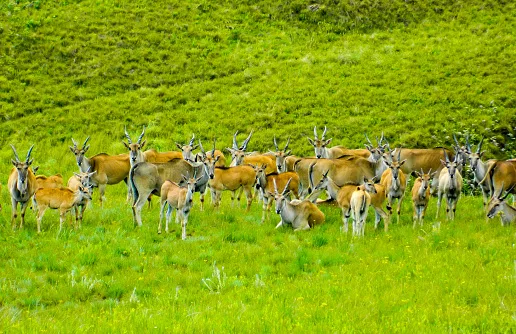
Eland herd grazing in uKhahlamba Drakensberg Park/ By: Lindokuhle Dlamini/Getty Images
Mountains filled with stories
The Drakensberg is easy to associate with dramatic cliffs, hiking trails and sweeping mountain views, but its importance goes far beyond scenery.
The uKhahlamba-Drakensberg Park is recognised as a World Heritage Site for both its natural and cultural significance. Its high-altitude grasslands, valleys, basalt formations and sandstone cliffs provide habitat for a range of endemic and threatened species.
Then there is the rock art.
The mountains contain the largest and most concentrated collection of rock paintings in Africa south of the Sahara. Created by San communities, the paintings depict people, animals and scenes connected to the beliefs and lives of the people who lived in this landscape.
Walk through a living archive
This makes a Drakensberg trip more than a mountain escape. Hiking routes can lead visitors through valleys and past shelters and rock-art sites, allowing the landscape itself to become part of the history lesson.
The combination of wildlife, mountain ecosystems and ancient art is what makes the Drakensberg particularly compelling. The same cliffs that provide a dramatic hiking backdrop have also preserved glimpses into lives lived here thousands of years ago.
ALSO READ:
3. Addo Elephant National Park, Eastern Cape
A conservation story written into the landscape
Addo’s history is closely tied to one of South Africa’s best-known conservation stories.
When Addo Elephant National Park was proclaimed in 1931, it was created to protect the remaining 11 Addo elephants. Hunting and conflict with expanding agriculture had devastated the local elephant population, and the survivors were confined to a relatively small area.
The park has since grown dramatically, both geographically and in terms of what it protects. What began as a sanctuary for one species is now a much larger conservation landscape containing a variety of habitats and wildlife.
Look beyond the elephants
There is history here that predates the national park by thousands of years.
The Alexandria dune field contains archaeological middens associated with people who lived along the coast. Shells, animal bones, pottery fragments and stone tools provide evidence of how earlier communities used the landscape and its resources.
That means a day in Addo can encompass both sides of the story: watching elephants in a landscape protected because of their near disappearance, while also encountering evidence of people who lived here long before the park existed.
4. Richtersveld, Northern Cape
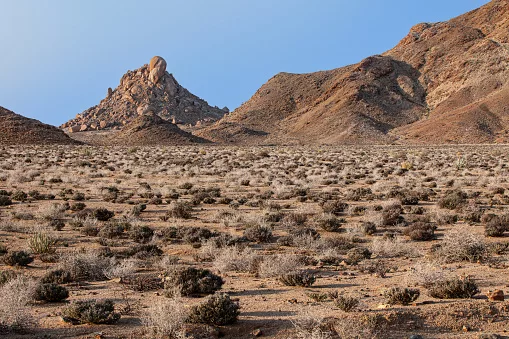
Die Toon (The Toe) photographed in the UNESCO Richtersveld Cultural and Botanical Landscape/By: Attie Gerber/iStock
Where culture has helped shape the landscape
The Richtersveld offers a completely different interpretation of the relationship between nature and history.
This mountainous desert in the Northern Cape is part of the Richtersveld Cultural and Botanical Landscape, a UNESCO World Heritage Site covering about 160,000 hectares. It is home to the Nama people’s semi-nomadic pastoral traditions, including seasonal movement between grazing areas and stockposts.
The cultural landscape is inseparable from its natural one. Traditional grazing practices have helped sustain the area’s distinctive succulent Karoo vegetation, while knowledge of plants and the environment has been passed down through generations.
Experience a desert shaped by people
The Richtersveld is famous for its stark mountains, rocky valleys and extraordinary succulent plants, but the landscape also tells the story of how people have adapted to an exceptionally dry environment.
The Nama traditionally used portable rush-mat houses known as haru oms, moving seasonally with livestock between grazing grounds and stockposts. UNESCO notes that these traditions may have persisted for as much as two millennia.
Here, history is not confined to a museum or archaeological site. It remains part of the way the landscape is understood and used.
5. iSimangaliso Wetland Park, KwaZulu-Natal
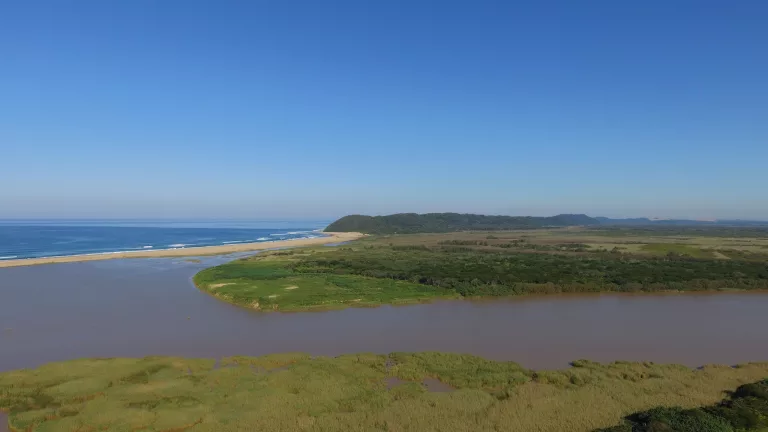
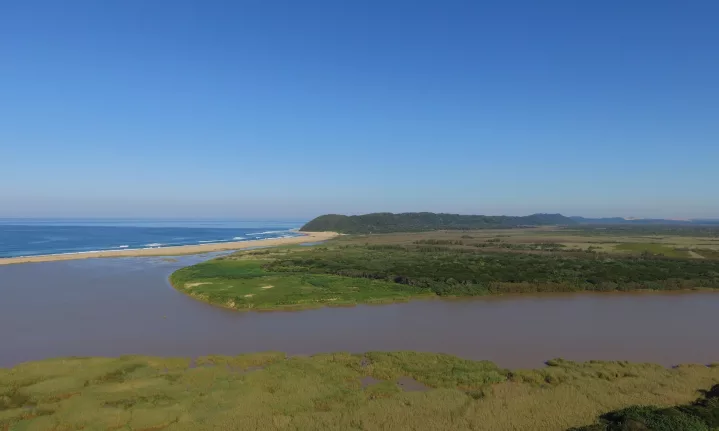
Sky view of Maphelane dune/Natureboy89/Wikimedia Commons
Where wetlands, wildlife and human history meet
iSimangaliso is best known for its extraordinary variety of ecosystems, stretching from coastal forests and dunes to lakes, wetlands, estuaries and the ocean.
The UNESCO World Heritage Site protects a remarkable range of habitats and supports species including hippos, turtles, elephants, rhinos and large concentrations of waterbirds.
But there is a substantial human history beneath the natural spectacle.
Archaeological evidence shows that people have lived in and around the landscape for thousands of years. The park’s cultural heritage includes archaeological and palaeontological sites, historical structures, shipwrecks, graves, fish traps, spiritual places and oral traditions.
Discover the stories behind the place names
The park’s own recent heritage research has also documented stories connected to places including Maphelane, Lake St Lucia, Cape Vidal, Kosi Bay and Sodwana Bay, drawing where possible on the recollections of people who lived in these areas and stories passed down through families.
Even the name iSimangaliso carries a story. The park explains that it is linked to an isiZulu expression about the wonders encountered in the land of the Thonga people.
Today, visitors can combine boat trips, wildlife viewing, birding and coastal exploration with an appreciation of the communities and histories that have long been part of the landscape.
Nature and history belong to the same story
From an ancient kingdom in Limpopo to a desert shaped by generations of Nama pastoralists, these destinations show that South Africa’s natural landscapes cannot always be separated from the people and events that shaped them.
The wildlife, mountains, wetlands and deserts are part of the attraction, but so are the stories held within them.
Follow us on social media for more travel news, inspiration, and guides. You can also tag us to be featured.
Instagram | Facebook | Twitter | Spotify
ALSO READ:
The South African destinations where couples can switch off without going off-grid