


Around the world, scientists, researchers and local communities are making important progress in protecting species and restoring ecosystems.

Texas Horned Lizard/Thomas Park/Unsplash
This past week brought several encouraging wildlife stories that highlight how conservation efforts, scientific innovation and long term monitoring are helping vulnerable animals survive.
Texas horned lizards are making a comeback
The Texas horned lizard, sometimes nicknamed the “horned toad”, was once a common sight across parts of the southern United States. Over time, habitat destruction, pesticide use and the decline of native harvester ants caused populations to drop dramatically.
Now, conservationists at the San Antonio Zoo have reported encouraging signs that captive bred horned lizards released into the wild are surviving and adapting successfully. Researchers have also found evidence that some of the animals may be reproducing naturally in their restored habitats.
The development is significant because successful breeding in the wild suggests the species is beginning to establish self sustaining populations rather than relying entirely on human intervention. Conservation programmes for reptiles can often be challenging because many species are highly sensitive to environmental changes, making this a particularly important milestone.
Indian conservationists recognised for protecting endangered species
Two Indian conservationists, Parveen Shaikh and Barkha Subba, received international recognition this week through the 2026 Whitley Awards, often referred to as the “Green Oscars”.
Shaikh has focused much of her work on protecting the endangered Indian skimmer, a distinctive waterbird known for its unusual feeding technique where it skims the surface of rivers with its lower beak. Habitat loss, river modification and human disturbance have caused populations to decline sharply across parts of South Asia. Subba’s conservation efforts have centred on protecting fragile Himalayan ecosystems, including wetlands and rare amphibian species such as Himalayan salamanders. Her work highlights the importance of community based conservation, where local residents play an active role in protecting biodiversity. Awards like these draw global attention to conservation projects that may otherwise receive limited international coverage, while also helping secure funding and support for future research and habitat protection.
Environmental DNA is transforming wildlife monitoring in Rwanda
Scientists working in and around Volcanoes National Park in Rwanda are increasingly using environmental DNA, commonly known as eDNA, to monitor wildlife populations without disturbing animals directly. Environmental DNA refers to genetic material that animals leave behind in the environment through fur, skin cells, saliva, droppings or waste. Researchers can collect samples from soil, rivers or water sources and analyse them to identify which species are present in an area. The technique is becoming an important conservation tool because it allows scientists to monitor biodiversity more efficiently, especially in dense forests or remote regions where animals are difficult to observe. In the Virunga landscape, which stretches across Rwanda, Uganda and the Democratic Republic of Congo, eDNA research could help scientists better understand ecosystem health and track species that are elusive or under threat. The technology also reduces the need for invasive monitoring methods and may improve conservation planning in some of Africa’s most biodiverse regions.
Rare red ruffed lemur triplets born in the United States
A critically endangered red ruffed lemur recently gave birth to a rare set of triplets at a wildlife park in Georgia in the United States. Native to Madagascar, red ruffed lemurs are among the world’s most threatened primates. Their populations have declined because of deforestation, habitat fragmentation and hunting. Scientists estimate that fewer than 10,000 individuals remain in the wild. Multiple births are uncommon among lemurs, making the successful arrival of three healthy offspring particularly notable for conservation breeding programmes. Captive breeding plays an important role in maintaining genetic diversity and creating insurance populations for species facing severe pressure in the wild. Although animals born in conservation programmes are not always reintroduced into natural habitats, these breeding efforts contribute valuable research and help raise public awareness about species facing extinction risks.
Rare hybrid sea turtle hatchlings offer new research opportunities
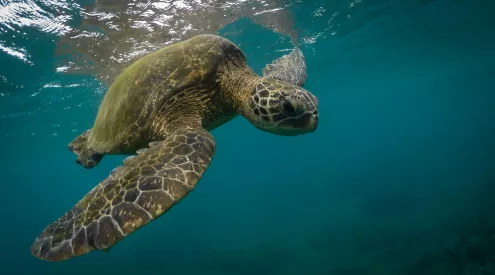
Marine researchers in Queensland, Australia are closely monitoring two rare sea turtle hatchlings believed to be hybrids between loggerhead and green turtles. The hatchlings were transferred to specialist care facilities for observation and further study. Scientists hope the turtles may provide valuable insight into marine turtle genetics, migration and reproduction. Hybridisation between sea turtle species is relatively uncommon, though it may occur in regions where different species share nesting areas. Researchers are still working to understand how climate change, warming oceans and shifting habitats may influence these interactions. Studying unusual hatchlings can help scientists better understand the health and adaptability of marine turtle populations, many of which remain threatened by pollution, fishing activity, habitat destruction and climate change.
Follow us on social media for more travel news, inspiration, and guides. You can also tag us to be featured.
Instagram | Facebook | Twitter
ALSO READ:
Constitutional Court case could redefine how ‘wellbeing’ is interpreted in law