


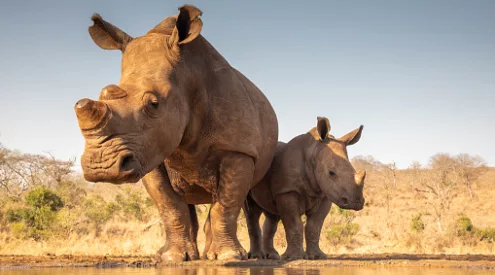
World Rhino Day is observed on 22 September each year, shining a spotlight on the five rhino species found across Africa and Asia. While rhinos are among Africa’s most recognisable animals, there is plenty about these prehistoric-looking giants that you might not know.
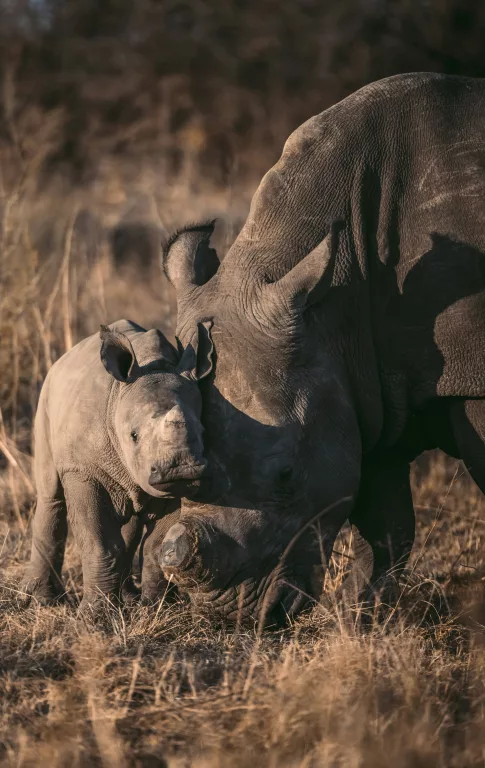
Photo: Unsplash
With the latest global population estimated at around 26,700 rhinos, conservation efforts remain important, particularly for the species with the smallest remaining populations. Here are 10 facts to know this World Rhino Day.
1. There are five rhino species
There are five living rhinoceros species: the black rhino, white rhino, greater one-horned rhino, Sumatran rhino and Javan rhino.
Two species, the black and white rhino, are found in Africa, while the greater one-horned, Sumatran and Javan rhinos are found in Asia. Their habitats range from African savannahs and grasslands to the forests and wetlands of Asia.
The conservation status of the five species varies considerably, with black, Javan and Sumatran rhinos classified as Critically Endangered, while the greater one-horned rhino is Vulnerable and the white rhino is Near Threatened.
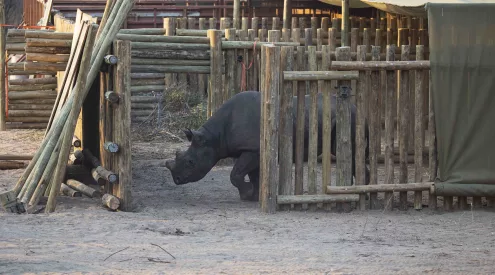
2. You can tell black and white rhinos apart by their mouths
Despite their names, the easiest way to distinguish a black rhino from a white rhino isn’t their colour. Both are generally grey.
Instead, take a look at their mouths.
Black rhinos have a pointed, hooked upper lip, which helps them pick leaves and twigs from bushes and trees. White rhinos have a much broader, square-shaped upper lip, suited to grazing grass. This is also why black rhinos are known as browsers, while white rhinos are grazers.
The names “black” and “white” are therefore a little misleading.
3. Rhino horn is made of keratin
A rhino’s horn might look like it belongs in the animal’s skeleton, but it is actually made primarily of keratin, the same protein found in human hair and fingernails.
The horn grows continuously throughout a rhino’s life. Unlike antlers, which are shed and regrown, rhino horns do not naturally fall off each year.
4. Not all rhinos have two horns
Three of the five living species have two horns: the black, white and Sumatran rhinos.
The greater one-horned rhino and Javan rhino have only one horn.
The Sumatran rhino is particularly distinctive among the Asian species because it has two horns. It is also the smallest of the five living rhino species.
5. Rhinos can run surprisingly fast
Their large size can make rhinos appear slow, but these animals can move at considerable speed when they need to.
Black rhinos, in particular, can reach speeds of around 55km/h. Their ability to turn quickly while running also makes them considerably more agile than their bulky appearance might suggest.
That is one reason visitors on safari should always give rhinos plenty of space and follow the instructions of their guide.
6. The northern white rhino has only two individuals left
This is one of the starkest examples of how vulnerable some rhino populations have become.
There are currently only two northern white rhinos remaining, both females. They live at Ol Pejeta Conservancy in Kenya and are protected around the clock. The last male, Sudan, died in 2018.
Because there are no remaining males, natural reproduction is no longer possible. Scientists and conservationists have therefore been working on assisted reproductive techniques in an effort to prevent the subspecies from disappearing entirely.
7. The greater one-horned rhino has made an impressive recovery
Not every rhino conservation story is one of decline.
The greater one-horned rhino, also known as the Indian rhino, has increased substantially following decades of protection in India and Nepal. The latest IUCN figures estimate 4,075 individuals, compared with 2,565 in 2007.
The species is also rather different in appearance from Africa’s rhinos, with thick folds of skin giving it an almost armour-plated appearance.
8. Black rhino numbers have more than doubled from their historic low
Black rhinos have also demonstrated that conservation can make a difference.
Their numbers fell by a staggering 98% between 1960 and 1995, when fewer than 2,500 remained. The population has since recovered to almost 6,800, with the IUCN estimating 6,788 black rhinos at the end of 2024.
They remain Critically Endangered, however, and the recovery is not guaranteed to continue. The latest IUCN assessment noted that conservation gains remain vulnerable to threats including poaching, habitat pressures and environmental changes.
9. Two rhino species have fewer than 100 individuals
The northern white rhino isn’t the only rhino population facing an extremely precarious future.
The Javan rhino population is estimated at just 50 animals, while there are an estimated 34 to 47 Sumatran rhinos remaining. Both species are Critically Endangered.
The entire known wild population of Javan rhinos is concentrated in Indonesia’s Ujung Kulon National Park, making the species particularly vulnerable to threats affecting its limited habitat.
10. Rhinos are important to the ecosystems they inhabit
Rhinos aren’t simply impressive animals to spot on safari. As large herbivores, they play a role in shaping the landscapes around them.
Their grazing and browsing influence vegetation, while their movement and feeding can create opportunities for other species. Their dung also contributes nutrients to ecosystems and can help disperse seeds.
The latest conservation figures offer a reminder that the story of rhinos is not simply one of decline. Some populations have increased significantly through sustained protection and conservation work, while others remain critically small. The challenge is maintaining those gains while protecting the species that are still on the brink.
Why World Rhino Day matters
The five surviving rhino species face very different circumstances, from populations numbering in the thousands to the two remaining northern white rhinos. The latest figures from the International Rhino Foundation put the total global rhino population at approximately 26,700.
For South Africa, where the majority of the world’s southern white rhinos are found, the conservation of these animals remains particularly relevant. World Rhino Day provides an opportunity to look beyond the familiar safari sighting and understand just how unusual, ancient and vulnerable these animals are.
ALSO SEE: 5 places in South Africa where rhino conservation is changing the future
5 places in South Africa where rhino conservation is changing the future