


Brazil has officially classified the six-tubercled Amazon river turtle as endangered for the first time, highlighting growing concerns over the health of one of the Amazon’s most important freshwater species.
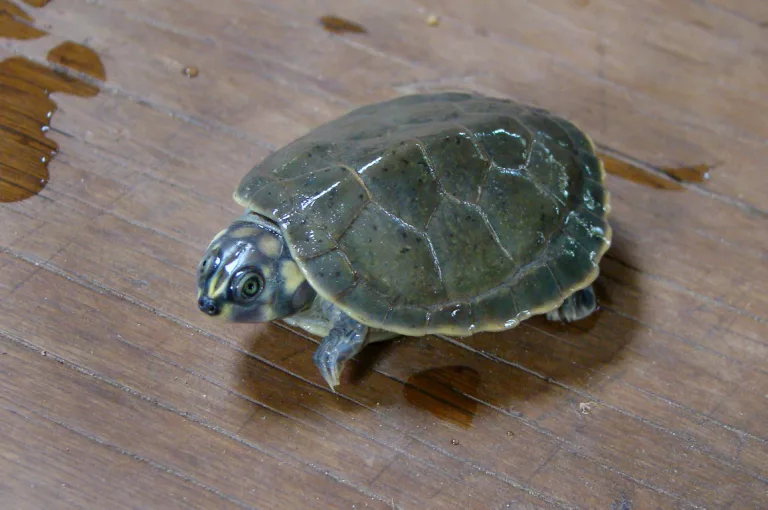
Young Six-tubercled Amazon River turtle photographed in the Amazon, Brazil/Cláudio Dias Timm/Wikimedia Commons
The cágado-iaçá (Podocnemis sextuberculata) was upgraded from “near threatened” to “endangered” in the country’s latest national list of threatened wildlife, published by Brazil’s Ministry of Environment and Climate Change. The reclassification follows evidence that populations have declined by more than 50% over the past 36 years across Amazonas and western Pará, where around 70% of the species’ range is found.
The turtle, known locally as tracajá, is one of the Amazon’s smallest river turtles, growing to about 34 cm in length and weighing up to 3.5 kg. It has long been an important source of food for many Indigenous and riverine communities throughout northern Brazil.
Conservationists say its new status reflects the mounting pressures facing Amazon wildlife despite decades of protection efforts.
A species under increasing pressure
According to Brazil’s Chico Mendes Institute for Biodiversity Conservation (ICMBio), the six-tubercled Amazon river turtle has suffered significant population losses despite ongoing conservation programmes.
The species faces a combination of threats, including habitat degradation, illegal harvesting and unsustainable hunting. While it is widely consumed alongside the yellow-spotted river turtle and the larger Amazon river turtle, those two species remain in less threatened categories.
Officials stressed that future conservation measures will need to balance wildlife protection with the livelihoods of traditional communities that have sustainably relied on these turtles for generations.
ALSO READ:
Western Cape dams continue to recover after welcome winter rains
Hundreds more species now threatened
The updated list includes 790 threatened terrestrial species, spanning mammals, birds, reptiles, amphibians and invertebrates. Combined with aquatic species added earlier this year, Brazil now officially recognises 1,280 species as threatened with extinction.
Among the species newly classified as vulnerable are the iconic hyacinth macaw, the black howler monkey and the red silky anteater.
The red-footed tortoise has also been listed as vulnerable, while the yellow-footed tortoise has been upgraded to endangered.
Habitat loss remains the greatest threat
Brazil assessed more than 15,500 animal species during what conservation authorities describe as one of the world’s largest national extinction risk assessments.
Habitat destruction remains the biggest driver of biodiversity loss. The Atlantic Forest continues to record the highest number of threatened terrestrial species after centuries of deforestation, urban expansion and agricultural development, with only a small fraction of its original forest cover remaining.
The Amazon is increasingly affected by similar pressures, alongside climate change, mining, infrastructure development and expanding agriculture.
Wildlife trafficking compounds the crisis
Conservation groups also warn that illegal wildlife trafficking continues to place enormous pressure on Brazil’s native species.
While official seizure figures provide some indication of the trade, experts say they represent only a fraction of the animals removed from the wild each year. Estimates from Brazil’s National Network Against the Trafficking of Wild Animals suggest that more than 38 million animals are taken annually from the country’s terrestrial ecosystems to supply the illegal wildlife trade.
The addition of the six-tubercled Amazon river turtle to Brazil’s endangered species list underscores the growing challenges facing the Amazon’s unique biodiversity and the urgent need for conservation measures that protect both wildlife and the communities that depend on these ecosystems.
SOURCE: Mongabay
Follow us on social media for more travel news, inspiration, and guides. You can also tag us to be featured.
Instagram | Facebook | Twitter | Spotify
ALSO READ:



_-_Filhote.jpg)