




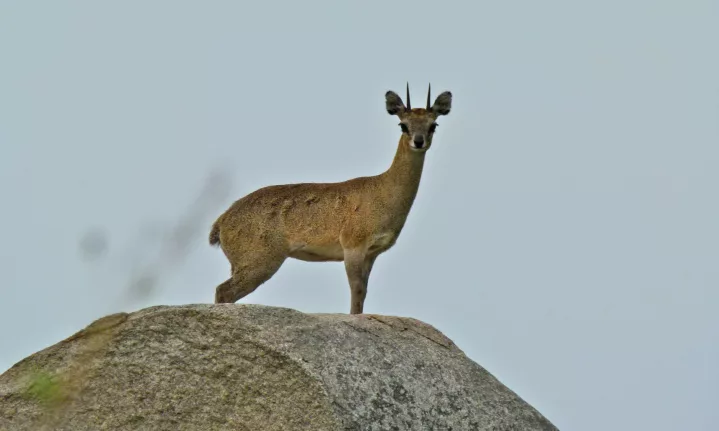
The Big Five may dominate safari wish lists, but South Africa is also home to some remarkably small antelope that are just as fascinating to encounter. Many stand no higher than a household dog, blend seamlessly into their surroundings and spend much of their lives hidden in forests, fynbos or rocky outcrops.
Spotting one requires patience, a keen eye and a little luck. Yet these miniature antelope reward observant travellers with some of the country’s most memorable wildlife sightings. From the tiny blue duiker to the nimble klipspringer, here’s where to find South Africa’s smallest antelope and what makes each one so special.
Blue duiker
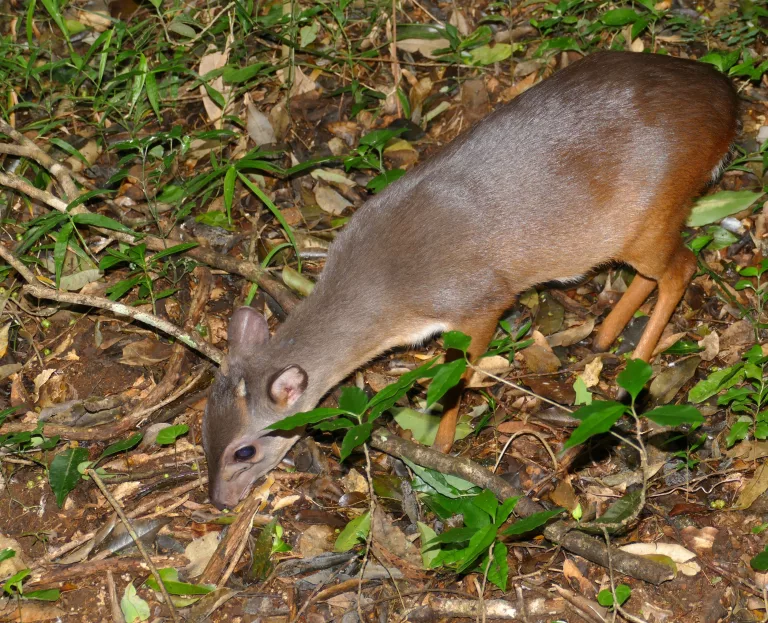
Blue duiker/Bernard DUPONT from FRANCE/Wikimedia Commons
The tiniest antelope in Southern Africa
Standing at just 30 to 40cm tall and weighing between 4 and 6kg, the blue duiker is Southern Africa’s smallest antelope. Its slate-blue sheen, rounded body and delicate face make it easy to distinguish, although seeing one is another matter entirely.
Blue duikers inhabit dense coastal and indigenous forests, where they feed on fallen fruit, leaves, flowers and fungi. Unlike many antelope that graze in open grasslands, they rarely venture into clearings, preferring thick undergrowth that offers protection from predators.
Where to see them
Some of the best places to look include Tsitsikamma National Park along the Garden Route, the indigenous forests of Knysna, Dwesa-Cwebe Nature Reserve in the Eastern Cape and protected forests in northern KwaZulu-Natal. Early mornings and late afternoons offer the best chance of a sighting as they quietly forage beneath the forest canopy.
Suni
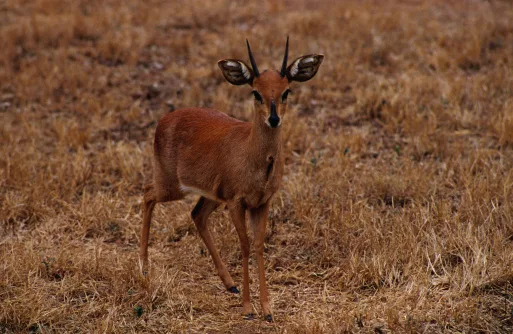
Image of suni antelope used for illustrative purposes/By: Richard I’Anson
Stone
A forest specialist
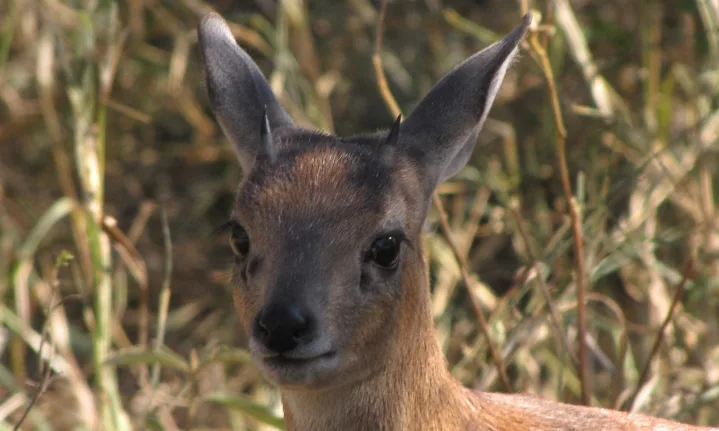
The suni is one of Africa’s smallest antelope, reaching only around 35 to 45cm at the shoulder. With its reddish-brown coat, large ears and alert expression, it is perfectly adapted to life in dense coastal forests and thickets.
Unlike larger antelope that move in herds, sunis are shy, solitary animals or are occasionally seen in pairs. They rely on dense vegetation for cover and freeze at the slightest sign of danger before disappearing almost silently into the undergrowth.
Where to see them
In South Africa, the best opportunities are found in Tembe Elephant Park, Mkhuze Game Reserve and parts of the iSimangaliso Wetland Park in northern KwaZulu-Natal. Guided walks often provide better viewing opportunities than vehicle safaris, as the quieter pace makes it easier to notice movement among the vegetation.
ALSO READ:
Cape grysbok
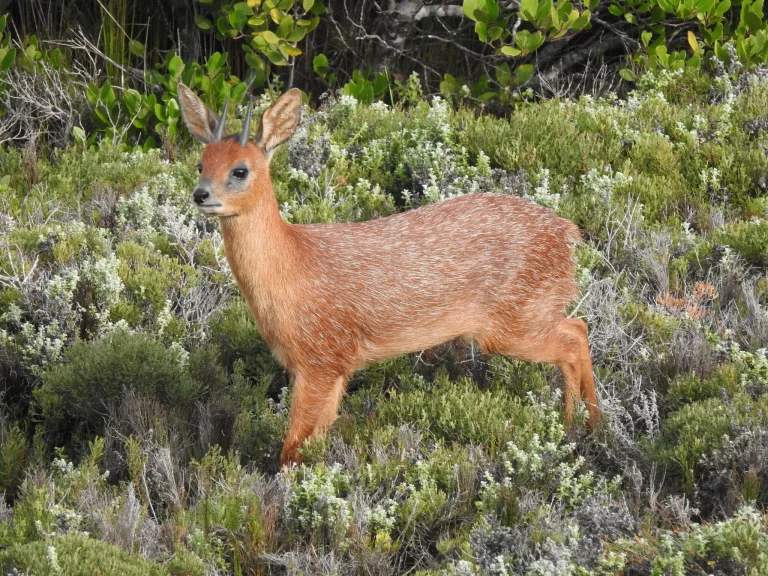
Cape grysbok/Ryan van Huyssteen/Wikimedia Commons
The fynbos favourite
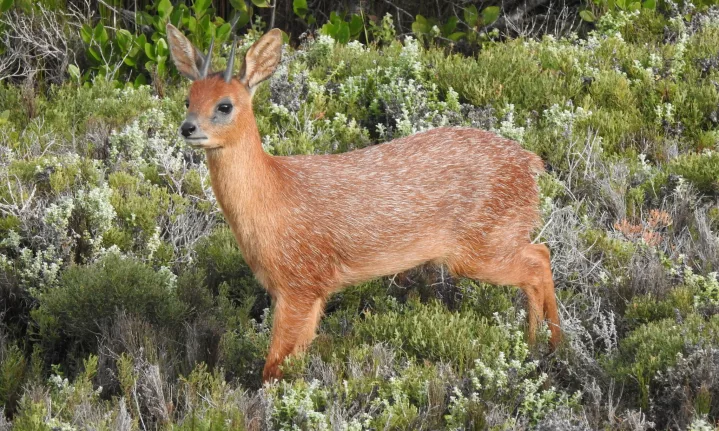
Found nowhere else in the world, the Cape grysbok is endemic to South Africa’s fynbos biome. Slightly larger than the blue duiker, this compact antelope has coarse grey-brown fur, large rounded ears and striking white speckles scattered across its coat.
Primarily nocturnal, Cape grysbok spend daylight hours concealed within shrubs before emerging at dusk to browse on leaves, shoots and herbs.
Where to see them
Cape Point in Table Mountain National Park is one of the easiest places to spot Cape grysbok, particularly in the quieter early mornings or near sunset. They are also regularly seen in De Hoop Nature Reserve, Agulhas National Park and several private reserves across the Western Cape.
Sharpe’s grysbok
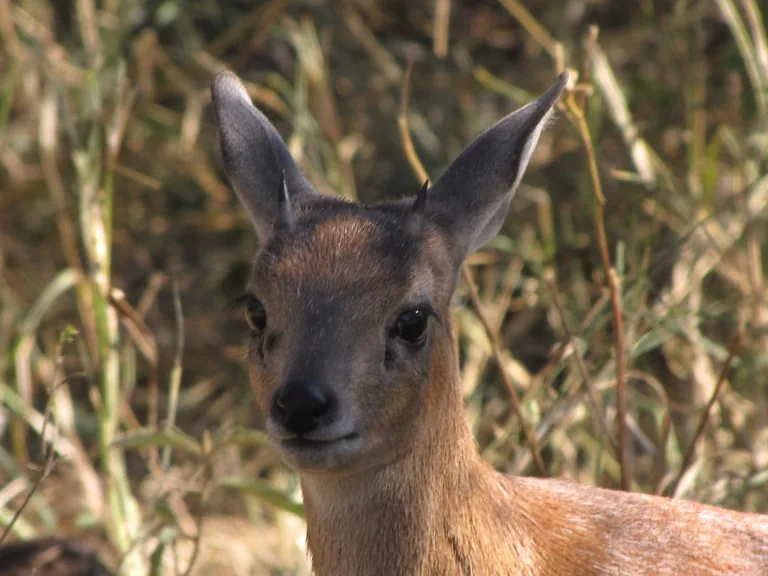
Sharpe’s grysbok/Brian du Preez/Wikimedia Commons
The northern cousin
Sharpe’s grysbok closely resembles the Cape grysbok but occupies bushveld and woodland habitats in the country’s northeast. It is among South Africa’s least-seen antelope thanks to its nocturnal habits and preference for dense vegetation.
Unlike many antelope species, both males and females are highly territorial and usually live alone.
Where to see them
Your best chance is in the far northern reaches of Kruger National Park, along with selected private reserves in Limpopo and Mpumalanga. Night drives significantly improve the odds of a sighting.
Steenbok
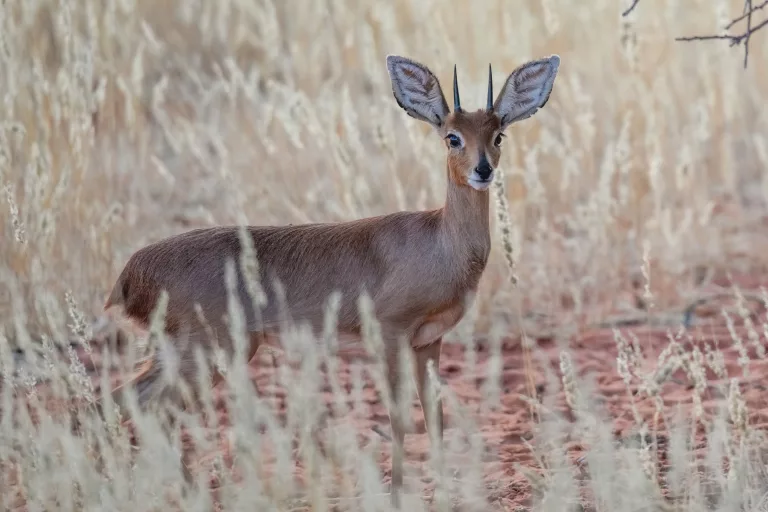
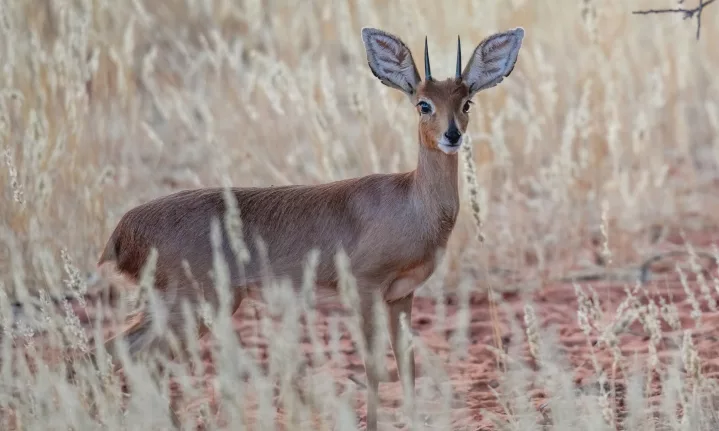
Male Steenbok in the Kalahari Desert of Namibia/Giles Laurent/Wikimedia Commons
Small but widespread
With its slender legs, oversized ears and graceful movements, the steenbok is one of South Africa’s most familiar small antelope. Adults weigh only around 10 to 12kg, making them considerably smaller than impala but much easier to overlook in open landscapes.
Steenbok are usually solitary and rely on stillness rather than speed when predators approach. Their sandy colouring allows them to disappear into dry grasslands and semi-arid environments.
Where to see them
Steenbok occur throughout much of South Africa and are regularly spotted in Kgalagadi Transfrontier Park, Addo Elephant National Park, Karoo National Park and Kruger National Park. They’re also common on many private game reserves.
Common duiker
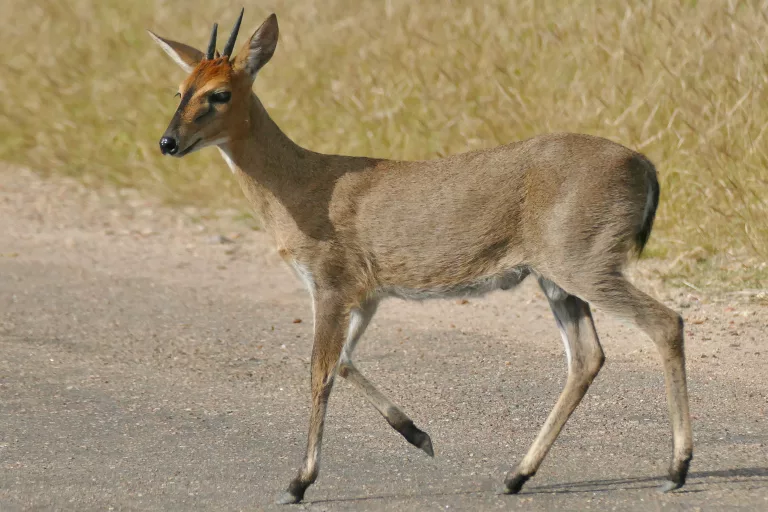
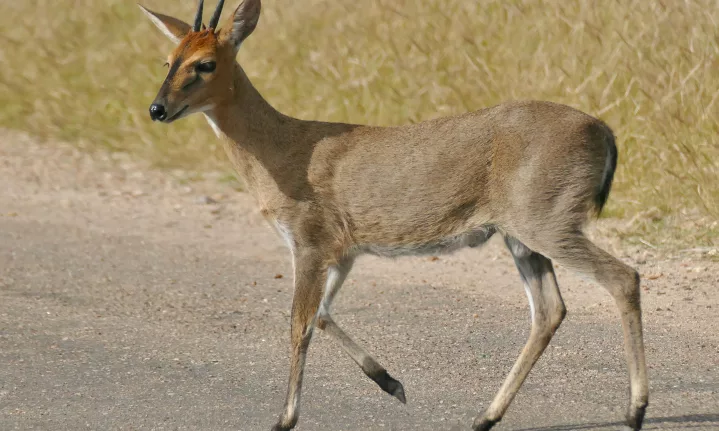
Common duiker/Bernard DUPONT from FRANCE/Wikimedia Commons
The adaptable browser
Although larger than the other species on this list, the common duiker deserves a mention because it is often the first small antelope visitors encounter.
Highly adaptable, it occupies forests, bushveld, savanna and even farmland. Common duikers feed on leaves, fruit, flowers and insects, making them one of the country’s most versatile antelopes.
Where to see them
They occur across most of South Africa, from the Western Cape to Limpopo, and are regularly seen in national parks, nature reserves and even along quiet rural roads.
Klipspringer
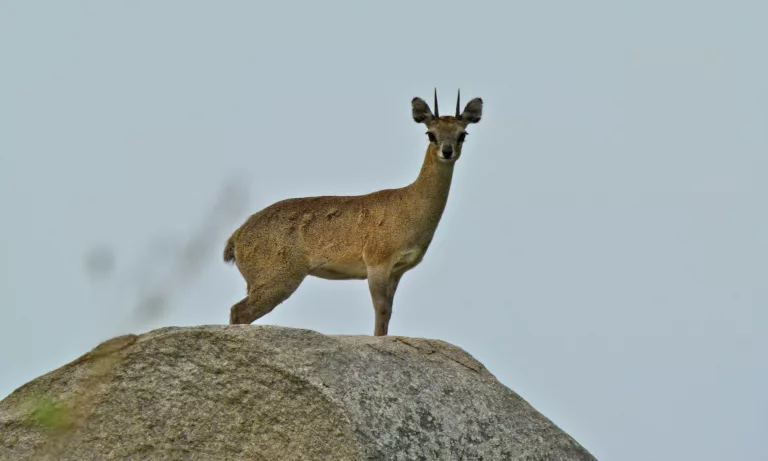
Klipspringer/Bernard DUPONT from FRANCE/Wikimedia Commons
The mountain acrobat
While not the smallest antelope by weight, the klipspringer is one of the country’s most distinctive miniature species. Standing around 50 to 60cm tall, it has specialised rubbery hooves that allow it to balance on tiny rock ledges with remarkable precision.
Klipspringers typically live in lifelong pairs and spend much of their time navigating cliffs and rocky outcrops that larger predators struggle to access.
Where to see them
Excellent viewing opportunities exist in Table Mountain National Park, the Cederberg, Blyde River Canyon Nature Reserve, Augrabies Falls National Park and the Drakensberg, where rocky terrain provides ideal habitat.
Why these tiny antelope are so easy to miss
Unlike large herd animals that dominate open plains, South Africa’s smallest antelope survive by remaining inconspicuous. Most are solitary, many are active at dawn, dusk or night, and several rely on dense vegetation or rocky terrain to avoid predators.
Their natural camouflage means they often stay perfectly still as vehicles pass by, making them almost invisible unless you know what to look for. Slowing down, scanning the edges of forests and thickets, and joining guided bush walks can dramatically improve your chances of spotting these elusive mammals.
Follow us on social media for more travel news, inspiration, and guides. You can also tag us to be featured.
Instagram | Facebook | Twitter | Spotify
ALSO READ:








_male_crossing_the_road_..._(53135907371).jpg)
_(6011633719).jpg)