
South Africa’s wildlife is about much more than the animals that dominate the safari checklist. Beyond lions, elephants and leopards is a remarkable collection of antelope, many of which are elusive, habitat specialists or simply easy to overlook.
Some are tiny enough to disappear into dense vegetation. Others favour rocky mountain slopes, while a few of the country’s most striking species are concentrated in the northern reaches of the Kruger National Park.
If you’ve already learnt to spot the obvious animals, these six unusual antelope are worth adding to your next wildlife wish list.
Suni
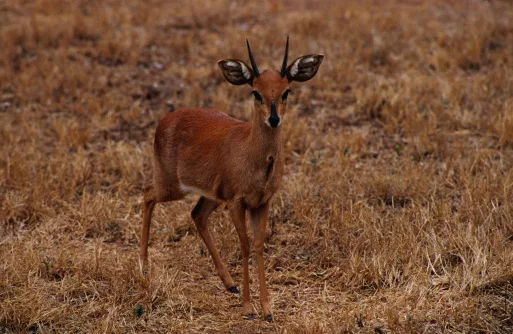
Image of suni antelope used for illustrative purposes/By: Richard I’Anson Stone/Getty Images
Look closely in northern Kruger
At little more than knee height, the suni is one of South Africa’s easiest antelope to miss. This tiny reddish-brown antelope favours dense vegetation, where its small size allows it to move quietly through the undergrowth.
In South Africa, one of the best-known places to look is the northern Kruger National Park. SANParks describes the Mahonie Loop near Punda Maria as the best venue in the park for seeing suni. The surrounding Punda Maria area also offers very different vegetation from the southern sections of Kruger, making the journey north worthwhile in its own right.
The trick is to slow down. Rather than scanning open plains for large herds, concentrate on the edges of dense bush and listen for movement.
A suni sighting may last only a few seconds, but that is part of its appeal.
Oribi
Head to the KwaZulu-Natal grasslands
The oribi is a small, delicate antelope with a distinctive white throat and underparts. Unlike the forest-loving suni, it is associated with open grassland and can be surprisingly difficult to spot despite living in relatively open country.
One of the most evocative places to search for it is Oribi Gorge Nature Reserve on the KwaZulu-Natal South Coast. The reserve takes its name from the antelope and protects a spectacular landscape of sandstone cliffs, grassland and indigenous forest. Ezemvelo KZN Wildlife lists the rare oribi among the reserve’s wildlife.
Oribi also occur elsewhere in KwaZulu-Natal, where their conservation has become increasingly important. SANBI notes research into their populations and conservation in the province.
The setting makes this an especially memorable wildlife experience: rather than looking for an oribi against a typical game-reserve backdrop, you could find one while exploring one of the province’s most dramatic landscapes.
ALSO READ:
A roundup of some of the must-visit sculpture gardens in South Africa
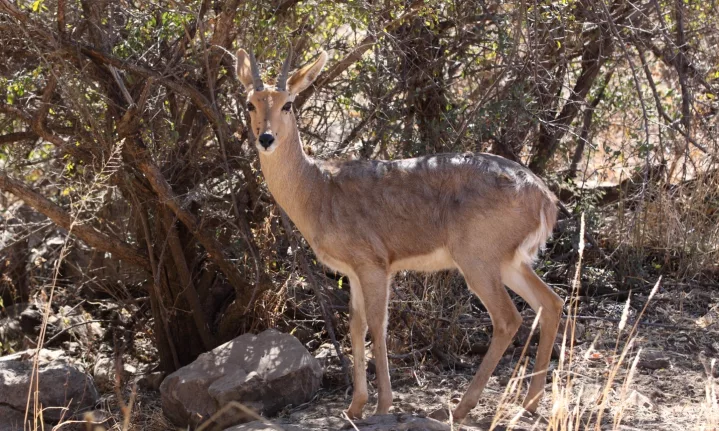
Mountain reedbuck
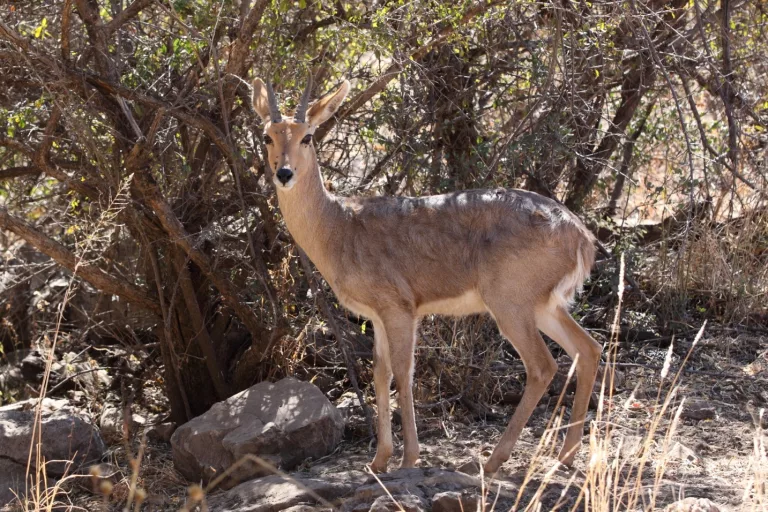
Mountain reedbuck/Darren Obbard/Wikimedia Commons
Search the slopes rather than the savanna
If your idea of an antelope safari involves flat grasslands and dusty roads, mountain reedbuck will change the picture.
As its name suggests, this species is closely associated with hills and mountains. SANParks describes its habitat as dry, stony slopes with grass and scattered bushes and trees, with the species occurring at elevations of up to 2,200 metres in the Drakensberg.
The Sterkfontein Dam Nature Reserve in the eastern Free State is one particularly interesting destination. The reserve’s rugged landscape supports mountain reedbuck, grey rhebok and reedbuck, while the surrounding escarpment provides an entirely different wildlife setting from the Lowveld.
Mountain reedbuck have also been recorded in the Drakensberg, where visitors may encounter them alongside other high-altitude antelope such as grey rhebok, klipspringer and oribi.
This is an antelope best approached with a different mindset: look up the slopes, scan rocky ridges and give yourself time to pick out animals against the grass.
Tsessebe
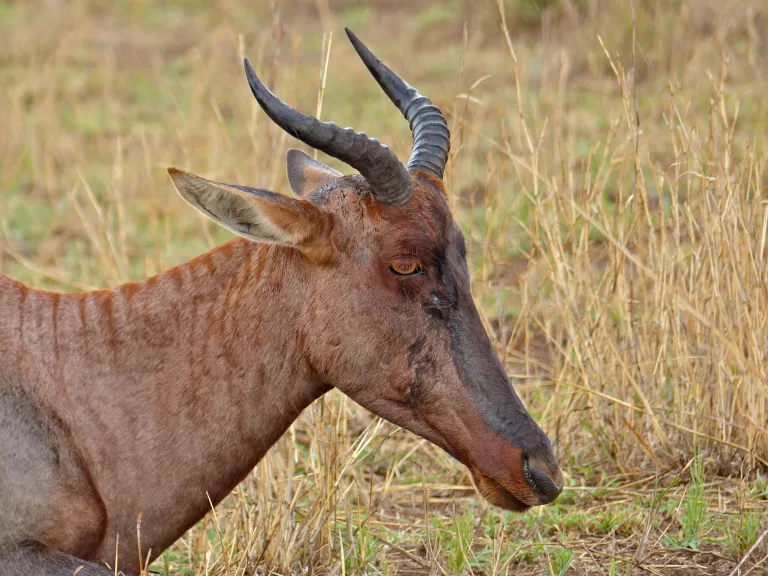
Tsessebe close-up in Kruger/Bernard DUPONT from FRANCE/Wikimedia Commons
Explore the northern reaches of Kruger
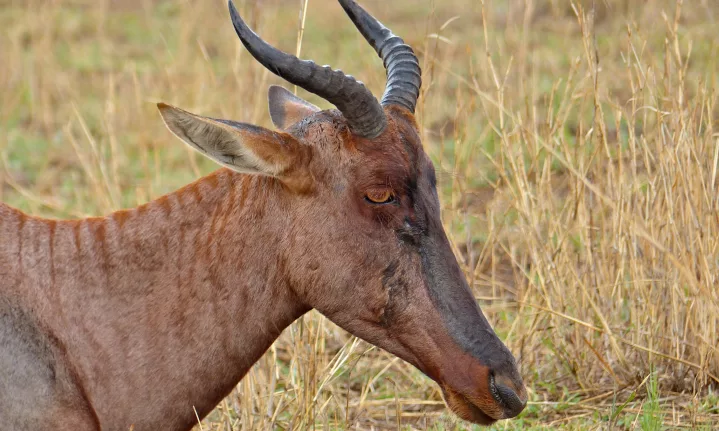
With its sloping back, long face and dark markings, the tsessebe is one of the more distinctive members of the antelope family.
It is also one of the species that rewards travellers who venture into northern Kruger. SANParks identifies the open plains north of Babalala Picnic Site as a good area to search for rare large antelope, including tsessebe, sable, roan, eland and Lichtenstein’s hartebeest.
The Shingwedzi region is therefore worth considering if your safari priorities extend beyond the standard game-viewing circuit.
Here, the landscape itself becomes part of the experience. The alluvial plains around the Shingwedzi River contrast with the surrounding mopane shrubveld, creating a varied habitat and a different feel from the busy southern sections of the park.
For wildlife enthusiasts, a northern Kruger trip can become less about ticking off the Big Five and more about searching for the species that require a little more patience.
Sable

Sable antelope at Tswaluw Kalahari/Charles J. Sharp/Wikimedia Commons
Watch the northern Kruger grasslands
Few African antelope are as spectacular as the sable.
Adults are instantly recognisable by their dark coats, powerful build and impressive backwards-curving horns. They are also not an animal that should be treated as a guaranteed sighting: SANParks includes sable among the rare large antelope visitors should search for around the Shingwedzi region.
That makes northern Kruger particularly appealing for dedicated wildlife watchers.
The wider area around Shingwedzi and Babalala offers opportunities to search for several of Kruger’s less commonly seen large antelope in the same trip.
Sable also demonstrates why it pays to spend more time in one part of a reserve rather than racing through it. A safari centred on unusual antelope calls for patience, repeated drives and an eye trained to pick out shapes at a distance.
Nyala

A Nyala bull spotted in Harmony, Hoedspruit/Rayne Rabie/Unsplash
Look for them around Pafuri
The nyala is perhaps one of the most visually unusual antelope on this list, particularly because males and females look so different.
Males are larger and darker, with prominent horns and vertical white stripes, while females are smaller, reddish-brown and lack horns. This dramatic difference can make the two sexes appear almost like separate species to an inexperienced observer.
The northern Kruger is one of the best places to add nyala to a wildlife-focused itinerary. SANParks specifically highlights Pafuri for nyala sightings, while the Punda Maria area is also noted for the species.
The Pafuri region is particularly rewarding because the wildlife comes with a spectacular landscape. The Luvuvhu River and surrounding vegetation create a greener, more wooded environment than much of the park, and the area is also exceptionally good for birding.
For travellers who enjoy looking beyond the obvious safari animals, a nyala sighting is a reminder of just how varied South Africa’s antelope can be.
Why look beyond the usual safari checklist?
The smaller sightings can be the most rewarding
South Africa’s antelope diversity offers a different way of experiencing the country’s reserves and wild spaces.
A search for suni takes you into dense northern Kruger vegetation. Looking for oribi can lead you to KwaZulu-Natal’s grasslands and spectacular gorges. Mountain reedbuck changes the scenery completely, taking you into high-altitude landscapes, while tsessebe and sable encourage a deeper exploration of northern Kruger.
Even the familiar idea of a game drive changes when the goal is no longer simply to find the largest or most famous animal.
So on your next South African safari, keep the binoculars ready for the animals that don’t necessarily announce their presence. The unusual antelope may end up being the sighting you remember longest.
Follow us on social media for more travel news, inspiration, and guides. You can also tag us to be featured.
Instagram | Facebook | Twitter | Spotify
ALSO READ: