
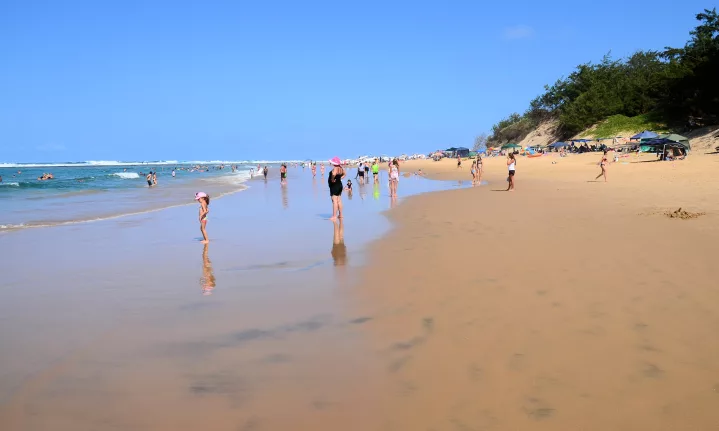
iSimangaliso Wetland Park is often associated with long stretches of golden coastline, but its most fascinating stories unfold away from the sand. Across northern KwaZulu-Natal, wetlands, estuaries, lakes, grasslands, coastal forests and marine habitats exist alongside one another, creating one of South Africa’s most diverse protected areas.
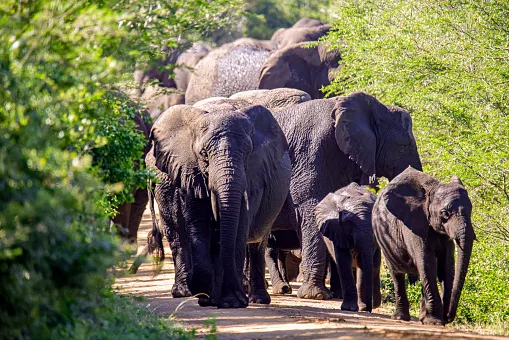
A herd of African elephants strolls down a dirt path in Isimangaliso Wetland Park, South Africa. /By: Beata Whitehead/Getty Images
The park became South Africa’s first UNESCO World Heritage Site in 1999 and stretches along about 220km of coastline. More than 520 bird species have been recorded here, while its habitats support everything from hippos and crocodiles to elephants, rhinos, whales and nesting turtles.
A 48-hour visit is enough to experience some of this variety without spending the entire trip on the beach. Base yourself in St Lucia and use the town as a gateway to the estuary, wetlands, coastal forests and wildlife-rich Eastern Shores.
Day 1: Start where the land meets the water
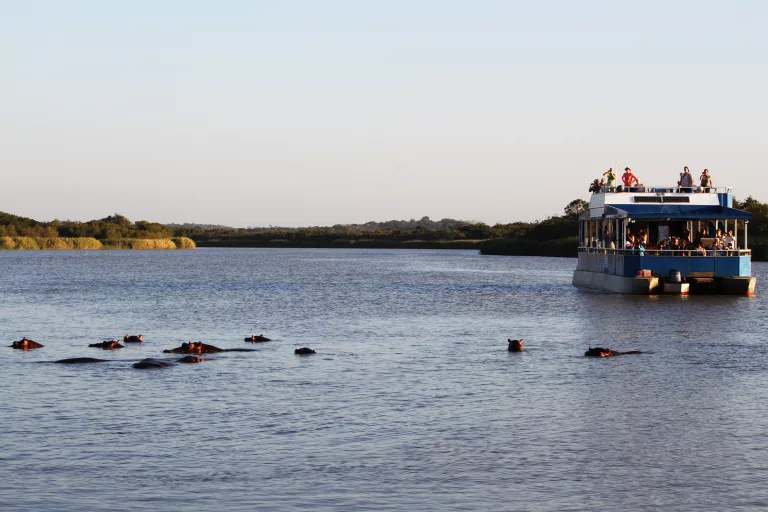
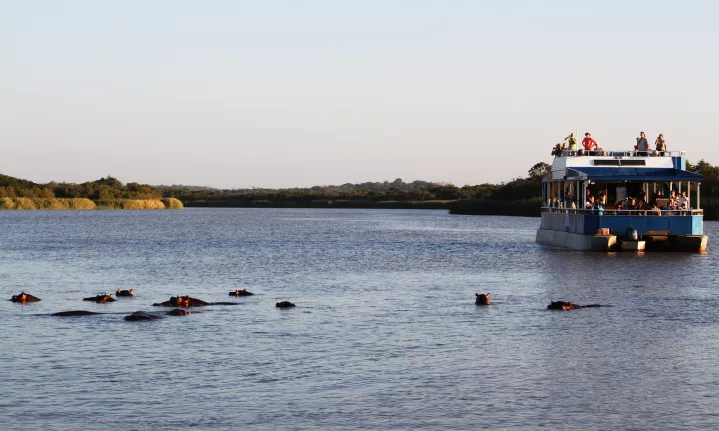
Hippo viewing at Lake St Lucia/Jessica Leonard/Wikimedia Commons
Cruise Lake St Lucia
Begin with the ecosystem that gives the area its character: Lake St Lucia.
The estuary is one of the most important wetland systems in South Africa, and more than half of KwaZulu-Natal’s waterbirds feed, roost or nest here. The lake is also an important nursery for fish, with 71 of the 155 fish species recorded in the estuarine system depending on it as a nursery area.
A boat cruise from St Lucia is one of the easiest ways to experience the lake. Rather than searching for animals on land, you are looking across the water for hippos, crocodiles and birds along the shoreline.
Keep binoculars handy for waterbirds and raptors, while hippos are often visible in or near the water. The park also records abundant antelope around the lake, including waterbuck, reedbuck, kudu, nyala, impala and duiker.
Look beyond the hippos
Lake St Lucia is more than a wildlife-viewing backdrop. Its changing conditions support a complex wetland ecosystem, and the area is home to an extraordinary diversity of plants.
More than 2,180 flowering plant species have been documented around the lake, illustrating how much life is supported by this watery landscape.
That makes the cruise a useful introduction to the bigger story of iSimangaliso: the animals are only one part of a much larger system.
Head into False Bay Park
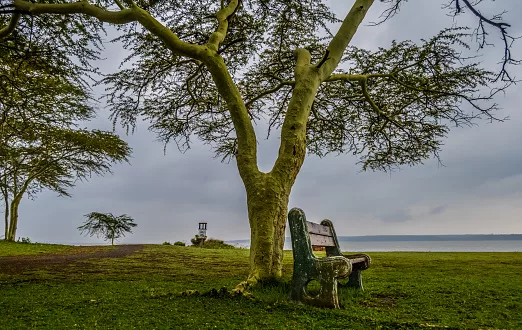
Green and isolated False Bay Park in iSimangaliso wetlands/By: Shams/iStock
Spend the afternoon on the western side of Lake St Lucia in False Bay Park, where the scenery changes from open water to rare sand forest.
The area has ancient fossil beds and seashells that provide evidence of a very different landscape in the past. Today, the forest supports birds, butterflies and smaller wildlife, while hippos and crocodiles remain in the surrounding wetland.
Three self-guided trails, including Mphophomeni, Ingwe and Dukandlovu, lead through sand forest and woodland towards the shores of Lake St Lucia.
This is a good place to slow down rather than ticking off a checklist of large animals. Look into the canopy for forest birds, scan the vegetation for butterflies and pay attention to tracks and other signs of wildlife.
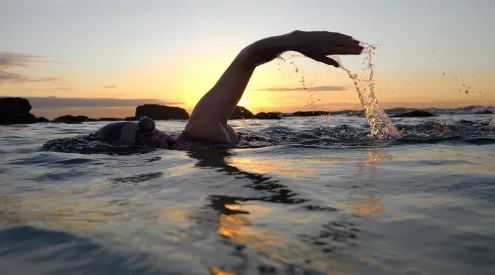
Swimming is not recommended in the lake because of the presence of hippos and crocodiles, making the shoreline better suited to walking, boating, birding and simply taking in the landscape.
Return to St Lucia
Back in town, the evening is an opportunity to experience St Lucia without another major activity. The town sits beside the park and makes a convenient base for exploring several of iSimangaliso’s habitats.
After a day spent around water, forest and wetland, dinner in town brings you back to civilisation before another early start.
ALSO READ:
Karkloof: The KwaZulu-Natal Midlands escape built around forests, farms and fresh air
Day 2: Follow the wetlands towards the coast
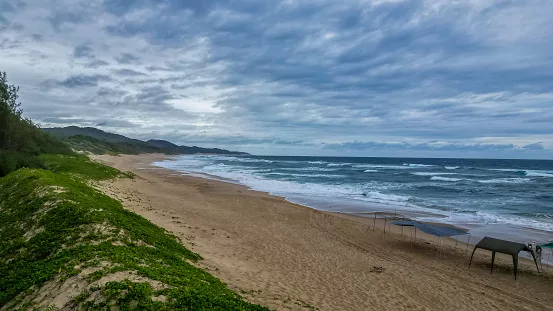
Aerial drone shot of Cape Vidal beach in St Lucia, iSimangaliso/By: Shams/iStock
Drive the Eastern Shores
Start early and head into the Eastern Shores section towards Cape Vidal.
This is where iSimangaliso’s unusual geography becomes particularly obvious. The route passes through coastal forest, grasslands and freshwater pans before reaching the Indian Ocean. The park describes the Eastern Shores as an area where bush, lake and ocean meet, creating opportunities for both wildlife viewing and birding.
Take your time on the loop roads rather than treating the drive as simply a way to reach Cape Vidal.
Elephants, rhinos, buffalo and other wildlife occur in the area, while the freshwater pans and forest habitats attract a range of bird species.
Make the birds part of the safari
The Eastern Shores are particularly rewarding if you stop thinking of a safari as a search for large mammals.
The park’s varied habitats support species including Livingstone’s turaco, dwarf bittern, rufous-bellied heron and southern banded snake eagle. More than 500 bird species have been recorded across iSimangaliso.
The changing landscape also gives you a chance to see how different habitats support different species. A freshwater pan, patch of grassland and section of coastal forest can each offer a completely different wildlife experience within the same morning.
Stop at Mission Rocks
Before continuing towards Cape Vidal, make time for Mission Rocks.
The rocky shoreline has tidal pools, coastal views and fossil beds, but its rough seas and strong currents mean it is not a swimming spot. Instead, it works well as a place to stop, explore the coastline and watch for marine life.
Depending on the season, you may also spot humpback whales offshore. The whales migrate along the iSimangaliso coastline from roughly June to November.
The contrast is what makes the stop worthwhile: behind you is a wildlife-rich protected landscape, while ahead is the Indian Ocean.
Continue to Cape Vidal
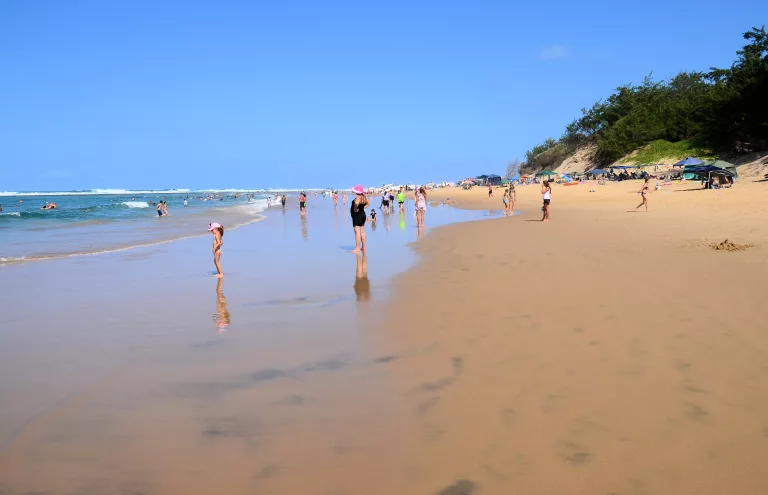
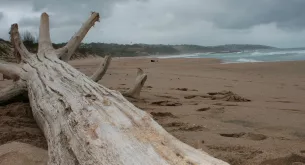
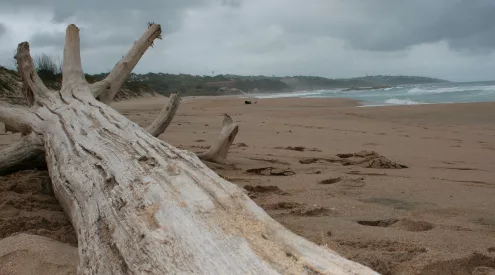
Cape Vidal Beach/Ossewa/Wikimedia Commons
Cape Vidal is where the different sides of iSimangaliso come together most clearly.
The coastline is backed by forest and wildlife habitat, while offshore waters attract dolphins and migrating whales. During the turtle nesting season, loggerhead and leatherback turtles come ashore to nest, generally between November and March.
Rather than making the beach the destination, look at how the coastal environment connects with everything you have already seen.
The forested dunes form a transition between the terrestrial and marine environments, while the wider park protects wetlands, grasslands, lakes, estuaries, forests and marine habitats. UNESCO recognises this mosaic of ecosystems as one of the defining features of the World Heritage property.
Why iSimangaliso is more than a beach destination
A weekend in iSimangaliso can easily become a beach escape, but that only reveals one part of the park.
Within the broader protected area are three major lake systems, wetlands, coastal forests, grasslands, estuaries, freshwater habitats and marine environments. The park is also home to more than 500 recorded bird species and an exceptional range of terrestrial and marine wildlife.
Follow us on social media for more travel news, inspiration, and guides. You can also tag us to be featured.
Instagram | Facebook | Twitter | Spotify
ALSO READ:
Phalaborwa: The South African town where the Kruger starts before the gate