






An Indonesian court has sentenced a wildlife trafficking intermediary to nine years in prison following the discovery of more than three tonnes of pangolin scales at Jakarta’s Tanjung Priok port earlier this year.
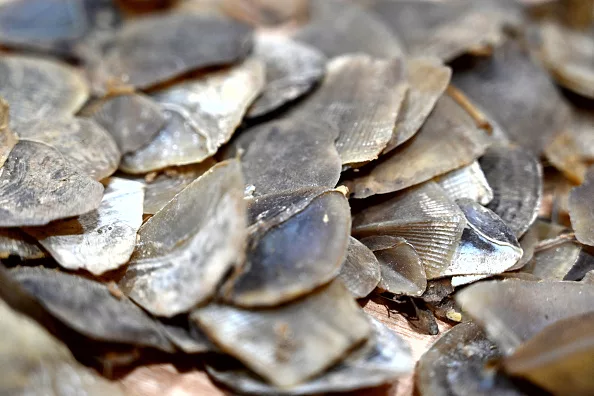
Image of pangolin scales used for illustrative purposes/By: CHAIDEER MAHYUDDIN/AFP via Getty Images
However, investigators say the case is far from over as they continue efforts to identify the people behind the international trafficking network.
The conviction marks the first major legal outcome in an investigation into the attempted smuggling of 3.05 tonnes of pangolin scales from Indonesia to Cambodia.
In October, Tonny Tumbelaka was sentenced by a court in Jakarta after prosecutors established that he had arranged for the shipment to be transported to a warehouse in Cakung, east Jakarta. The scales were allegedly concealed among consignments of sea cucumbers and instant noodles before being prepared for export.
Alongside his nine-year prison sentence, Tumbelaka was ordered to pay a fine of one billion rupiah (approximately $55,000). The ruling was shorter than the 11-year sentence and two-billion-rupiah fine requested by prosecutors.
More than 3 tonnes of pangolin scales discovered at Jakarta port
The investigation began on 18 February, when Indonesian customs officials inspected a suspicious shipping container at Tanjung Priok, the country’s largest port.
Although the container was declared to contain sea cucumbers and instant noodles, officials discovered 99 boxes holding a total of 3,053kg of dried pangolin scales. The consignment was valued at approximately 183 billion rupiah (around $10.1 million) at the time of the seizure.
The scale of the discovery highlights the devastating impact of the illegal wildlife trade. Researchers from Indonesia’s Bogor Institute of Agriculture and the Ministry of Forestry estimate that one kilogram of pangolin scales could represent approximately five animals.
Based on this estimate, the seized shipment could have originated from as many as 15,000 pangolins.
Why pangolins are targeted by traffickers
Pangolins are among the world’s most heavily trafficked mammals, with their scales sought after for use in traditional medicine in China and parts of Southeast Asia.
However, the scales are made of keratin, the same protein found in human hair and fingernails, and have no scientifically established medicinal benefits.
All eight recognised pangolin species are listed as threatened on the International Union for Conservation of Nature’s (IUCN) Red List and are protected under Appendix I of the Convention on International Trade in Endangered Species (CITES), which prohibits international commercial trade in the animals.
In Indonesia, the Sunda pangolin (Manis javanica) is classified as Critically Endangered and protected under national legislation. This makes the illegal capture and trade of the species a criminal offence.
Investigators pursue wider trafficking network
While the nine-year sentence represents a significant development, Indonesian authorities are continuing to investigate other individuals suspected of involvement in the operation.
According to investigators from Gakkum, the law enforcement division of Indonesia’s forestry ministry, the objective is to identify and dismantle the wider criminal network, including those believed to have organised and financed the shipment.
The case has already resulted in further arrests. In August, authorities arrested a Vietnamese national in Pontianak, West Kalimantan, as part of efforts to trace the international connections behind the trafficking operation.
Investigators have also sought to question another person of interest who has so far failed to appear. Authorities have indicated that they intend to bring the individual in for questioning.
The investigation is being conducted in coordination with other agencies, with officials working to identify those believed to be directing the operation rather than focusing solely on the individuals responsible for transporting the contraband.
Wildlife campaigners have welcomed the conviction but say stronger enforcement is needed to ensure that everyone involved in the trafficking chain is held accountable.
Geopix wildlife campaigner Annisa Rahmawati told Mongabay that effective action must extend beyond arrests and prosecutions. This includes tackling the online trade in protected wildlife, improving public awareness and strengthening the ability of law enforcement agencies to investigate organised trafficking networks.
She also warned that the environmental consequences of the Jakarta seizure should not be underestimated, given the number of animals potentially killed to supply the shipment.
For Indonesia’s pangolins, the conviction is an important first step. Whether it leads to the dismantling of the wider trafficking network remains to be seen.
Source: Mongabay. Originally published in Indonesian on 1 November 2026.
Follow us on social media for more travel news, inspiration, and guides. You can also tag us to be featured.
Instagram | Facebook | Twitter | Spotify
ALSO READ:
Savuti: The Botswana wilderness where elephants reshape the landscape
.