



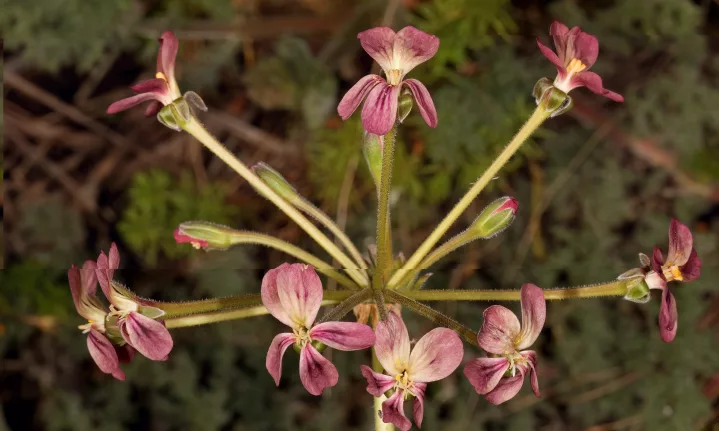
By October, most travellers assume the wildflower season is over. The Namaqualand daisies have faded, and attention has shifted to beach days. But nature always has an encore. Across South Africa — from the Cape’s rocky ridges to KwaZulu-Natal’s green hills — late bloomers quietly brighten the landscape.
These hardy flowers thrive where others can’t: in sandy dunes, damp flats, and cool mountain slopes. For slow travellers, October is the perfect time to wander off the beaten path and discover bursts of unexpected colour.
Why late-season blooms matter
Late wildflowers are more than a pretty afterthought. Ecologically, they sustain bees, beetles, and butterflies preparing for summer; they feed birds and small mammals through their seedheads; and they tell us stories about adaptation and resilience in changing climates.
For the traveller, late bloomers bring a different kind of joy — not the overwhelming carpets of colour, but the satisfaction of looking closer. You’ll find singular plants framed by rock, dune, or grass, standing in quiet contrast to the fading landscape.
Where to wander in October
- West Coast & Overberg: Coastal routes near Yzerfontein, Cape Agulhas, and De Hoop Nature Reserve still host patches of late bloomers, especially in damp depressions.
- Cederberg to Clanwilliam: Sandy slopes and fynbos trails reveal bulb species holding out until early summer.
- Klein Karoo: Around Calitzdorp and Oudtshoorn, protea shrubs and Leucadendrons peak late in the season.
- KwaZulu-Natal Midlands: Grasslands show a different set of wildflowers in October, from Watsonias to wild dagga, giving the region a spring flush.
- Eastern Cape’s Baviaanskloof and Tsitsikamma edges: Moist valleys hide endemic bulbs and lilies that thrive as temperatures climb.
Late-season South African showstoppers
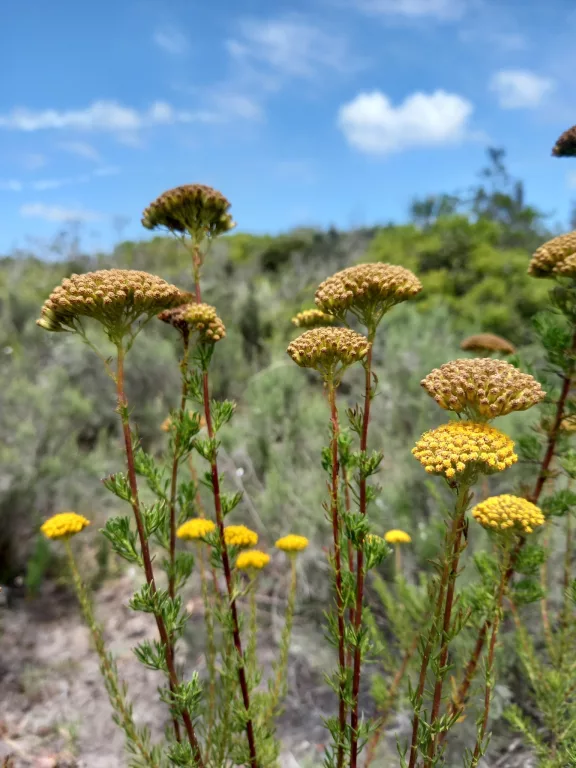
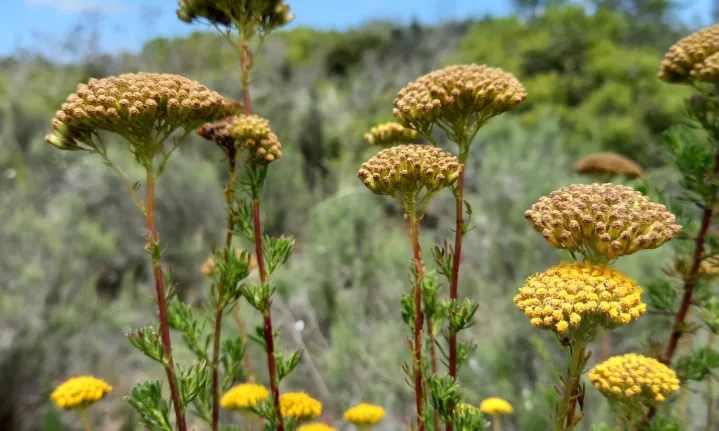
Athanasia pectinata/(c) kevin koen, some rights reserved/Wikimedia Commons
1. Athanasia pectinata – The Claybank Sunshine
Endemic to the Western Cape between Hermanus and Gouritsmond, Athanasia pectinata dots damp clay flats with golden discs from October to December. Its compact shrub form and rich colour brighten the hillsides long after most fynbos annuals have vanished.
Where to see it: Between Hermanus and Gouritsmond, where there is damp soil
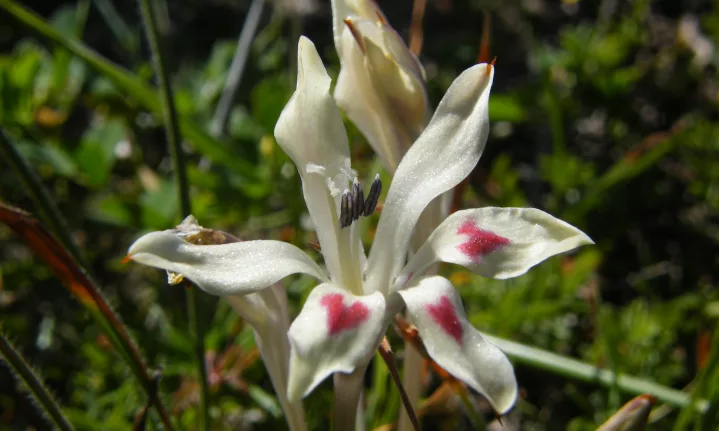
2. Babiana tubiflora – The Shy Coastal Beauty
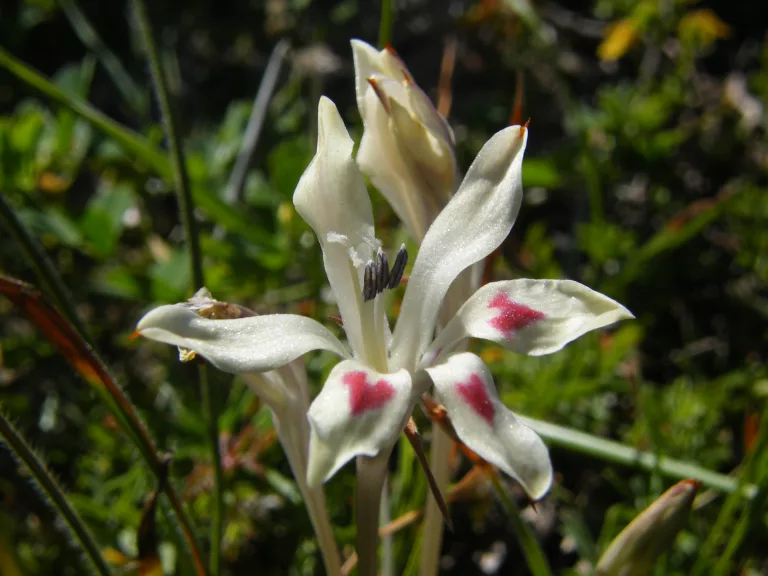
This delicate geophyte blooms along South Africa’s west and south coasts from August to early October, often in loose sand near dunes. Its pale tubular flowers, adapted for long-tongued pollinators, are easy to miss — but once spotted, unforgettable.
Where to see it: Along the Western Cape’s coast from Lambert’s Bay to Stilbaai and inland around Darling and Piketberg.
3. Lachenalia variegata – The Spotty Viooltjie
Among the Cape’s most photogenic bulbs, this “spotty violet” displays mottled leaves and tubular blooms streaked in cream and mauve. Flowering from August into late October, it thrives in sandy coastal flats from Clanwilliam to Cape Point.
Where to see it: From Clanwilliam to the Cape Peninsula, most commonly in coastal areas with deep, sandy soils.
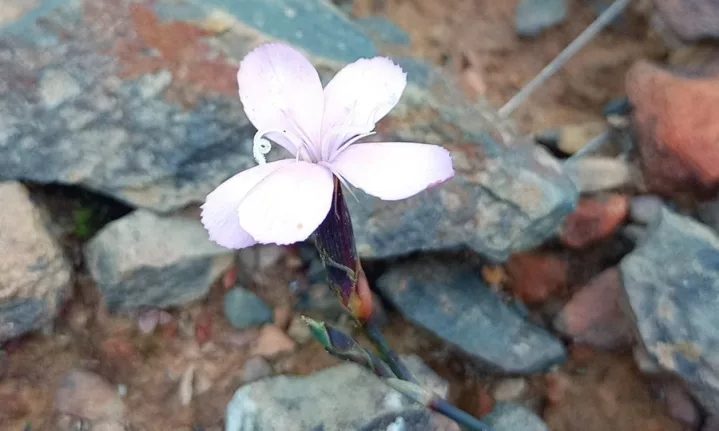
4. Dianthus albens – The Seaside Frill
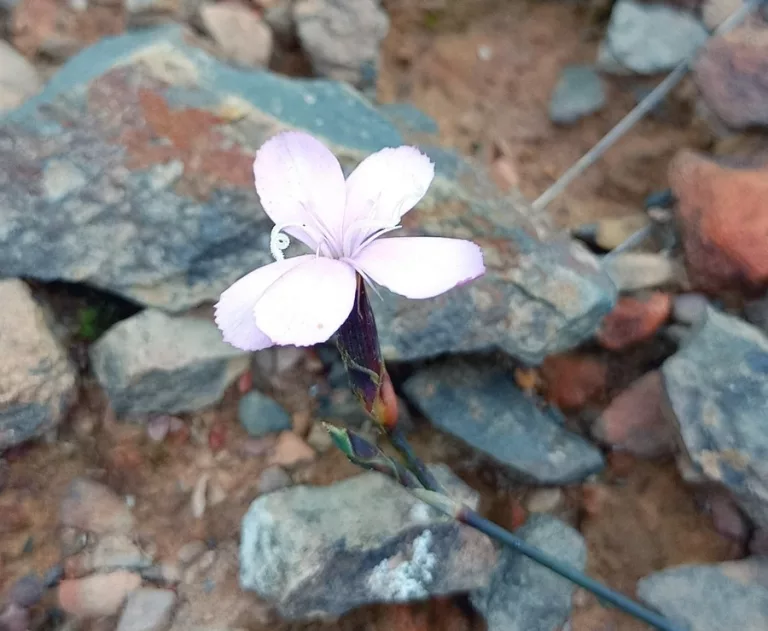
Dianthus albens/S Molteno/Wikimedia Commons
From Cederberg to the Cape Peninsula, Dianthus albens adds soft white-pink fringed flowers to rocky and sandy coastal slopes. Its long bloom season (September–April) makes it a reliable late-spring find.
Where to see it: Rocherpan Nature Reserve, Kogelberg Biosphere
5. Leucadendron osbornei – The Karoo Survivor
Standing tall in the Klein Karoo, this shrub offers golden bracts through October, its cones hinting at summer ahead. It’s part of the protea family — tougher than it looks, thriving on minimal rainfall.
Where to see it: It grows mainly in sandy soil in the Klein Karoo
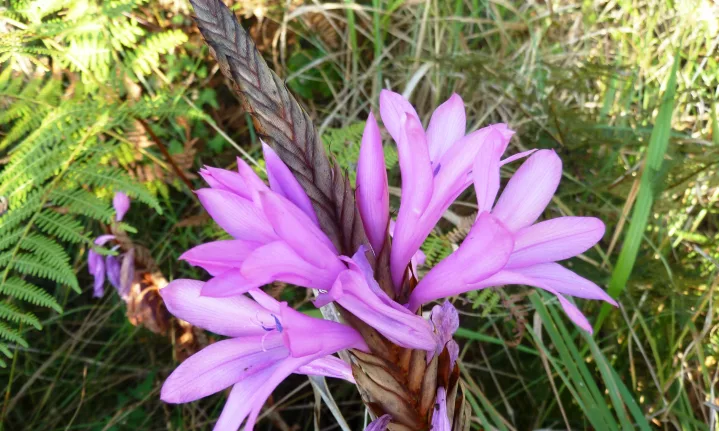
6. Watsonia densiflora – The Pink Spears of the Drakensberg
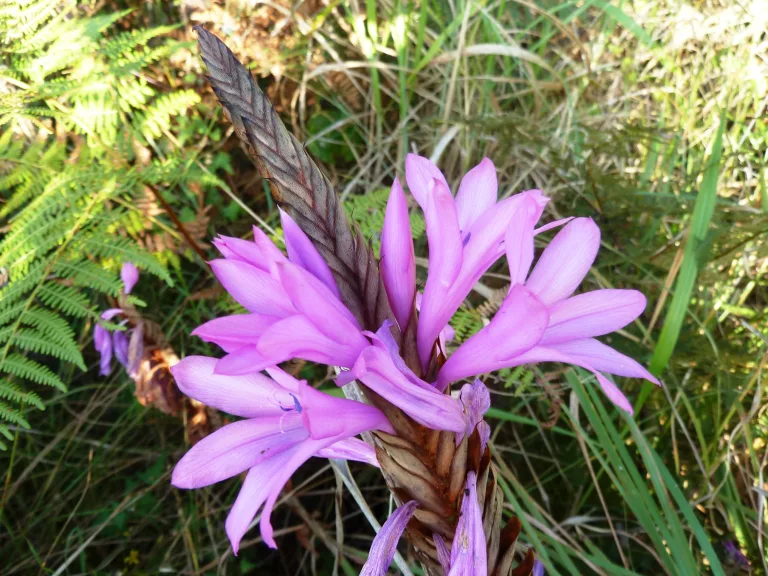
Watsonia densiflora in Krantzkloof Nature Reserve/JMK/Wikimedia Commons
High up in KwaZulu-Natal’s grasslands, these tall pink spikes sway through late spring. Flowering from September to November, they dominate montane meadows as other flora fade.
Where to see it: Sani Pass, Royal Natal National Park
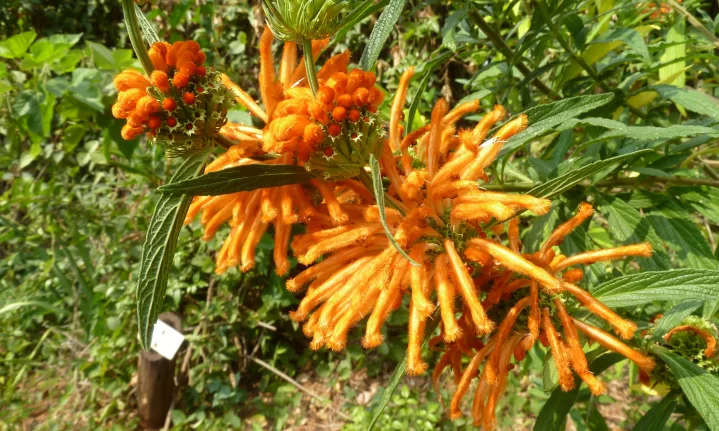
7. Leonotis leonurus (Wild Dagga/ Lion’s Ear) – The Orange Flame
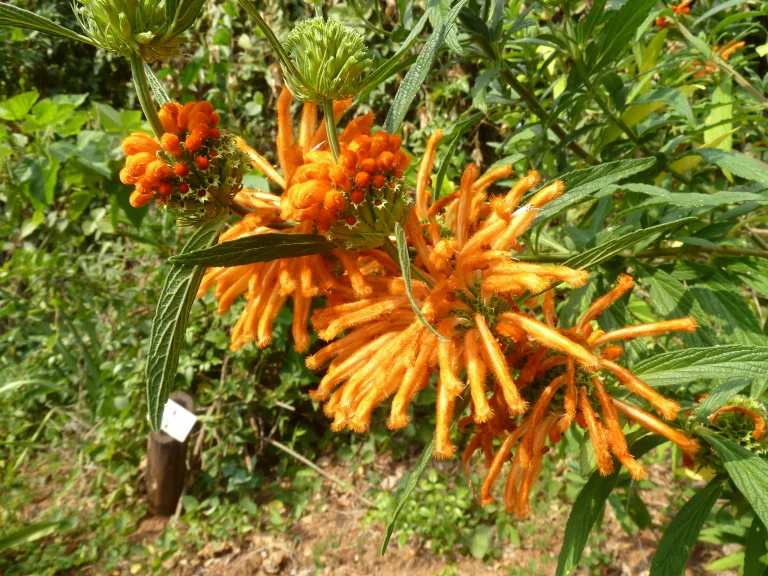
Leonotis leonurus found at the Manie Van Der Schijff Botanical Garden in Pretoria/JMK/Wikimedia Commons
Bursting with brilliant orange whorls, wild dagga lights up hillsides from October to January. This hardy shrub supports sunbirds and bees and often grows on rocky slopes and grasslands across the country.
Where to see it: Drakensberg foothills, Magaliesberg, and the Eastern Cape
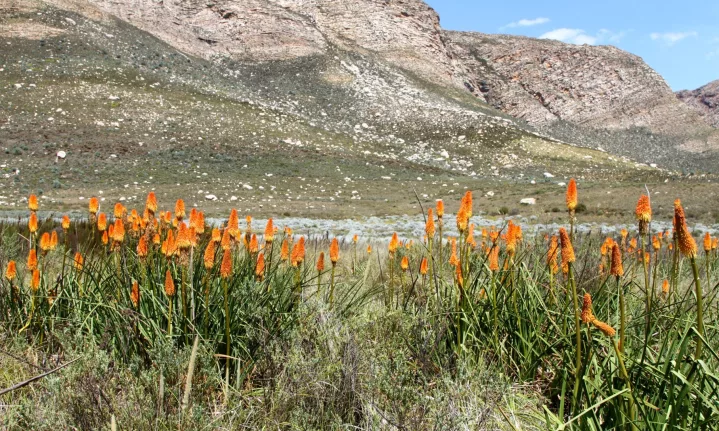
8. Kniphofia uvaria (Red Hot Poker) – The Torch That Won’t Quit
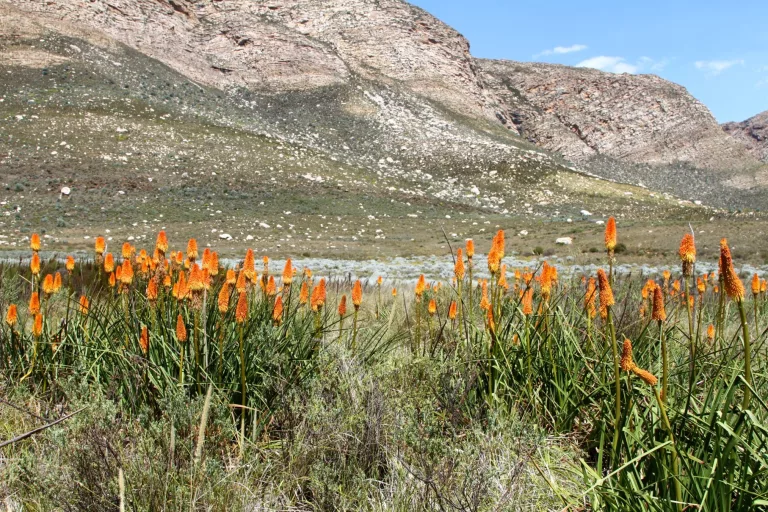
Kniphofia uvaria in the Swartberg Nature Reserve/yakovlev.alexey from Moscow, Russia/Wikimedia Commons
Known for its fiery spikes, this native species continues to flower in high-altitude wetlands and along streams in the Drakensberg and Western Cape through October.
Where to see it: Hogsback, Giants Castle, and Cederberg streams
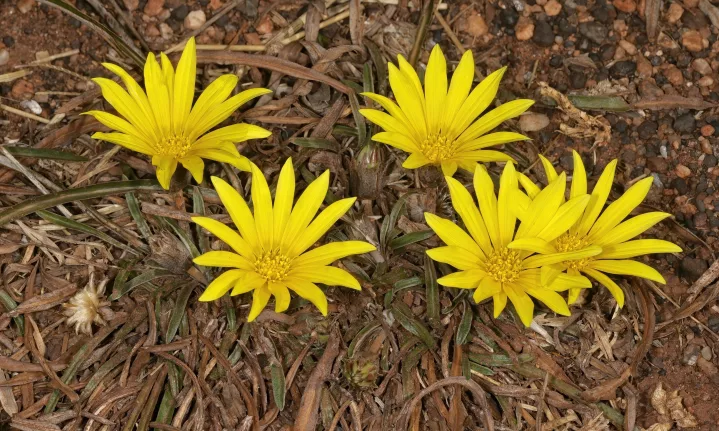
9. Gazania krebsiana – The Last of the Daisies
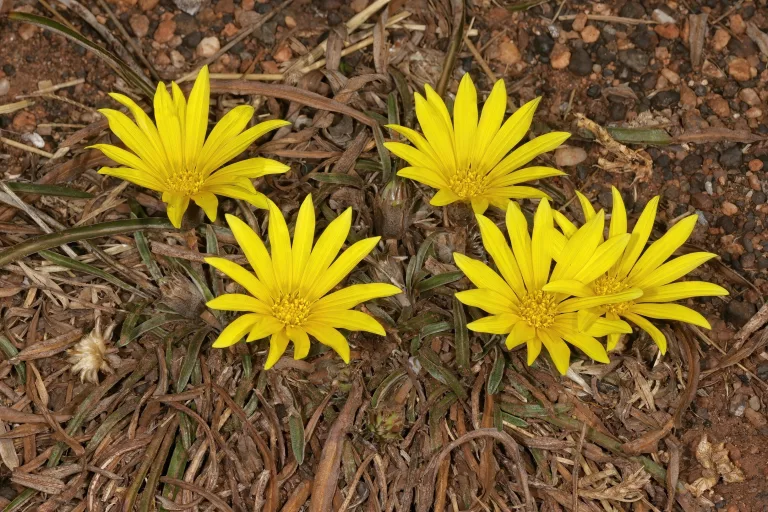
Gazania krebsiana along N14 between Carltonville and Ventersdorp, North West/SAplants/Wikimedia Commons
While most daisies fade by September, Gazania krebsiana often stretches into mid-October, offering splashes of orange and gold on roadside verges.
Where to see it: Namaqualand’s southern stretches, Darling, and West Coast National Park edges
10. Pelargonium triste – The Night Blooming Scented Star
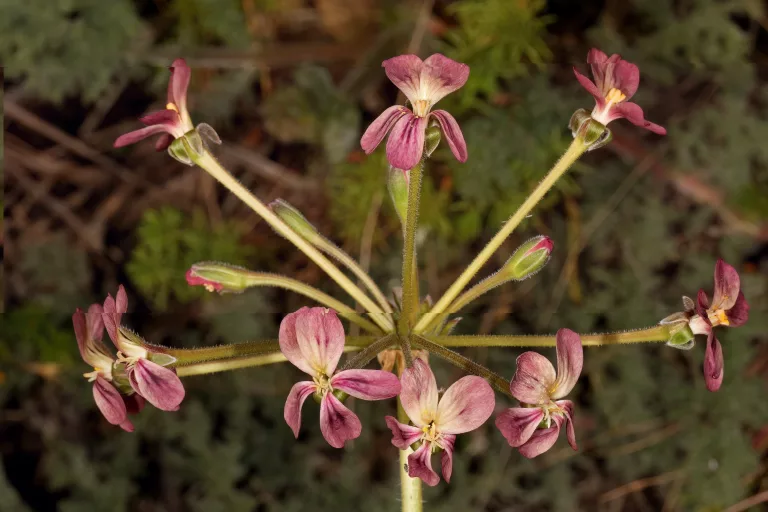
Pelargonium triste, flowers in Jonkershoek Nature Reserve, Stellenbosch/SAplants/Wikimedia Commons
A nocturnal gem, this pelargonium releases its vanilla-like fragrance after dusk. Blooming in September and December, it’s a favourite among moth pollinators.
Where to see it: Coastal flats near Langebaan and Lambert’s Bay
Tips for wildflower wanderers
- Timing is everything: October’s display shifts north to south and with altitude. Call reserves ahead for current sightings.
- Look low and slow: Many late bloomers are small bulbs or ground huggers — crouch down to spot their details.
- Respect the roots: Picking wildflowers is illegal in most areas. Stick to paths and photograph instead.
- Chase the light: Early morning and late afternoon give the best glow for photography.
- Bring binoculars: You’ll often catch sunbirds and butterflies feasting on late nectar.
By the time November arrives, the heat will have deepened, the seeds dispersed, and the wildflower season officially closed. But for those who lingered in October’s quiet corners — walking through De Hoop’s dunes, pausing in the Klein Karoo’s golden scrub, or climbing into the cool grasslands of the Drakensberg — the memory lingers longer than the petals.
Follow us on social media for more travel news, inspiration, and guides. You can also tag us to be featured.
TikTok | Instagram | Facebook | Twitter
ALSO READ: 5 easy hiking trails for beginners across South Africa







_(4576237216).jpg)

