Komatipoort is often treated as a stopover for travellers heading to Kruger National Park or crossing into Mozambique.
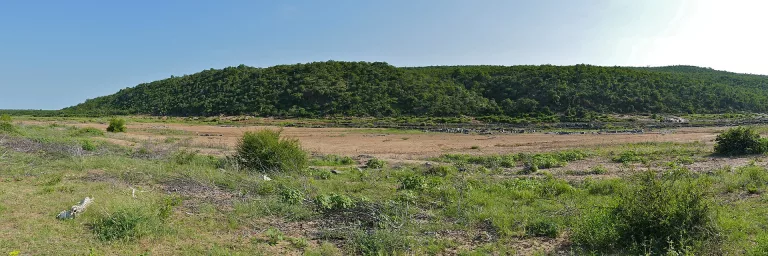
Lebombo Hills behind Letaba River / Bernard Dupont / Wikimedia Commons
But there is more to this corner of Mpumalanga than it’s location. Two major rivers meet nearby, the Lebombo Mountains run along the eastern border, and the surrounding Lowveld offers opportunities for fishing, wildlife watching and exploring beyond the usual safari route.
At the centre of it all is the Komati River, a waterway that connects South Africa, Eswatini and Mozambique.
Where two rivers meet
Komatipoort takes it’s name from the Komati River and the Afrikaans word ‘poort’, meaning valley. The town lies close to where the Komati and Crocodile rivers meet, just before the combined watercourse enters Mozambique.
The Komati begins in Mpumalanga, flows through Eswatini and returns to South Africa near the Mananga border. From Komatipoort, it continues into Mozambique as part of the Incomati River system, eventually reaching Maputo Bay.
Along it’s course, the river supports communities, agriculture and wildlife. It’s banks are lined with riverine vegetation, contrasting with the surrounding bushveld and cultivated farmland.
Getting out on the water
The Komati is popular with anglers hoping to catch tiger fish. Known for their speed and strength, these freshwater predators make for a challenging catch.
Komati River Adventures offers guided fishing trips from the riverbanks and aboard it’s pontoon boats. Visitors can also book sunset and brunch cruises, offering a different way to experience the river.
Hippos and crocodiles also inhabit the river, so wildlife is best observed from a safe distance. Follow your guide’s advice and avoid swimming.
Exploring the southern Kruger
About 8km from Komatipoort, Crocodile Bridge Gate provides access to the southern section of Kruger National Park. This part of the park is popular for game viewing, with opportunities to encounter the Big Five.
The Crocodile River is an important feature of the area, with wildlife often gathering near it’s banks. The surrounding roads offer plenty of opportunities to explore at your own pace.
For a more adventurous experience, the Lebombo Eco Trail follows Kruger’s eastern boundary along the Lebombo Mountains. The approximately 500km guided 4×4 journey runs between Crocodile Bridge and Pafuri, taking five days and passing through several ecological zones.
The experience requires a suitable 4×4 vehicle, camping equipment and advance bookings. SANParks operates the trail during the dry season, from April to October, although weather conditions can affect access. It is worth checking the latest arrangements before planning a trip.
The Lebombo Mountains and local history
The Lebombo Mountains form a long chain of low ridges along South Africa’s eastern border with Mozambique. Around Komatipoort, they provide a geographical contrast to the surrounding river valleys and Lowveld.
The wider landscape forms part of the Great Limpopo conservation region, which connects protected areas across South Africa, Mozambique and Zimbabwe. The Great Limpopo Transfrontier Park links Kruger National Park with Limpopo National Park in Mozambique and Gonarezhou National Park in Zimbabwe.
The region also holds an important place in modern history. At Mbuzini, in the Lebombo Mountains, the Samora Machel Monument commemorates the 1986 aircraft crash that killed the Mozambican president and members of his delegation.
The memorial and museum offer visitors an opportunity to learn about the tragedy and it’s significance in the relationship between South Africa and Mozambique.
Why the Komati matters
Beyond fishing and wildlife, the Komati is an important resource for the communities and farms along it’s course. However, increasing water demands and pollution place pressure on the wider catchment.
The Inkomati-Usuthu Catchment Management Agency’s 2024/25 planning report identifies elevated phosphate concentrations and electrical conductivity in parts of the Komati catchment. The report also highlights the importance of cooperation between South Africa, Eswatini and Mozambique in managing their shared water resources.
It’s easy to appreciate the river as a place for fishing and boating, but it’s importance extends much further. It supports an interconnected landscape that depends on the health of it’s waterways.
More than a stopover
Komatipoort’s location makes it a convenient base for exploring Kruger and travelling into Mozambique, but there are reasons to stay a little longer. Spend time on the Komati, explore the southern reaches of the national park or visit the Lebombo Mountains and their historical landmarks.
The area offers a different perspective of the Lowveld, one that goes beyond game drives and familiar safari routes. Sometimes it’s worth slowing down and exploring the landscape around you. In Komatipoort, the river is a good place to start.
Follow us on social media for more travel news, inspiration, and guides. You can also tag us to be featured.
Instagram | Facebook | Twitter | Spotify
ALSO READ: